


Page 1824 - Hematology_ Basic Principles and Practice ( PDFDrive )
P. 1824
1626   Part X  Transplantation


                          T Cell Activation            T Cell Proliferation                  Proliferating
                                                                                           ALLOREACTIVE
                     Peptide-MHC  CD80/CD86       Receptor                    Cy day  3     cells are killed
                                      CD28  TCR
                                             T cell


                Alloreactive
                T cells           CD40  CD40L    IL-2  Activated
                                                       effector
                       Dendritic cell                   T cell
                                             Anti-CMV
                                                                                                  Anti-CMV
                         Non-alloreactive
                         T cells
                                                                                                  Anti-HSV
                              Anti-HSV
                                                                                           Non-proliferating
                                                                                           non-alloreactive
                                                                                           cells are spared
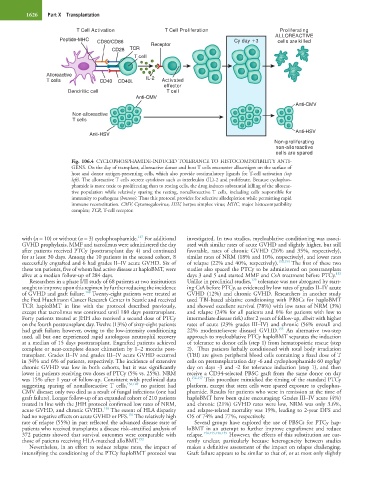
                        Fig. 106.4  CYCLOPHOSPHAMIDE-INDUCED TOLERANCE TO HISTOCOMPATIBILITY ANTI-
                        GENS. On the day of transplant, alloreactive donor and host T cells encounter alloantigen on the surface of
                        host and donor antigen-presenting cells, which also provide costimulatory ligands for T-cell activation (top
                        left). The alloreactive T cells secrete cytokines such as interleukin (IL)-2 and proliferate. Because cyclophos-
                        phamide is more toxic to proliferating than to resting cells, the drug induces substantial killing of the alloreac-
                        tive  population  while  relatively  sparing  the  resting,  nonalloreactive T  cells,  including  cells  responsible  for
                        immunity to pathogens (bottom). Thus this protocol provides for selective allodepletion while permitting rapid
                        immune reconstitution. CMV, Cytomegalovirus; HSV, herpes simplex virus; MHC, major histocompatibility
                        complex; TCR, T-cell receptor.


                                              147
        with (n = 10) or without (n = 3) cyclophosphamide.  For additional   investigated. In two studies, myeloablative conditioning was associ-
        GVHD prophylaxis, MMF and tacrolimus were administered the day   ated with similar rates of acute GVHD and slightly higher, but still
        after patients received PTCy (posttransplant day 4) and continued   favorable,  rates  of  chronic  GVHD  (26%  and  35%,  respectively),
        for at least 30 days. Among the 10 patients in the second cohort, 8   similar rates of NRM (18% and 10%, respectively), and lower rates
        successfully engrafted and 6 had grades II–IV acute GVHD. Six of   of relapse (22% and 40%, respectively). 153,154  The first of these two
        these ten patients, five of whom had active disease at haploBMT, were   studies also spaced the PTCy to be administered on posttransplant
                                                                                                               153
        alive at a median follow-up of 284 days.              days 3 and 5 and started MMF and CsA treatment before PTCy.
                                                                                   129
           Researchers in a phase I/II study of 68 patients at two institutions   Unlike in preclinical studies,  tolerance was not abrogated by start-
        sought to improve upon this regimen by further reducing the incidence   ing CsA before PTCy, as evidenced by low rates of grades II–IV acute
                             148
        of GVHD and graft failure.  Twenty-eight patients were treated at   GVHD (12%) and chronic GVHD. Researchers in another study
        the Fred Hutchinson Cancer Research Center in Seattle and received   used TBI-based  ablative  conditioning  with  PBSCs  for  haploBMT
        TCR  haploBMT  in  line  with  the  protocol  described  previously,   and showed excellent survival (78%) with low rates of NRM (3%)
        except that tacrolimus was continued until 180 days posttransplant.   and relapse (24% for all patients and 0% for patients with low to
        Forty patients treated at JHH also received a second dose of PTCy   intermediate disease risk) after 2 years of follow-up, albeit with higher
        on the fourth posttransplant day. Twelve (13%) of sixty-eight patients   rates  of  acute  (23%  grades  III–IV)  and  chronic  (56%  overall  and
                                                                                            155
        had graft failure; however, owing to the low-intensity conditioning   22%  moderate/severe  disease)  GVHD.   An  alternative  two-step
        used, all but one experienced rapid autologous neutrophil recovery   approach to myeloablative PTCy haploBMT separates the induction
        at a median of 15 days posttransplant. Engrafted patients achieved   of tolerance to donor cells (step 1) from hematopoietic rescue (step
        complete or near-complete donor chimerism by 1–2 months post-  2).  Thus patients lethally conditioned with total body irradiation
        transplant. Grades II–IV and grades III–IV acute GVHD occurred   (TBI) are given peripheral blood cells containing a fixed dose of T
        in 34% and 6% of patients, respectively. The incidence of extensive   cells on pretransplantation day -6 and cyclophosphamide 60 mg/kg/
        chronic  GVHD  was  low  in  both  cohorts,  but  it  was  significantly   day  on  days  -3  and  -2  for  tolerance  induction  (step  1),  and  then
        lower in patients receiving two doses of PTCy (5% vs. 25%). NRM   receive a CD34-selected PBSC graft from the same donor on day
        was 15% after 1 year of follow-up. Consistent with preclinical data   0. 156,157  This procedure mimicked the timing of the standard PTCy
        suggesting  sparing  of  nonalloreactive  T  cells, 136,149   no  patient  had   platform, except that stem cells were spared exposure to cyclophos-
        CMV disease; only two died as a result of fungal infections (one had   phamide. Results for patients who were in remission at the time of
        graft failure). Longer follow-up of an expanded cohort of 210 patients   haploBMT have been quite encouraging: Grades III–IV acute (4%)
        treated in line with the JHH protocol confirmed low rates of NRM,   and chronic (21%) GVHD rates were low, NRM was only 3.6%,
                                   150
        acute GVHD, and chronic GVHD.  The extent of HLA disparity   and relapse-related mortality was 19%, leading to 2-year DFS and
                                           151
        had no negative effects on acute GVHD or PFS.  The relatively high   OS of 74% and 77%, respectively.
        rate of relapse (55%) in part reflected the advanced disease state of   Several groups have explored the use of PBSCs for PTCy hap-
        patients who received transplants; a disease risk–stratified analysis of   loBMT in an attempt to further improve engraftment and reduce
        372 patients showed that survival outcomes were comparable with   relapse. 154,155,158,159  However, the effects of this substitution are cur-
        those of patients receiving HLA-matched alloBMT. 152  rently  unclear,  particularly  because  heterogeneity  between  studies
           Nevertheless, in an effort to reduce relapse rates, the impact of   makes a definitive assessment of the impact on relapse challenging.
        intensifying the conditioning of the PTCy haploBMT protocol was   Graft failure appears to be similar to that of, or at most only slightly

