


Page 1821 - Hematology_ Basic Principles and Practice ( PDFDrive )
P. 1821
Chapter 106  Haploidentical Hematopoietic Cell Transplantation  1623


                         GCSF stimulation
                               BM (or G-PBSCs)                                           TCD with ‘mega-dose’


                                                    CD34  positive selection OR          CD34  cells
                                 PBSCs and/or BM
                                                    CD3  and CD19  negative selction OR  GIAC protocol


                                      PBSCs         TCR- /   and CD19  negative selection
                                                                                         Post-transplantation
                                                                                         cyclophosphamide
                           Graft collection       Graft processing
                                                    (TCD only)
                      Donor                                                PTCy, tacrolimus, MMF, GCSF
                                       Rabbit ATG                             Methotrexate, cyclosporine,
                                                                              MMF, GCSF     basiliximab
                                                                          Post-grafting
                                                Conditioning
                                                                       immunomodulation
                                   Recipient                  Conditioned            Recipient
                                    pre-BMT                     recipient            post-BMT
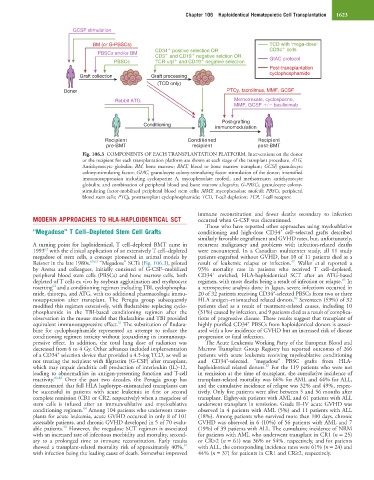
                            Fig. 106.3  COMPONENTS OF EACH TRANSPLANTATION PLATFORM. Interventions on the donor
                            or the recipient for each transplantation platform are shown at each stage of the transplant procedure. ATG,
                            Antithymocyte  globulin;  BM,  bone  marrow;  BMT,  blood  or  bone  marrow  transplant;  GCSF,  granulocyte
                            colony-stimulating factor; GIAC, granulocyte colony-stimulating factor stimulation of the donor; intensified
                            immunosuppression  including  cyclosporine  A,  mycophenolate  mofetil,  and  methotrexate;  antithymocyte
                            globulin; and combination of peripheral blood and bone marrow allografts; G-PBSCs, granulocyte colony-
                            stimulating factor-mobilized peripheral blood stem cells; MMF, mycophenolate mofetil; PBSCs, peripheral
                            blood stem cells; PTCy, posttransplant cyclophosphamide; TCD, T-cell depletion; TCR, T-cell receptor.

                                                                  immune  reconstitution  and  fewer  deaths  secondary  to  infection
            MODERN APPROACHES TO HLA-HAPLOIDENTICAL SCT           occurred when G-CSF was discontinued.
                                                                    Those who have reported other approaches using myeloablative
            “Megadose” T Cell–Depleted Stem Cell Grafts           conditioning  and  high-dose  CD34   cell–selected  grafts  described
                                                                                             +
                                                                  similarly favorable engraftment and GVHD rates, but, unfortunately,
            A turning point for haploidentical, T cell–depleted BMT came in   recurrent  malignancy  and  problems  with  infection-related  deaths
                62
            1993  with the clinical application of an extensively T cell–depleted   were  encountered.  In  a  Canadian  multicenter  study,  all  11  study
            megadose  of  stem  cells,  a  concept  pioneered  in  animal  models  by   patients engrafted without GVHD, but 10 of 11 patients died as a
                                                                                                47
            Reisner in the late 1980s. 60,63  “Megadose” SCTs (Fig. 106.3), piloted   result  of  leukemic  relapse  or  infection.   Waller  et al  reported  a
            by  Aversa  and  colleagues,  initially  consisted  of  G-CSF–mobilized   93%  mortality  rate  in  patients  who  received  T  cell–depleted,
                                                                       +
            peripheral  blood  stem  cells  (PBSCs)  and  bone  marrow  cells,  both   CD34   enriched,  HLA-haploidentical  SCT  after  an  ATG-based
                                                                                                                 85
            depleted of T cells ex vivo by soybean agglutination and erythrocyte   regimen, with most deaths being a result of infection or relapse.  In
                  62
            rosetting  and a conditioning regimen including TBI, cyclophospha-  a retrospective analysis done in Japan, severe infections occurred in
                                                                                          +
            mide, thiotepa, and ATG, with no additional pharmacologic immu-  20 of 32 patients receiving CD34 -selected PBSCs from two or three
                                                                                                 86
            nosuppression  after  transplant.  The  Perugia  group  subsequently   HLA antigen–mismatched related donors.  Seventeen (53%) of 32
            modified this regimen extensively, with fludarabine replacing cyclo-  patients  died  as  a  result  of  treatment-related  causes,  including  10
            phosphamide  in  the  TBI-based  conditioning  regimen  after  the   (31%) caused by infection, and 9 patients died as a result of complica-
            observation in the mouse model that fludarabine and TBI provided   tions of progressive disease. These results suggest that transplant of
                                                                                  +
                                        81
            equivalent immunosuppressive effect.  The substitution of fludara-  highly purified CD34  PBSCs from haploidentical donors is associ-
            bine  for  cyclophosphamide  represented  an  attempt  to  reduce  the   ated with a low incidence of GVHD but an increased risk of disease
            conditioning regimen toxicity without jeopardizing its immunosup-  progression or fatal infection.
            pressive  effect.  In  addition,  the  total  lung  dose  of  radiation  was   The Acute Leukemia Working Party of the European Blood and
            decreased from 6 to 4 Gy. Other advances included implementation   Marrow Transplant Group Registry has reported outcomes of 266
                    +
            of a CD34  selection device that provided a 4.5-log TCD, as well as   patients  with  acute  leukemia  receiving  myeloablative  conditioning
                                                                           +
            not treating the recipient with filgrastim (G-CSF) after transplant,   and  CD34 -selected,  “megadose”  PBSC  grafts  from  HLA-
                                                                                        87
            which may impair dendritic cell production of interleukin (IL)-12,   haploidentical related donors.  For the 119 patients who were not
            leading  to  abnormalities  in  antigen-presenting  function  and T-cell   in remission at the time of transplant, the cumulative incidence of
            reactivity. 82,83   Over  the  past  two  decades,  the  Perugia  group  has   transplant-related mortality was 66% for AML and 44% for ALL,
            demonstrated that full HLA haplotype–mismatched transplants can   and the cumulative incidence of relapse was 32% and 49%, respec-
            be  successful  in  patients  with  acute  leukemia  in  first  or  second   tively. Only five patients were alive between 5 and 56 months after
            complete remission (CR1 or CR2, respectively) when a megadose of   transplant. Eighty-six patients with AML and 61 patients with ALL
            stem  cells  is  infused  after  an  immunoablative  and  myeloablative   underwent transplant in remission. Grade II–IV acute GVHD was
                            84
            conditioning regimen.  Among 104 patients who underwent trans-  observed in 4 patients with AML (5%) and 11 patients with ALL
            plants for acute leukemia, acute GVHD occurred in only 8 of 101   (18%). Among patients who survived more than 100 days, chronic
            assessable patients, and chronic GVHD developed in 5 of 70 evalu-  GVHD was observed in 6 (10%) of 56 patients with AML and 7
                      40
            able patients.  However, the megadose SCT regimen is associated   (19%) of 39 patients with ALL. The cumulative incidence of NRM
            with an increased rate of infectious morbidity and mortality, second-  for patients with AML who underwent transplant in CR1 (n = 25)
            ary  to  a  prolonged  time  to  immune  reconstitution.  Early  results   or CR>2 (n = 61) was 36% or 54%, respectively, and for patients
                                                             39
            showed a transplant-related mortality risk of approximately 40%,    with ALL, the corresponding incidence rates were 61% (n = 24) and
            with infection being the leading cause of death. Somewhat improved   44% (n = 37) for patients in CR1 and CR≥2, respectively.

