


Page 2364 - Hematology_ Basic Principles and Practice ( PDFDrive )
P. 2364
2106   Part XII  Hemostasis and Thrombosis


                                                              nonspecific abnormalities may be detected. Patients with pulmonary
                                 Clinically suspected DVT
                                                              infarction or atelectasis may have reduced movement of the affected
                                                              portion of the chest.
                                        CUS
                                                              Differential Diagnosis

                             -                    +  Treat    The  differential  diagnosis  of  dyspnea  and  pleuritic  chest  pain,  in
                                                              addition to PE, includes pneumonia, pleurisy, chest wall pain, peri-
                                                              carditis, atelectasis, pneumothorax, acute bronchitis, acute bronchi-
                          Serial CUS                          olitis, and acute bronchial obstruction as a result of mucous plugging
                                                              or bronchoconstriction.

        A  Exclude Dx    -        +
                                                              Diagnosis

                          Clinically suspected DVT            The  clinical  diagnosis  of  PE  requires  objective  testing.  The  chest
                                                              radiograph  is  not  specific  for  PE  and  usually  does  not  show  any
                                                              diagnostic abnormality. Nevertheless, it is useful in excluding other
                                                              causes  for  the  presenting  symptoms  (e.g.,  pneumothorax)  and  is
                            Pretest probability               essential for interpreting V/Q lung scan findings. The electrocardio-
                                                              gram (ECG) is frequently normal or may show nonspecific abnor-
                                                              malities (e.g., sinus tachycardia). However, in the appropriate clinical
                Low                           Moderate or high  setting, ECG evidence of right ventricular strain is strongly suggestive
                                                              of PE. Elevated levels of cardiac troponin, brain natriuretic peptide
                                                              (BNP) or N-terminal pro-BNP (NT-proBNP) can result from right
           Validated D-dimer                   CUS            ventricular strain and associated cardiomyocyte stretch.

                      -      Diagnosis         -   +          OBJECTIVE DIAGNOSTIC TESTS FOR
                             excluded                Treat
                                                              PULMONARY EMBOLISM
             +                  -            Serial           Pulmonary Angiography
                                             CUS
        B                          CUS                        Although  pulmonary  angiography  is  the  reference  standard  for
                                                              establishing the presence or absence of PE, it is no longer routinely
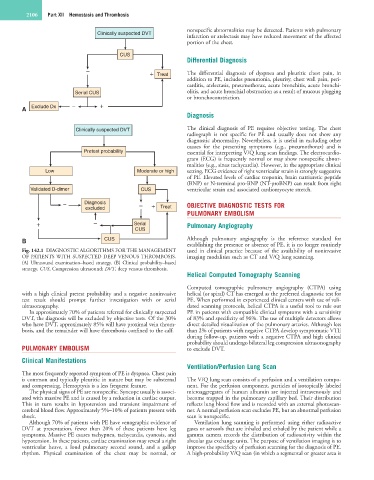
        Fig. 142.1  DIAGNOSTIC ALGORITHMS FOR THE MANAGEMENT   used  in  clinical  practice  because  of  the  availability  of  noninvasive
        OF PATIENTS WITH SUSPECTED DEEP VENOUS THROMBOSIS.    imaging modalities such as CT and V/Q lung scanning.
        (A) Ultrasound examination–based strategy. (B) Clinical probability–based
        strategy. CUS, Compression ultrasound; DVT, deep venous thrombosis.
                                                              Helical Computed Tomography Scanning

                                                              Computed  tomographic  pulmonary  angiography  (CTPA)  using
        with a high clinical pretest probability and a negative noninvasive   helical (or spiral) CT has emerged as the preferred diagnostic test for
        test  result  should  prompt  further  investigation  with  or  serial    PE. When performed in experienced clinical centers with use of vali-
        ultrasonography.                                      dated scanning protocols, helical CTPA is a useful tool to rule out
           In approximately 70% of patients referred for clinically suspected   PE in patients with compatible clinical symptoms with a sensitivity
        DVT, the diagnosis will be excluded by objective tests. Of the 30%   of 83% and specificity of 96%. The use of multiple detectors allows
        who have DVT, approximately 85% will have proximal vein throm-  direct detailed visualization of the pulmonary arteries. Although less
        bosis, and the remainder will have thrombosis confined to the calf.  than 2% of patients with negative CTPA develop symptomatic VTE
                                                              during follow-up, patients with a negative CTPA and high clinical
                                                              probability should undergo bilateral leg compression ultrasonography
        PULMONARY EMBOLISM                                    to exclude DVT.

        Clinical Manifestations
                                                              Ventilation/Perfusion Lung Scan
        The most frequently reported symptom of PE is dyspnea. Chest pain
        is common and typically pleuritic in nature but may be substernal   The V/Q lung scan consists of a perfusion and a ventilation compo-
        and compressing. Hemoptysis is a less frequent feature.  nent. For the perfusion component, particles of isotopically labeled
           The physical signs of PE are nonspecific. Syncope usually is associ-  microaggregates  of  human  albumin  are  injected  intravenously  and
        ated with massive PE and is caused by a reduction in cardiac output.   become trapped in the pulmonary capillary bed. Their distribution
        This  in  turn  results  in  hypotension  and  transient  impairment  of   reflects lung blood flow and is recorded with an external photoscan-
        cerebral blood flow. Approximately 5%–10% of patients present with   ner. A normal perfusion scan excludes PE, but an abnormal perfusion
        shock.                                                scan is nonspecific.
           Although 70% of patients with PE have venographic evidence of   Ventilation lung scanning is performed using either radioactive
        DVT  at  presentation,  fewer  than  20%  of  these  patients  have  leg   gases or aerosols that are inhaled and exhaled by the patient while a
        symptoms. Massive PE causes tachypnea, tachycardia, cyanosis, and   gamma camera records the distribution of radioactivity within the
        hypotension. In these patients, cardiac examination may reveal a right   alveolar gas exchange units. The purpose of ventilation imaging is to
        ventricular  heave,  a  loud  pulmonary  second  sound,  and  a  gallop   improve the specificity of perfusion scanning for the diagnosis of PE.
        rhythm.  Physical  examination  of  the  chest  may  be  normal,  or   A high-probability V/Q scan (in which a segmental or greater area is

