


Page 2392 - Hematology_ Basic Principles and Practice ( PDFDrive )
P. 2392
2134   Part XII  Hemostasis and Thrombosis


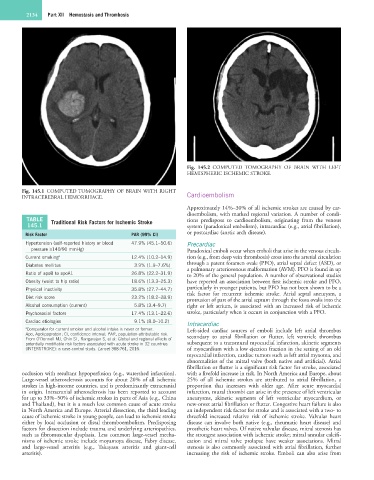
                                                              Fig.  145.2  COMPUTED  TOMOGRAPHY  OF  BRAIN  WITH  LEFT
                                                              HEMISPHERIC ISCHEMIC STROKE.

        Fig. 145.1  COMPUTED TOMOGRAPHY OF BRAIN WITH RIGHT
        INTRACEREBRAL HEMORRHAGE.                             Cardioembolism
                                                              Approximately 14%–30% of all ischemic strokes are caused by car-
                                                              dioembolism, with marked regional variation. A number of condi-
          TABLE   Traditional Risk Factors for Ischemic Stroke  tions  predispose  to  cardioembolism,  originating  from  the  venous
          145.1                                               system (paradoxical embolism), intracardiac (e.g., atrial fibrillation),
         Risk Factor                        PAR (99% CI)      or postcardiac (aortic arch disease).
         Hypertension (self-reported history or blood   47.9% (45.1–50.6)  Precardiac
           pressure ≥140/90 mmHg)                             Paradoxical emboli occur when emboli that arise in the venous circula-
         Current smoking a                  12.4% (10.2–14.9)  tion (e.g., from deep vein thrombosis) cross into the arterial circulation
         Diabetes mellitus                   3.9% (1.9–7.6%)  through a patent foramen ovale (PFO), atrial septal defect (ASD), or
                                                              a pulmonary arteriovenous malformation (AVM). PFO is found in up
         Ratio of apoB to apoA1             26.8% (22.2–31.9)  to 20% of the general population. A number of observational studies
         Obesity (waist to hip ratio)       18.6% (13.3–25.3)  have reported an association between first ischemic stroke and PFO,
         Physical inactivity                35.8% (27.7–44.7)  particularly in younger patients, but PFO has not been shown to be a
                                                              risk  factor  for  recurrent  ischemic  stroke.  Atrial  septal  aneurysm,  a
         Diet risk score                    23.2% (18.2–28.9)  protrusion of part of the atrial septum through the fossa ovalis into the
         Alcohol consumption (current)       5.8% (3.4–9.7)   right or left atrium, is associated with an increased risk of ischemic
         Psychosocial factors               17.4% (13.1–22.6)  stroke, particularly when it occurs in conjunction with a PFO.
         Cardiac etiologies                  9.1% (8.0–10.2)  Intracardiac
         a Comparator for current smoker and alcohol intake is never or former.  Left-sided  cardiac  sources  of  emboli  include  left  atrial  thrombus
         Apo, Apolipoprotein; CI, confidence interval; PAR, population-attributable risk.  secondary  to  atrial  fibrillation  or  flutter,  left  ventricle  thrombus
         From O’Donnell MJ, Chin SL, Rangarajan S, et al: Global and regional effects of
         potentially modifiable risk factors associated with acute stroke in 32 countries   subsequent to a transmural myocardial infarction, akinetic segments
         (INTERSTROKE): a case-control study. Lancet 388:761, 2016.  of myocardium with a low ejection fraction in the setting of an old
                                                              myocardial infarction, cardiac tumors such as left atrial myxoma, and
                                                              abnormalities of the mitral valve (both native and artificial). Atrial
                                                              fibrillation or flutter is a significant risk factor for stroke, associated
        occlusion with resultant hypoperfusion (e.g., watershed infarction).   with a fivefold increase in risk. In North America and Europe, about
        Large-vessel atherosclerosis accounts for about 20% of all ischemic   25%  of  all  ischemic  strokes  are  attributed  to  atrial  fibrillation,  a
        strokes in high-income countries, and is predominantly extracranial   proportion  that  increases  with  older  age.  After  acute  myocardial
        in origin. Intracranial atherosclerosis has been reported to account   infarction, mural thrombi can arise in the presence of left ventricular
        for up to 33%–50% of ischemic strokes in parts of Asia (e.g., China   aneurysms,  akinetic  segments  of  left  ventricular  myocardium,  or
        and Thailand), but it is a much less common cause of acute stroke   new-onset atrial fibrillation or flutter. Congestive heart failure is also
        in North America and Europe. Arterial dissection, the third leading   an independent risk factor for stroke and is associated with a two- to
        cause of ischemic stroke in young people, can lead to ischemic stroke   threefold  increased  relative  risk  of  ischemic  stroke.  Valvular  heart
        either by local occlusion or distal  thromboembolism. Predisposing   disease can involve both native (e.g., rheumatic heart disease) and
        factors for dissection include trauma and underlying arteriopathies,   prosthetic heart valves. Of native valvular disease, mitral stenosis has
        such  as  fibromuscular  dysplasia.  Less  common  large-vessel  mecha-  the strongest association with ischemic stroke; mitral annular calcifi-
        nisms of ischemic stroke include moyamoya disease, Fabry disease,   cation  and  mitral  valve  prolapse  have  weaker  associations.  Mitral
        and  large-vessel  arteritis  (e.g.,  Takayasu  arteritis  and  giant-cell   stenosis is also commonly associated with atrial fibrillation, further
        arteritis).                                           increasing  the  risk  of  ischemic  stroke.  Emboli  can  also  arise  from

