


Page 287 - Hematology_ Basic Principles and Practice ( PDFDrive )
P. 287
238    Part III  Immunologic Basis of Hematology


                                                              incorporation of an additional intracellular signaling domain derived
                                                              from costimulatory molecules, such as CD28 or 4-1BB, into second-
                                                              generation CARs augmented CAR-T-cell activation and antitumor
                                        Antigen               efficacy, and third-generation CARs include signaling domains from
                                        recognition           two  costimulatory  receptors.  Currently,  most  CARs  adhere  to  the
                                                              second-generation model. Which intracellular costimulatory domains
                                                              will work best in CARs and how many costimulatory domains are
                                                              required  for  optimal  T-cell  activation  and  antitumor  efficacy  are
                                                              under active investigation. Other outstanding questions in the bio-
                                        Transmembrane         chemistry of CARs concern the optimal number of functional ITAMs
                                        domain                present in ζ chain domains and the length and composition of the
                                                              transmembrane hinge domain and interdomain junctions. Defining
                                                              the  biochemistry  and  signal  transduction  of  CARs  should  permit
                                        Co-stimulatory        broadening its use to more common malignancies.
                                        domain
                                                                 The  examples  presented  here  are  only  a  small  subset  of  novel
                                                              approaches in use or being tested to modulate immune cell function
                                                              based upon our understanding of the molecular basis of T-cell activa-
                                        CD3  chain            tion. It is anticipated that as more is learned about the molecules and
                                                              pathways critical for control of T cell–mediated immunity, additional
                                                              new  agents  with  greater  efficacy  and  improved  safety  profiles  will
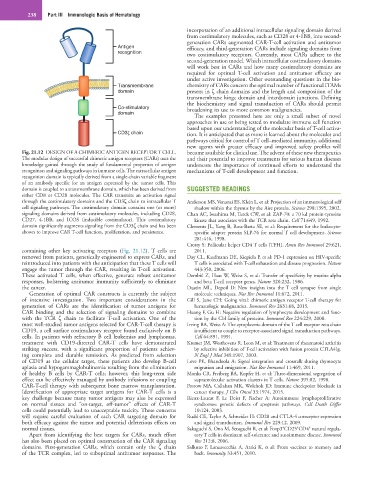
        Fig. 21.12  DESIGN OF A CHIMERIC ANTIGEN RECEPTOR T CELL.     become available for clinical use. The advent of these new therapeutics
        The modular design of successful chimeric antigen receptors (CARs) uses the   and their potential to improve treatments for serious human diseases
        knowledge gained through the study of fundamental properties of antigen   underscore  the  importance  of  continued  efforts  to  understand  the
        recognition and signaling pathways in immune cells. The extracellular antigen   mechanisms of T-cell development and function.
        recognition domain is typically derived from a single-chain variable fragment
        of  an  antibody  specific  for  an  antigen  expressed  by  the  tumor  cells. This
        domain is coupled to a transmembrane domain, which has been derived from   SUGGESTED READINGS
        either  CD8  or  CD28  molecules. The  CAR  transmits  an  activation  signal
        through the costimulatory domains and the CD3ζ chain to intracellular T   Anderson MS, Venanzi ES, Klein L, et al: Projection of an immunological self
        cell signaling pathways. The costimulatory domain contains one (or more)   shadow within the thymus by the Aire protein. Science 298:1395, 2002.
        signaling domains derived from costimulatory molecules, including CD28,   Chan AC, Iwashima M, Turck CW, et al: ZAP-70: a 70 kd protein-tyrosine
        CD27,  4-1BB,  and  ICOS  (inducible  costimulator).  This  costimulatory   kinase that associates with the TCR zeta chain. Cell 71:649, 1992.
        domain significantly augments signaling from the CD3ζ chain and has been   Clements JL, Yang B, Ross-Barta SE, et al: Requirement for the leukocyte-
        shown to improve CAR T-cell function, proliferation, and persistence.   specific adapter protein SLP-76 for normal T cell development. Science
                                                                 281:416, 1998.
                                                              Crotty S: Follicular helper CD4 T cells (TFH). Annu Rev Immunol 29:621,
        containing  other  key  activating  receptors  (Fig.  21.12). T  cells  are   2011.
        removed from patients, genetically engineered to express CARs, and   Day CL, Kaufmann DE, Kiepiela P, et al: PD-1 expression on HIV-specific
        reintroduced into patients with the anticipation that these T cells will   T cells is associated with T-cell exhaustion and disease progression. Nature
        engage the tumor through the CAR, resulting in T-cell activation.   443:350, 2006.
        These  activated T  cells,  when  effective,  generate  robust  antitumor   Dembić Z, Haas W, Weiss S, et al: Transfer of specificity by murine alpha
        responses,  bolstering  antitumor  immunity  sufficiently  to  eliminate     and beta T-cell receptor genes. Nature 320:232, 1986.
        the cancer.                                           Dustin  ML,  Depoil  D:  New  insights  into  the T  cell  synapse  from  single
           Generation  of  optimal  CAR  constructs  is  currently  the  subject   molecule techniques. Nat Rev Immunol 11:672, 2011.
        of  intensive  investigation.  Two  important  considerations  in  the   Gill S, June CH: Going viral: chimeric antigen receptor T-cell therapy for
        generation  of  CARs  are  the  identification  of  tumor  antigens  for   hematologic malignancies. Immunol Rev 2631:68, 2015.
        CAR  binding  and  the  selection  of  signaling  domains  to  combine   Huang F, Gu H: Negative regulation of lymphocyte development and func-
        with  the  TCR  ζ  chain  to  facilitate  T-cell  activation.  One  of  the   tion by the Cbl family of proteins. Immunol Rev 224:229, 2008.
        most well-studied tumor antigens selected for CAR-T-cell therapy is   Irving BA, Weiss A: The cytoplasmic domain of the T cell receptor zeta chain
        CD19, a cell surface costimulatory receptor found exclusively on B   is sufficient to couple to receptor-associated signal transduction pathways.
        cells. In patients with refractory B cell leukemias and lymphomas,   Cell 64:891, 1991.
        treatment  with  CD19-directed  CAR-T  cells  have  demonstrated   Kremer JM, Westhovens R, Leon M, et al: Treatment of rheumatoid arthritis
        striking  success,  with  a  significant  proportion  of  patients  achiev-  by selective inhibition of T-cell activation with fusion protein CTLA4Ig.
        ing  complete  and  durable  remission.  As  predicted  from  selection   N Engl J Med 349:1907, 2003.
        of  CD19  as  the  cellular  target,  these  patients  also  develop  B-cell   Love PE, Bhandoola A: Signal integration and crosstalk during thymocyte
        aplasia and hypogammaglobulinemia resulting from the elimination   migration and emigration. Nat Rev Immunol 11:469, 2011.
        of  healthy  B  cells  by  CAR-T  cells;  however,  this  long-term  side   Monks CR, Freiberg BA, Kupfer H, et al: Three-dimensional segregation of
        effect can be effectively managed by antibody infusions or coupling   supramolecular activation clusters in T cells. Nature 395:82, 1998.
        CAR-T-cell therapy with subsequent bone marrow transplantation.   Postow MA, Callahan MK, Wolchok JD: Immune checkpoint blockade in
        Identification  of  appropriate  target  antigens  for  CAR-T  cells  is  a   cancer therapy. J Clin Oncol 33:1974, 2015.
        key challenge because many tumor antigens may also be expressed   Rieux-Laucat  F,  Le  Deist  F,  Fischer  A:  Autoimmune  lymphoproliferative
        on  normal  tissues  and  “on-target,  off-tumor”  effects  of  CAR-T   syndromes:  genetic  defects  of  apoptosis  pathways.  Cell  Death  Differ
        cells could potentially lead to unacceptable toxicity. These concerns   10:124, 2003.
        will  require  careful  evaluation  of  each  CAR  targeting  domain  for   Rudd CE, Taylor A, Schneider H: CD28 and CTLA-4 coreceptor expression
        both efficacy against the tumor and potential deleterious effects on     and signal transduction. Immunol Rev 229:12, 2009.
                                                                                                      +
                                                                                             +
                                                                                                  +
        normal tissues.                                       Sakaguchi S, Ono M, Setoguchi R, et al: Foxp3 CD25 CD4  natural regula-
           Apart  from  identifying  the  best  targets  for  CARs,  much  effort   tory T cells in dominant self-tolerance and autoimmune disease. Immunol
        has also been placed on optimal construction of the CAR signaling   Rev 212:8, 2006.
        domains.  First-generation  CARs,  which  contain  only  the  ζ  chain   Sallusto  F,  Lanzavecchia  A,  Araki  K,  et al:  From  vaccines  to  memory  and
        of the TCR complex, led to suboptimal antitumor responses. The   back. Immunity 33:451, 2010.

