


Page 290 - Hematology_ Basic Principles and Practice ( PDFDrive )
P. 290
Chapter 22  Natural Killer Cell Immunity  241


                         CD56
                 CD16                      CD16    CD56
                                                       IL-2R αβγ
                                IL-2R αβγ
            c-kit   CD56 bright               CD56 dim                      NK cell                   NK cell
                     NK cell                   NK cell
                               L-selectin
                                                                  Activating       Inhibitory  Activating     Inhibitory
            CD94/NKG2A                KIR                          receptor        receptor   receptor        receptor
                                              ADCC
                                          natural cytotoxicity                      HLA class I
                         IFN-γ, TNF-α,                            Activating        ligand   Activating
                         GM-CSF, IL-10                              ligand                     ligand
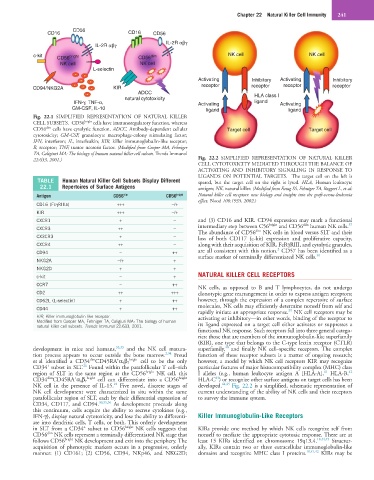
            Fig.  22.1  SIMPLIFIED  REPRESENTATION  OF  NATURAL  KILLER
            CELL SUBSETS.  CD56 bright  cells have immunoregulatory function, whereas
                dim
            CD56  cells have cytolytic function. ADCC, Antibody-dependent cellular   Target cell      Target cell
            cytotoxicity;  GM-CSF,  granulocyte  macrophage-colony  stimulating  factor;
            IFN, interferon; IL, interleukin; KIR, killer immunoglobulin-like receptor;
            R, receptor; TNF, tumor necrosis factor. (Modified from Cooper MA, Fehniger
            TA, Caligiuri MA: The biology of human natural killer cell subsets. Trends Immunol
            22:633, 2001.)                                        Fig.  22.2  SIMPLIFIED  REPRESENTATION  OF  NATURAL  KILLER
                                                                  CELL CYTOTOXICITY MEDIATED THROUGH THE BALANCE OF
                                                                  ACTIVATING  AND  INHIBITORY  SIGNALING  IN  RESPONSE  TO
                                                                  LIGANDS  ON  POTENTIAL TARGETS.   The  target  cell  on  the  left  is
             TABLE   Human Natural Killer Cell Subsets Display Different   spared,  but  the  target  cell  on  the  right  is  lysed.  HLA,  Human  leukocyte
              22.1   Repertoires of Surface Antigens              antigen; NK, natural killer. (Modified from Farag SS, Fehniger TA, Ruggeri L, et al:
             Antigen                  CD56 dim         CD56 bright  Natural killer cell receptors: new biology and insights into the graft-versus-leukemia
                                                                  effect. Blood 100:1935, 2002.)
             CD16 (FcγRIIIa)           +++               −/+
             KIR                       +++               −/+
             CXCR1                      +                 −       and (3) CD16 and KIR. CD94 expression may mark a functional
                                                                                         bright
                                                                                                    dim
                                                                                                                   37
             CXCR3                      ++                −       intermediary step between C56   and CD56  human NK cells.
                                                                                     dim
                                                                  The abundance of CD56  NK cells in blood versus SLT and their
             CX3CR3                     +                 −       loss  of  both  CD117  (c-kit)  expression  and  proliferative  capacity,
             CXCR4                      ++                −       along with their acquisition of KIR, FcRγRIII, and cytolytic granules,
                                                                                            2
             CD94                       −                ++       are all consistent with this notion.  CD57 has been identified as a
                                                                                                         38
             NKG2A                     −/+                +       surface marker of terminally differentiated NK cells.
             NKG2D                      +                 +
             c-kit                      −                 +       NATURAL KILLER CELL RECEPTORS
             CCR7                       −                ++       NK  cells,  as  opposed  to  B  and  T  lymphocytes,  do  not  undergo
             CD2                        ++               +++      clonotypic gene rearrangement in order to express antigen receptors;
             CD62L (L-selectin)         +                ++       however, through the expression of a complex repertoire of surface
             CD44                       +                ++       molecules, NK cells may efficiently determine nonself from self and
                                                                                               39
                                                                  rapidly initiate an appropriate response.  NK cell receptors may be
             KIR, Killer immunoglobulin-like receptor.            activating or inhibitory—in other words, binding of the receptor to
             Modified from Cooper MA, Fehniger TA, Caligiuri MA: The biology of human   its ligand expressed on a target cell either activates or suppresses a
             natural killer cell subsets. Trends Immunol 22:633, 2001.
                                                                  functional NK response. Such receptors fall into three general catego-
                                                                  ries: those that are members of the immunoglobulin-like superfamily
                                                                  (KIR), one type that belongs to the C-type lectin receptor (CTLR)
                                                                           40
            development  in  mice  and  humans, 32,33   and  the  NK  cell  matura-  superfamily,   and  finally  NK  cell–specific  receptors. The  complex
            tion  process  appears  to  occur  outside  the  bone  marrow. 2,34   Freud   function of these receptor subsets is a matter of ongoing research;
                              dim      +   bright
            et al  identified  a  CD34 CD45RA α 4 β 7    cell  to  be  the  only   however, a model by which NK cell receptors KIR may recognize
                 +
                            26
            CD34  subset in SLT.  Found within the parafollicular T cell–rich   particular features of major histocompatibility complex (MHC) class
                                                                                                           41
                                                                                                                   42
            region  of  SLT  in  the  same  region  as  the  CD56 bright   NK  cell,  this   I  alleles  (e.g.,  human  leukocyte  antigen  A  [HLA-A],   HLA-B,
                 dim     +   bright                         bright      43
            CD34 CD45RA α 4 β 7    cell  can  differentiate  into  a  CD56     HLA-C ) or recognize other surface antigens on target cells has been
                                      22
            NK  cell  in  the  presence  of  IL-15.   Five  novel,  discrete  stages  of   developed. 44,45  Fig. 22.2 is a simplified, schematic representation of
            NK  cell  development  were  characterized  in  situ  within  the  same   current understanding of the ability of NK cells and their receptors
            parafollicular region of SLT, each by their differential expression of   to survey the immune system.
            CD34,  CD117,  and  CD94. 30,35,36   As  development  proceeds  along
            this  continuum,  cells  acquire  the  ability  to  secrete  cytokines  (e.g.,
            IFN-γ), display natural cytotoxicity, and lose the ability to differenti-  Killer Immunoglobulin-Like Receptors
            ate into dendritic cells, T cells, or both. This orderly development
                            +
            in SLT from a CD34  subset to CD56 bright  NK cells suggests that   KIRs  provide  one  method  by  which  NK  cells  recognize  self  from
                 dim
            CD56  NK cells represent a terminally differentiated NK stage that   nonself to mediate the appropriate cytotoxic response. There are at
            follows CD56 bright  NK development and exit into the periphery. The   least  15  KIRs  identified  on  chromosome  19q13.4. 18,44,45   Structur-
            acquisition  of  phenotypic  markers  occurs  in  a  progressive,  orderly   ally,  KIRs  contain  two  or  three  extracellular  immunoglobulin-like
            manner:  (1)  CD161;  (2)  CD56,  CD94,  NKp46,  and  NKG2D;   domains  and  recognize  MHC  class  I  proteins. 18,41,42   KIRs  may  be

