


Page 294 - Hematology_ Basic Principles and Practice ( PDFDrive )
P. 294
Chapter 22  Natural Killer Cell Immunity  245


                     Donor                      Donor                       Donor                     Donor
                     NK cell                    NK cell                    NK cell                    NK cell

                             Inhibitory                 Inhibitory
            Activating       KIR2DL1  Activating        KIR2DL1   Activating        Inhibitory  Activating    Inhibitory
             receptor        (group 2  receptor         (group 2   receptor         receptor  receptor        receptor
                             specific)                  specific)                                             Anti-KIR
                                                                                                              antibody
            Activating       HLA-Cw4  Activating        HLA-Cw3   Activating        HLA-C    Activating
              ligand         (group 2)   ligand         (group 1)   ligand                     ligand         HLA-C

                      Host                       Host                        Host                       Host
                     leukemic                   leukemic                    leukemic                   leukemic
                      blast                      blast                       blast                      blast


                    Resistance                Susceptibility
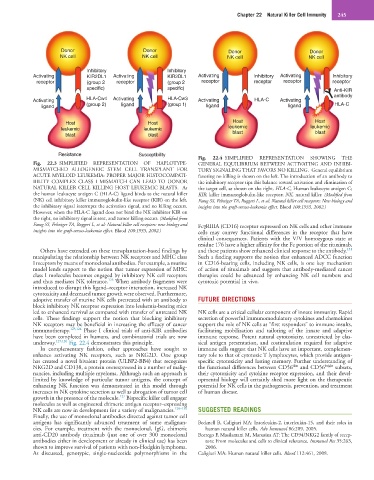
                                                                  Fig.   22.4  SIMPLIFIED  REPRESENTATION  SHOWING  THE
            Fig.  22.3  SIMPLIFIED  REPRESENTATION  OF  HAPLOTYPE-  GENERAL  EQUILIBRIUM  BETWEEN  ACTIVATING  AND  INHIBI-
            MISMATCHED  ALLOGENEIC  STEM  CELL  TRANSPLANT  FOR   TORY SIGNALING THAT FAVORS NO KILLING.  General equilibrium
            ACUTE MYELOID LEUKEMIA: PROPER MAJOR HISTOCOMPATI-    favoring no killing is shown on the left. The introduction of an antibody to
            BILITY  COMPLEX  CLASS  I  MISMATCH  CAN  LEAD TO  DONOR   the inhibitory receptor tips this balance toward activation and elimination of
            NATURAL KILLER CELL KILLING HOST LEUKEMIC BLASTS.  As   the target cell, as shown on the right. HLA-C, Human leukocyte antigen C;
            the human leukocyte antigen C (HLA-C) ligand binds to the natural killer   KIR, killer immunoglobulin-like receptor; NK, natural killer. (Modified from
            (NK) cell inhibitory killer immunoglobulin-like receptor (KIR) on the left,   Farag SS, Fehniger TA, Ruggeri L, et al: Natural killer cell receptors: New biology and
            the inhibitory signal interrupts the activation signal, and no killing occurs.   insights into the graft-versus-leukemia effect. Blood 100:1935, 2002.)
            However, when the HLA-C ligand does not bind the NK inhibitor KIR on
            the right, no inhibitory signal is sent, and tumor killing occurs. (Modified from
            Farag SS, Fehniger TA, Ruggeri L, et al: Natural killer cell receptors: new biology and   FcγRIIIA (CD16) receptor expressed on NK cells and other immune
            insights into the graft-versus-leukemia effect. Blood 100:1935, 2002.)  cells  may  convey  functional  differences  in  the  receptor  that  have
                                                                  clinical  consequences.  Patients  with  the  V/V  homozygous  state  at
                                                                  residue 176 have a higher affinity for the Fc portion of the rituximab,
                                                                                                                  131
              Others have extended on these transplantation-based findings by   and these patients show enhanced clinical response to the antibody.
            manipulating the relationship between NK receptors and MHC class   Such a finding supports the notion that enhanced ADCC function
            I receptors by means of monoclonal antibodies. For example, a murine   in CD16-bearing cells, including NK cells, is one key mechanism
            model lends support to the notion that tumor expression of MHC   of action of rituximab and suggests that antibody-mediated cancer
            class I molecules becomes engaged by inhibitory NK cell receptors   therapies  could  be  advanced  by  enhancing  NK  cell  numbers  and
                                    123
            and thus mediates NK tolerance.  When antibody fragments were   cytotoxic potential in vivo.
            introduced to disrupt this ligand–receptor interaction, increased NK
            cytotoxicity and decreased tumor growth were observed. Furthermore,
            adoptive transfer of murine NK cells pretreated with an antibody to   FUTURE DIRECTIONS
            block inhibitory NK receptor expression into leukemia-bearing mice
            led to enhanced survival as compared with transfer of untreated NK   NK cells are a critical cellular component of innate immunity. Rapid
            cells.  These  findings  support  the  notion  that  blocking  inhibitory   secretion of powerful immunomodulatory cytokines and chemokines
            NK receptors may be beneficial in increasing the efficacy of cancer   support the role of NK cells as “first responders” to immune insults,
            immunotherapy. 123,124   Phase  I  clinical  trials  of  anti-KIR  antibodies   facilitating  mobilization  and  tailoring  of  the  innate  and  adaptive
            have been completed in humans, and combinatorial trials are now   immune response. Potent natural cytotoxicity, unrestricted by clas-
            underway. 125,126  Fig. 22.4 demonstrates this principle.  sical antigen presentation, and costimulation required for adaptive
              In  complementary  fashion,  other  approaches  have  sought  to   immune cells suggest that NK cells have an important, complemen-
            enhance  activating  NK  receptors,  such  as  NKG2D.  One  group   tary role to that of cytotoxic T lymphocytes, which provide antigen-
            has created a novel bivalent protein (ULBP2-BB4) that recognizes   specific cytotoxicity and lasting memory. Further understanding of
                                                                                                 dim
            NKG2D and CD138, a protein overexpressed in a number of malig-  the functional differences between CD56  and CD56 bright  subsets,
            nancies, including multiple myeloma. Although such an approach is   their cytotoxicity and cytokine receptor expression, and their devel-
            limited by knowledge of particular tumor antigens, the concept of   opmental biology will certainly shed more light on the therapeutic
            enhancing  NK  function  was  demonstrated  in  this  model  through   potential for NK cells in the pathogenesis, prevention, and treatment
            increases in NK cytokine secretion as well as abrogation of tumor cell   of human disease.
                                        127
            growth in the presence of the molecule.  Bispecific killer cell engager
            molecules as well as engineered chimeric antigen receptor–expressing
            NK cells are now in development for a variety of malignancies. 128–130    SUGGESTED READINGS
            Finally, the use of monoclonal antibodies directed against tumor cell
            antigens  has  significantly  advanced  treatment  of  some  malignan-  Becknell B, Caligiuri MA: Interleukin-2, interleukin-15, and their roles in
            cies.  For  example,  treatment  with  the  monoclonal,  IgG,  chimeric   human natural killer cells. Adv Immunol 86:209, 2005.
            anti-CD20  antibody  rituximab  (just  one  of  over  300  monoclonal   Borrego F, Masilamani M, Marusina AT: The CD94/NKG2 family of recep-
            antibodies either in development or already in clinical use) has been   tors: From molecules and cells to clinical relevance. Immunol Res 35:263,
            shown to improve survival of patients with non-Hodgkin lymphoma.   2006.
            As  discussed,  genotypic,  single-nucleotide  polymorphisms  in  the   Caligiuri MA: Human natural killer cells. Blood 112:461, 2008.

