


Page 577 - Hematology_ Basic Principles and Practice ( PDFDrive )
P. 577
492    Part V  Red Blood Cells


          TABLE   Suspected Causes of Anemia of Chronic Disease  with RA show increased levels of IL-6 and TNF-α. Experimentally,
          37.1                                                transgenic mice with endogenous elevations in IFN-ɣ show increased
                                                              expression of the proleukocyte, anti-RBC transcription factor PU.1
         Shortened erythrocyte survival                       in hematopoietic precursors and diminished BFU-E. Causality is also
         Block in reuse of iron by erythrocyte                suggested by the multiple trials of cytokine antagonists in inflamma-
         Direct inhibition of erythropoiesis                  tory diseases that have shown a decrease in anemia. In patients with
                                                              Crohn disease, treatment  with  anti-TNF-α therapy was associated
         Relative deficiency of erythropoietin                with improvement in disease activity and in anemia. In vitro, anti-
                                                              TNF-α therapy increased the growth of erythroid progenitor cells
                                                              obtained from the peripheral blood of patients with active disease.
                              Cytokines
                                                              Cytokine-Induced Decreases in Red Blood
                                                              Cell Survival


                   ↑ Hepcidin            ↓ EPO and ↓ response  The underlying mechanism for the reduction in RBC life span in
                                              to EPO          ACD is not fully elucidated, but studies support the absence of an
                                                              intrinsic red cell defect. Alterations in RBC rheology (deformability
                                           ↓ Proliferation of  and aggregation) are seen in intensive care unit patients, especially
             ↓ Iron       ↑ Iron retention    erythron        those with sepsis. In vivo and in vitro experiments suggest that fever
           absorbtion      in the RES      ↓ Red cell half-life  itself  can  induce  rheologic  changes  in  RBCs,  leading  to  increased
                                                              destruction  and  up  to  a  15%  decline  in  RBC  mass.  Rats  treated
                                                              with  chronic  sublethal  doses  of TNF  had  a  25%  decline  in  total
                                                              RBC mass. The study also demonstrated a simultaneous decrease in
                ↓ Iron availability in                        RBC survival. This effect may be secondary to increased cytokines
                  the erythron                                e.g., IL-1 in RA patients, that enhance the RBC-phagocytic ability
                                                              of macrophages.

                              Anemia                          Cytokine-Induced Abnormalities in Iron Metabolism
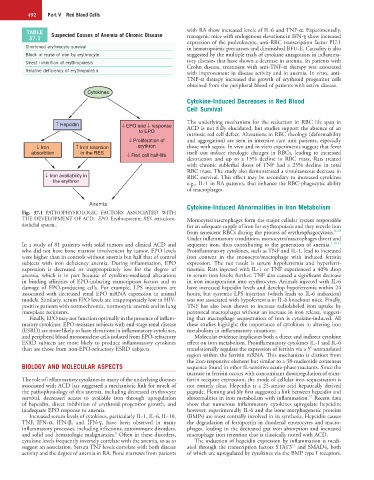
        Fig.  37.1  PATHOPHYSIOLOGIC  FACTORS  ASSOCIATED  WITH
        THE DEVELOPMENT OF ACD.  EPO, Erythropoietin; RES, reticuloen-  Monocytes/macrophages form the major cellular system responsible
        dothelial system,.                                    for an adequate supply of iron for erythropoiesis and they recycle iron
                                                              from senescent RBCs during the process of erythrophagocytosis. 8–10
                                                              Under inflammatory conditions, monocytes/macrophages divert and
        In a study of 81 patients with solid tumors and clinical ACD and   sequester iron, thus contributing to the generation of anemia. 1,10,11
        who did not have bone marrow involvement by tumor, EPO levels   Proinflammatory cytokines, such as TNF and IL-1, lead to increased
        were higher than in controls without anemia but half that of control   iron  content  in  the  monocyte/macrophage  with  induced  ferritin
        subjects  with  iron  deficiency  anemia.  During  inflammation,  EPO   expression.  The  net  result  is  serum  hypoferremia  and  hyperferri-
        expression  is  decreased  or  inappropriately  low  for  the  degree  of   tinemia. Rats injected with IL-1 or TNF experienced a 40% drop
        anemia,  which  is  in  part  because  of  cytokine-mediated  alterations   in serum iron levels; further, TNF also caused a significant decrease
        in  binding  affinities  of  EPO-inducing  transcription  factors  and  to   in iron incorporation into erythrocytes. Animals injected with IL-6
        damage  of  EPO-producing  cells.  For  example,  LPS  injections  are   have increased hepcidin levels and develop hypoferremia within 24
        associated  with  decreased  renal  EPO  mRNA  expression  in  animal   hours, but systemic LPS injection (which leads to IL-6 induction)
        models. Similarly, serum EPO levels are inappropriately low in HIV-  was not associated with hypoferremia in IL-6 knockout mice. Finally,
        positive patients with normochromic, normocytic anemia and in lung   TNF has also been shown to increase radiolabeled iron uptake by
        transplant recipients.                                peritoneal macrophages without an increase in iron release, suggest-
           Finally, EPO may not function optimally in the presence of inflam-  ing that macrophage sequestration of iron is cytokine-induced. All
        matory cytokines. EPO-resistant subjects with end-stage renal disease   these studies highlight the importance of cytokines in altering iron
        (ESRD) are more likely to have elevations in inflammatory cytokines,   metabolism in inflammatory situations.
        and peripheral blood mononuclear cells isolated from EPO-refractory   Molecular evidence implicates both a direct and indirect cytokine
        ESRD subjects are more likely to produce inflammatory cytokines   effect on iron metabolism. Proinflammatory cytokines IL-1 and IL-6
        than are those from non-EPO-refractory ESRD subjects.  translationally regulate the expression of ferritin via a 5′ untranslated
                                                              region within the ferritin mRNA. This mechanism is distinct from
                                                              the iron-responsive element but similar to a 38-nucleotide consensus
        BIOLOGY AND MOLECULAR ASPECTS                         sequence found in other IL-sensitive acute-phase reactants. Since the
                                                              increase in ferritin occurs with concomitant downregulation of trans-
        The role of inflammatory cytokines in many of the underlying diseases   ferrin receptor expression, the mode of cellular iron sequestration is
        associated with ACD has suggested a mechanistic link for much of   not entirely clear. Hepcidin is a 25-amino acid hepatically derived
        the pathophysiology of this anemia, including decreased erythrocyte   peptide. Fleming and Sly first suggested a link between hepcidin and
                                                                                                      12
        survival,  decreased  access  to  available  iron  through  upregulation   abnormalities in iron metabolism with inflammation.  Recent data
        of  hepcidin,  direct  inhibition  of  erythroid  progenitor  growth,  and   show  that  numerous  inflammatory  cytokines  upregulate  hepcidin;
        inadequate EPO response to anemia.                    however, experimentally IL-6 and the bone morphogenetic proteins
           Increased serum levels of cytokines, particularly IL-1, IL-6, IL-10,   (BMPs) are most centrally involved in its synthesis. Hepcidin causes
        TNF,  IFN-α,  IFN-β,  and  IFN-ɣ,  have  been  observed  in  many   the degradation of ferroportin in duodenal enterocytes and macro-
        inflammatory processes, including infections, autoimmune disorders,   phages, leading to the decreased gut iron absorption and increased
                                       8
        and solid and hematologic malignancies.  Often in these disorders,   macrophage iron retention that is classically noted with ACD.
        cytokine levels frequently inversely correlate with the anemia, so as to   The induction of hepcidin expression by inflammation is medi-
                                                                                                13
        suggest an association. Serum TNF levels correlate with both disease   ated through the transcription factors STAT3  and SMAD4, both
        activity and the degree of anemia in RA. Bone marrows from patients   of which are upregulated by cytokines via the BMP type I receptors.

