


Page 1201 - Williams Hematology ( PDFDrive )
P. 1201
1176           Part IX:  Lymphocytes and Plasma Cells                                                                                              Chapter 76:  Functions of T Lymphocytes: T-cell Receptors for Antigen         1177


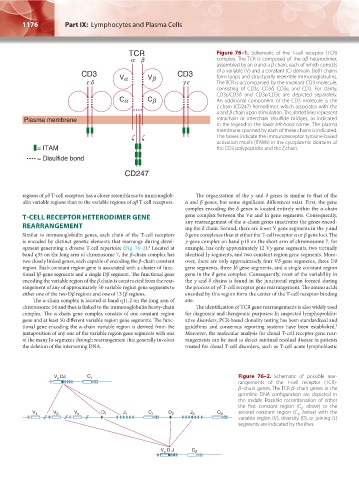
                                                                                 Figure 76–1.  Schematic of the  T-cell receptor (TCR)
                                                                                 complex. The TCR is composed of the αβ heterodimer,
                                                                                 assembled by an α and a β chain, each of which consists
                                                                                 of a variable (V) and a constant (C) domain. Both chains
                                                                                 form loops and structurally resemble immunoglobulins.
                                                                                 The TCR is accompanied by the invariant CD3 molecule,
                                                                                 consisting of CD3ε, CD3δ, CD3γ, and CD3. For clarity,
                                                                                 CD3ε/CD3δ and CD3γ/CD3ε are depicted separately.
                                                                                 An additional component of the CD3 molecule is the
                                                                                 ζ chain (CD247) homodimer, which associates with the
                                                                                 α and β chain upon stimulation. The dotted lines represent
                                                                                 intrachain or interchain disulfide bridges, as indicated
                                                                                 in the legend in the lower left-hand corner. The plasma
                                                                                 membrane spanned by each of these chains is indicated.
                                                                                 The boxes indicate the immunoreceptor tyrosine-based
                                                                                 activation motifs (ITAMs) in the cytoplasmic domains of
                                                                                 the CD3 polypeptides and the ζ chain.


               regions of γδ T-cell receptors has a closer resemblance to immunoglob-  The organization of the γ and δ genes is similar to that of the
               ulin variable regions than to the variable regions of αβ T-cell receptors.  α and β genes, but some significant differences exist. First, the gene
                                                                      complex encoding the δ genes is located entirely within the α-chain
               T-CELL RECEPTOR HETERODIMER GENE                       gene complex between the Vα and Jα gene segments. Consequently,
                                                                      any rearrangement of the α-chain genes inactivates the genes encod-
               REARRANGEMENT                                          ing the δ chain. Second, there are fewer V gene segments in the γ and
               Similar to immunoglobulin genes, each chain of the T-cell receptors   δ gene complexes than at either the T-cell receptor α or β gene loci. The
               is encoded by distinct genetic elements that rearrange during devel-  γ-gene complex on band p15 on the short arm of chromosome 7, for
               opment generating a diverse T-cell repertoire (Fig. 76–2).  Located at   example, has only approximately 12 Vγ gene segments, two virtually
                                                          4
               band q35 on the long arm of chromosome 7, the β-chain complex has   identical Jγ segments, and two constant region gene segments. More-
               two closely linked genes, each capable of encoding the β-chain constant   over, there are only approximately four Vδ gene segments, three Dδ
               region. Each constant region gene is associated with a cluster of func-  gene segments, three Jδ gene segments, and a single constant region
               tional Jβ-gene segments and a single Dβ segment. The functional gene   gene in the δ gene complex. Consequently, most of the variability in
               encoding the variable region of the β chain is constructed from the rear-  the γ and δ chains is found in the junctional region formed during
               rangement of any of approximately 50 variable region gene segments to   the process of γδ T-cell receptor gene rearrangement. The amino acids
               either one of the two Dβ regions and one of 13 Jβ regions.  encoded by this region form the center of the T-cell receptor-binding
                   The α-chain complex is located at band q11.2 on the long arm of   site.
               chromosome 14 and thus is linked to the immunoglobulin heavy-chain   The identification of TCR gene rearrangements is also widely used
               complex. The  α-chain gene complex consists of one constant region   for diagnostic and therapeutic purposes: In suspected lymphoprolifer-
               gene and at least 50 different variable region gene segments. The func-  ative disorders, PCR-based clonality testing has been standardized and
               tional gene encoding the α-chain variable region is derived from the   guidelines and consensus reporting systems have been established.
                                                                                                                        5
               juxtaposition of any one of the variable region gene segments with one   Moreover, the molecular analysis for clonal T-cell receptor gene rear-
               of the many Jα segments through rearrangement that generally involves   rangements can be used to detect minimal residual disease in patients
               the deletion of the intervening DNA.                   treated for clonal T-cell disorders, such as T-cell acute lymphoblastic


                          V DJ       C 1                                                Figure 76–2.  Schematic of possible rear-
                           y
                                                                                        rangements of the  T-cell receptor (TCR)-
                                                                                        β–chain genes. The TCR-β–chain genes in the
                                                                                        germline DNA configuration are depicted in
                                                                                        the  middle. Possible recombination of either
                                                                                        the first constant region (C ,  above) or the
                                                                                                             1
                   V 1    V 2    V n      D 1    J 1      C 1   D 2     J 2      C 2    second constant region (C ,  below) with the
                                                                                                            2
                                                                                        variable region (V), diversity (D), or joining (J)
                                                                                        segments are indicated by the lines.


                                                              V D J     C 2
                                                               x


          Kaushansky_chapter 76_p1175-1188.indd   1176                                                                  9/17/15   4:00 PM

