


Page 1319 - Williams Hematology ( PDFDrive )
P. 1319
1294           Part X:  Malignant Myeloid Diseases                                                                                                                                       Chapter 84:  Polycythemia Vera          1295


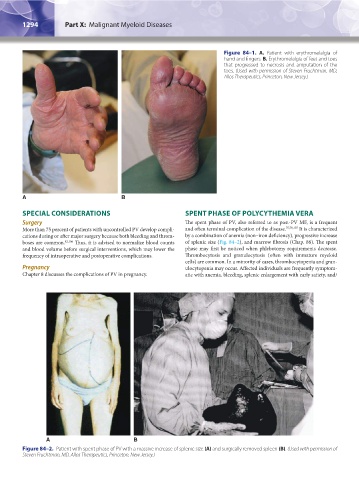
                                                                                   Figure 84–1.  A.  Patient  with erythromelalgia  of
                                                                                   hand and fingers. B. Erythromelalgia of feet and toes
                                                                                   that progressed to necrosis and amputation of the
                                                                                   toes. (Used with permission of Steven Fruchtman, MD,
                                                                                   Allos Therapeutics, Princeton, New Jersey.)


               A                                 B

               SPECIAL CONSIDERATIONS                                 SPENT PHASE OF POLYCYTHEMIA VERA
               Surgery                                                The spent phase of PV, also referred to as post-PV MF, is a frequent
               More than 75 percent of patients with uncontrolled PV develop compli-  and often terminal complication of the disease. 75,78,107  It is characterized
               cations during or after major surgery because both bleeding and throm-  by a combination of anemia (non–iron deficiency), progressive increase
               boses are common. 82,106  Thus, it is advised to normalize blood counts   of splenic size (Fig. 84–2), and marrow fibrosis (Chap. 86). The spent
               and blood volume before surgical interventions, which may lower the   phase may first be noticed when phlebotomy requirements decrease.
               frequency of intraoperative and postoperative complications.  Thrombocytosis and granulocytosis (often with immature myeloid
                                                                      cells) are common. In a minority of cases, thrombocytopenia and gran-
               Pregnancy                                              ulocytopenia may occur. Affected individuals are frequently symptom-
               Chapter 8 discusses the complications of PV in pregnancy.  atic with anemia, bleeding, splenic enlargement with early satiety, and/


                       A                             B
               Figure 84–2.  Patient with spent phase of PV with a massive increase of splenic size (A) and surgically removed spleen (B). (Used with permission of
               Steven Fruchtman, MD, Allos Therapeutics, Princeton, New Jersey.)


          Kaushansky_chapter 84_p1291-1306.indd   1294                                                                  9/21/15   11:10 AM

