


Page 1399 - Williams Hematology ( PDFDrive )
P. 1399
1374           Part X:  Malignant Myeloid Diseases                                                                                                                           Chapter 88:  Acute Myelogenous Leukemia             1375


               identification of individual chromosomes and the point at which they   TABLE 88–1.  Conditions Predisposing to Development of
               break in the formation of a translocation, inversion, or deletion. This
               technologic advance unleashed the power of cancer cytogenetics and   Acute Myelogenous Leukemia
               initiated an era of leukemia study based not solely on the appearance   Environmental factors
               of cells under the microscope (phenotype) but also by their chromoso-    Radiation 14,15
                                            8
               mal or genetic abnormality (genotype).  The completion of the human     Benzene 16–18
               genome project further enhanced the specificity of the identification of      Alkylating agents, topoisomerase II inhibitors, and other
                           9
               gene  alterations.   These  advances  permitted  (1)  more  precise  under-  cytotoxic drugs 20–22
               standing of the molecular pathology of specific leukemia subtypes,      Tobacco smoke 19,24,25
               (2) improvement of diagnostic and prognostic methods for the study    Acquired diseases
               of AML, and (3) identification of molecular targets for therapy.
                   The introduction to the clinic by Holland, Ellison, and colleagues      Clonal myeloid diseases
                                                                 10

               of arabinosyl cytosine (cytarabine) in the late 1960s as the first potent        Chronic myelogenous leukemias (CML, CMML, CNL, etc.) (Chap. 89)
               drug for treatment of AML, followed by their introduction of the com-      Primary myelofibrosis (Chap. 86)
               bination of 7 days of cytosine arabinoside and 3 days of daunorubicin       Essential thrombocythemia (Chap. 85)
               in the early 1970s (the “7 plus 3 regimen”)  opened the era of effective       Polycythemia vera (Chap. 84)
                                              11
               therapy for AML. This drug combination or its congeners remains the       Clonal cytopenias (Chap. 87)
               mainstay of treatment over 4 decades later.  The description of alloge-      Oligoblastic myelogenous leukemia(Chap.87)
                                              12
               neic marrow (stem cell) transplantation as a curative therapy for AML       Paroxysmal nocturnal hemoglobinuria (Chap. 40)
                                  13
               by Thomas and colleagues  in 1977 ushered in the era of hematopoietic   Other hematopoietic disorders
               stem cell (HSC) transplantation as a modality to cure eligible patients
               with AML.                                                 Aplastic anemia (Chap. 35)
                                                                         Eosinophilic fasciitis (Chap. 87)
                                                                         Myeloma (Chap. 107) 31,32
                  ETIOLOGY AND PATHOGENESIS                            Other disorders
                                                                         Human immunodeficiency virus infection 32
               ENVIRONMENTAL FACTORS                                     Langerhans cell histiocytosis 33,34
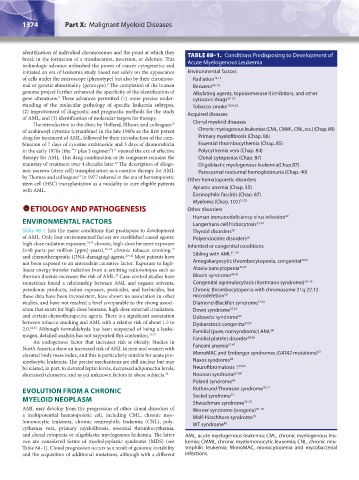
               Table 88–1 lists the major conditions that predispose to development     Thyroid disorders 35
               of AML. Only four environmental factors are established causal agents:     Polyendocrine disorders 36
               high-dose radiation exposure, 14,15  chronic, high-dose benzene exposure   Inherited or congenital conditions
               (≥40 parts per million [ppm]-years), 16–18  chronic tobacco smoking,    37–39
                                                                 19
               and chemotherapeutic (DNA-damaging) agents. 20–22  Most patients have     Sibling with AML
               not been exposed to an antecedent causative factor. Exposure to high-    Amegakaryocytic thrombocytopenia, congenital 40,41
               linear energy transfer radiation from α-emitting radioisotopes such as     Ataxia-pancytopenia 42,43
               thorium dioxide increases the risk of AML.  Case-control studies have     Bloom syndrome 44,45
                                               23
               sometimes found a relationship between AML and organic solvents,     Congenital agranulocytosis (Kostmann syndrome) 46–49
               petroleum  products,  radon  exposure, pesticides,  and herbicides,  but      Chronic thrombocytopenia with chromosome 21q 22.12
               these data have been inconsistent, have shown no association in other   microdeletion 50
               studies, and have not reached a level comparable to the strong associ-    Diamond-Blackfan syndrome 51,52
               ation that exists for high-dose benzene, high-dose external irradiation,     Down syndrome 53,54
               and certain chemotherapeutic agents. There is a significant association     Dubowitz syndrome 55
               between tobacco smoking and AML with a relative risk of about 1.5 to     Dyskeratosis congenita 56,57
               2.0. 24,25  Although formaldehyde has been suspected of being a leuke-    Familial (pure, nonsyndromic) AML 58
               mogen, detailed analysis has not supported this contention. 26,27           59,60
                   An endogenous factor that increases risk is obesity. Studies in     Familial platelet disorder
                                                                                    61,62
               North America show an increased risk of AML in men and women with     Fanconi anemia
               elevated body mass index, and this is particularly notable for acute pro-    MonoMAC and Emberger syndromes (GATA2 mutations) 63
               myelocytic leukemia. The precise mechanisms are still unclear but may     Naxos syndrome 64
               be related, in part, to elevated leptin levels, decreased adiponectin levels,     Neurofibromatosis 1 65,66
               shortened telomeres, and as yet unknown factors in obese subjects. 28    Noonan syndrome 67,68
                                                                         Poland syndrome 69
               EVOLUTION FROM A CHRONIC                                  Rothmund-Thomson syndrome 70,71
                                                                                     72
               MYELOID NEOPLASM                                          Seckel syndrome  73–75
                                                                         Shwachman syndrome
               AML may develop from the progression of other clonal disorders of     Werner syndrome (progeria) 76–78
               a multipotential hematopoietic cell, including CML, chronic mye-    Wolf-Hirschhorn syndrome 79
               lomonocytic  leukemia,  chronic  neutrophilic  leukemia  (CNL),  poly-    WT syndrome 80
               cythemia vera, primary myelofibrosis, essential thrombocythemia,
               and clonal cytopenia or oligoblastic myelogenous leukemia. The latter   AML, acute myelogenous leukemia; CML, chronic myelogenous leu-
               two are considered forms of myelodysplastic syndrome (MDS) (see   kemia; CMML, chronic myelomonocytic leukemia; CNL, chronic neu-
               Table  88–1). Clonal progression occurs as a result of genomic instability   trophilic leukemia; MonoMAC, monocytopenia and mycobacterial
               and the acquisition of additional mutations, although with a different   infections.


          Kaushansky_chapter 88_p1373-1436.indd   1374                                                                  9/21/15   11:00 AM

