


Page 1545 - Williams Hematology ( PDFDrive )
P. 1545
1520           Part XI:  Malignant Lymphoid Diseases                                                                                                                        Chapter 91:  Acute Lymphoblastic Leukemia            1521


                                                                      women, a low marital rate. Many children with profound deficien-
                                                                      cies of growth hormone receive hormone replacement therapy, which
                                                                      permits attainment of acceptable final heights without an increased
                                                                      chance of relapse. 270
                                                                          The most devastating complication is the development of brain
                                                                      tumors and therapy-related myeloid leukemia. 271,272  Children who
                                                                      undergo cranial irradiation at age 6 years or younger are most suscepti-
                                                                      ble to development of brain tumors.  Intensive use of antimetabolites
                                                                                                273
                                                                      before and during cranial irradiation also increases the risk of brain
                                                                      tumor.  The median latency period for high-grade brain tumors
                                                                           177
                                                                      is 9 years; it is 20 years for low-grade tumors (e.g., meningioma). 266,273
                                                                          Therapy-related myeloid leukemia has been linked to intensive
                                                                      treatment with epipodophyllotoxins (teniposide and etoposide). The
                                                                      risk of disease depends on treatment schedule, concomitant use of
                                                                      other agents (e.g.,  l-asparaginase, alkylating agents, perhaps antime-
                                                                      tabolites), and host pharmacogenetics. 176,274  The long-term survival rate
                                                                      for patients with this complication is very low, even when the patients
                                                                      undergo allogeneic stem cell transplantation. No evidence indicates an
                                                                      increased incidence of cancer or birth defects among the offspring of
                                                                      adult survivors of childhood ALL. 275,276
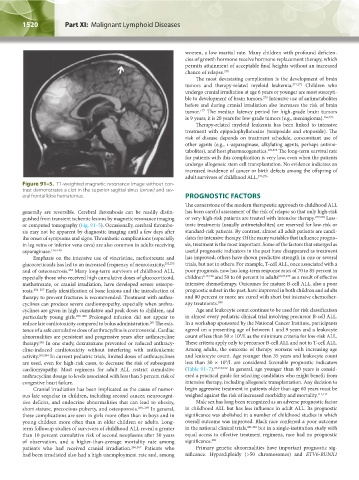
               Figure 91–5.  T1-weighted magnetic resonance image without con-
               trast demonstrates a clot in the superior sagittal sinus (arrow) and sev-
               eral frontal lobe hematomas.                           PROGNOSTIC FACTORS
                                                                      The cornerstone of the modern therapeutic approach to childhood ALL
               generally are reversible. Cerebral thrombosis can be readily distin-  has been careful assessment of the risk of relapse so that only high-risk
               guished from transient ischemic lesions by magnetic resonance imaging   or very-high-risk patients are treated with intensive therapy. 277,278  Less-
               or computed tomography (Fig. 91–5). Occasionally, cerebral thrombo-  toxic treatments (usually antimetabolites) are reserved for low-risk or
               sis may not be apparent by diagnostic imaging until a few days after   standard-risk patients. By contrast, almost all adult patients are candi-
               the onset of symptoms and signs. Thrombotic complications (especially   dates for intensive therapy. Of the many variables that influence progno-
               in leg veins or inferior vena cava) are also common in adults receiving   sis, treatment is the most important. Some of the factors that emerged as
               asparaginase. 136–140                                  useful prognostic indicators in the past have disappeared as treatment
                   Emphasis on  the intensive  use of vincristine, methotrexate and   has improved; others have shown predictive strength in one or several
               glucocorticoids has led to an increased frequency of neurotoxicity, 252,253    trials, but not in others. For example, T-cell ALL, once associated with a
               and of osteonecrosis.  Many long-term survivors of childhood ALL,   poor prognosis, now has long-term response rates of 70 to 85 percent in
                               254
               especially those who received high cumulative doses of glucocorticoid,   children 2,17,190  and 50 to 60 percent in adults 66,67,279  as a result of effective
               methotrexate, or cranial irradiation, have developed severe osteopo-  intensive chemotherapy. Outcomes for mature B-cell ALL, also a poor
               rosis. 254–257  Early identification of bone lesions and the introduction of   prognostic subset in the past, have improved in both children and adults
               therapy to prevent fractures is recommended. Treatment with anthra-  and 80 percent or more are cured with short but intensive chemother-
               cyclines can produce severe cardiomyopathy, especially when anthra-  apy treatments. 280
               cyclines are given in high cumulative and peak doses to children, and   Age and leukocyte count continue to be used for risk classification
               particularly young girls. 258–260  Prolonged infusion did not appear to   in almost every pediatric clinical trial involving precursor B-cell ALL.
               reduce late cardiotoxicity compared to bolus administration.  The exis-  In a workshop sponsored by the National Cancer Institute, participants
                                                          261
               tence of a safe cumulative dose of anthracycline is controversial. Cardiac   agreed on a presenting age of between 1 and 9 years and a leukocyte
               abnormalities are persistent and progressive years after anthracycline   count of less than 50 × 10 /L as the minimum criteria for low-risk ALL.
                                                                                        9
               therapy.  In one study, dexrazoxane prevented or reduced anthracy-  These criteria apply only to precursor B-cell ALL and not to T-cell ALL.
                     262
               cline-induced cardiotoxicity without interfering with antileukemic   Among  adults,  the outcome  of  therapy  worsens  with  increasing  age
               activity. 263,264  In current pediatric trials, limited doses of anthracyclines   and leukocyte count. Age younger than 35 years and leukocyte count
               are used, even for high-risk cases, to decrease the risk of subsequent   less than 30 × 10 /L are considered favorable prognostic indicators
                                                                                   9
               cardiomyopathy. Most regimens for adult ALL restrict cumulative   (Table 91–7). 67,150,152  In general, age younger than 60 years is consid-
               anthracycline dosage to levels associated with less than 5 percent risk of   ered a practical guide for selecting candidates who might benefit from
               congestive heart failure.                              intensive therapy, including allogeneic transplantation. Any decision to
                   Cranial irradiation has been implicated as the cause of numer-  begin aggressive treatment in patients older than age 60 years must be
               ous late sequelae in children, including second cancer, neurocogni-  weighed against the risk of increased morbidity and mortality. 111,112
               tive deficits, and endocrine abnormalities that can lead to obesity,   Male sex has long been recognized as an adverse prognostic factor
               short stature, precocious puberty, and osteoporosis. 265–269  In general,   in childhood ALL but has less influence in adult ALL. Its prognostic
               these complications are seen in girls more often than in boys and in   significance was abolished in a number of childhood studies in which
               young children more often than in older children or adults. Long-  overall outcome was improved. Black race conferred a poor outcome
               term followup studies of survivors of childhood ALL reveal a greater   in the national clinical trials, 281,282  but in a single-institution study with
               than 10 percent cumulative risk of second neoplasms after 30 years   equal access to effective treatment regimens, race had no prognostic
               of observation, and a higher-than-average mortality rate among   significance. 283
               patients who had received cranial irradiation. 266,267  Patients who   Primary genetic abnormalities have important prognostic sig-
               had been irradiated also had a high unemployment rate and, among   nificance. Hyperdiploidy (>50 chromosomes) and  ETV6-RUNX1


          Kaushansky_chapter 91_p1505-1526.indd   1520                                                                  9/21/15   12:20 PM

