


Page 1659 - Williams Hematology ( PDFDrive )
P. 1659
1634           Part XI:  Malignant Lymphoid Diseases                                                                                                     Chapter 98:  Diffuse Large B-Cell Lymphoma and Related Diseases         1635


                                                                      LYMPHOMA DURING PREGNANCY
                  100
                                                                      Lymphoma is the fourth most frequent malignancy diagnosed during
                                                                      pregnancy, occurring in approximately 1 in 6000 deliveries.  Reports
                                                                                                                 110
                                                                      of therapeutic interventions in pregnant patients with lymphoma are
                                                                      limited, and management recommendations are largely based on small
                  75                                                  retrospective studies and case reports. Both radiation therapy and che-
                                                   Germinal center    motherapy during pregnancy are potentially teratogenic. Fetal exposure
                                                       B cell         to antineoplastic agents may result in impaired growth, diminished
                 Survival, percent  50                                ductive function, mutagenesis of germline tissue, and carcinogenesis.
                                                                      neurologic and/or intellectual function, decreased gonadal and repro-
                                                                                                                       111
                                                                      The risks of treatment to the fetus are greatest during the first trimester
                                                                      and therapeutic abortion is a consideration under these circumstances.
                                                                      CHOP during the second and third trimesters may be administered rel-
                                                                      atively safely with little risk of significant adverse fetal outcomes. 112,113
                                                                      The prognosis of patients who receive optimal chemotherapy is similar
                                           Activated                                         114
                  25                         B cell                   to that of nonpregnant patients.
                                                                          Only a few cases of rituximab administration during pregnancy
                                                                      have been reported, most of them for the treatment of nonmalignant
                                                                      disorders such as autoimmune diseases. Patients with supradiaphrag-
                        P = 0.01                                      matic stage I disease may be considered for localized radiotherapy as
                   0                                                  a temporary measure until the second trimester, when chemotherapy
                                                                                          115
                     0              4             8              12   holds less risk for the fetus.  Patients in the second or third trimester
                                         Years                        should be treated with full-dose chemotherapy.
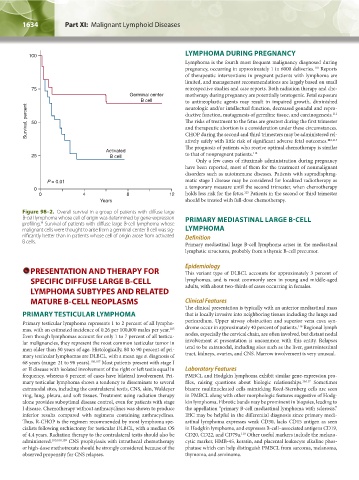
               Figure 98–2.  Overall survival in a group of patients with diffuse large
               B-cell lymphoma whose cell of origin was determined by gene-expression   PRIMARY MEDIASTINAL LARGE B-CELL
                     14
               profiling.  Survival of patients with diffuse large B-cell lymphoma whose
               malignant cells were thought to arise from a germinal center B cell was sig-  LYMPHOMA
               nificantly better than in patients whose cell of origin arose from activated   Definition
               B cells.                                               Primary mediastinal large B-cell lymphoma arises in the mediastinal
                                                                      lymphatic structures, probably from a thymic B-cell precursor.


                    PRESENTATION AND THERAPY FOR                      Epidemiology
                                                                      This variant type of DLBCL accounts for approximately 3 percent of
                  SPECIFIC DIFFUSE LARGE B-CELL                       lymphomas, and is most commonly seen in young and middle-aged
                  LYMPHOMA SUBTYPES AND RELATED                       adults, with about two-thirds of cases occurring in females.
                  MATURE B-CELL NEOPLASMS                             Clinical Features
                                                                      The clinical presentation is typically with an anterior mediastinal mass
               PRIMARY TESTICULAR LYMPHOMA                            that is locally invasive into neighboring tissues including the lungs and
               Primary testicular lymphoma represents 1 to 2 percent of all lympho-  pericardium. Upper airway obstruction and superior vena cava syn-
                                                                                                            116
                                                                 105
               mas, with an estimated incidence of 0.26 per 100,000 males per year.    drome occur in approximately 40 percent of patients.  Regional lymph
               Even though lymphomas account for only 1 to 7 percent of all testicu-  nodes, especially the cervical chain, are often involved, but distant nodal
               lar malignancies, they represent the most common testicular tumor in   involvement at presentation is uncommon with this entity. Relapses
               men older than 50 years of age. Histologically, 80 to 90 percent of pri-  tend to be extranodal, including sites such as the liver, gastrointestinal
               mary testicular lymphomas are DLBCL, with a mean age at diagnosis of     tract, kidneys, ovaries, and CNS. Marrow involvement is very unusual.
               68 years (range: 21 to 98 years). 106,107  Most patients present with stage I
               or II disease with isolated involvement of the right or left testis equal in   Laboratory Features
               frequency, whereas 6 percent of cases have bilateral involvement. Pri-  PMBCL and Hodgkin lymphoma exhibit similar gene-expression pro-
               mary testicular lymphoma shows a tendency to disseminate to several   files,  raising questions about biologic relationships. 16,117  Sometimes
               extranodal sites, including the contralateral testis, CNS, skin, Waldeyer   bizarre multinucleated cells mimicking Reed-Sternberg cells are seen
               ring, lung, pleura, and soft tissues. Treatment using radiation therapy   in PMBCL along with other morphologic features suggestive of Hodg-
               alone provides suboptimal disease control, even for patients with stage   kin lymphoma. Fibrotic bands may be prominent in biopsies, leading to
               I disease. Chemotherapy without anthracyclines was shown to produce   the appellation “primary B-cell mediastinal lymphoma with sclerosis.”
               inferior results compared with regimens containing anthracyclines.   IHC may be helpful in the differential diagnosis since primary medi-
               Thus, R-CHOP is the regimen recommended by most lymphoma spe-  astinal lymphoma expresses weak CD30, lacks CD15 antigen as seen
               cialists following orchiectomy for testicular DLBCL, with a median OS   in Hodgkin lymphoma, and expresses B-cell–associated antigens CD19,
                                                                                         118
               of 4.4 years. Radiation therapy to the contralateral testis should also be   CD20, CD22, and CD79a.  Other useful markers include the melano-
               administered. 105,108,109  CNS prophylaxis with intrathecal chemotherapy   cytic marker, HMB-45, keratin, and placental leukocyte alkaline phos-
               or high-dose methotrexate should be strongly considered because of the   phatase which can help distinguish PMBCL from sarcoma, melanoma,
               observed propensity for CNS relapses.                  thymoma, and seminoma.


          Kaushansky_chapter 98_p1625-1640.indd   1634                                                                  9/18/15   11:42 PM

