


Page 1835 - Williams Hematology ( PDFDrive )
P. 1835
1810           Part XI:  Malignant Lymphoid Diseases                                                                                                                                 Chapter 110:  Heavy-Chain Disease           1811


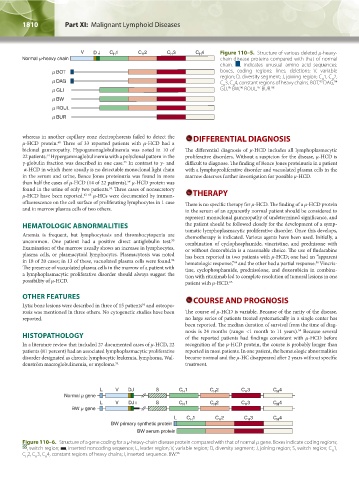
                                                                                  Figure 110–5.  Structure of various deleted μ-heavy-
                      -                                                           chain disease proteins compared with that of normal
                                                                                  chain.   , indicates unusual amino acid sequences;
                                                                                  boxes, coding regions; lines, deletions;  V, variable
                                                                                  region; D, diversity segment; J, joining region; C 1, C 2,
                                                                                                                       H
                                                                                                                    H
                                                                                                                        94
                                                                                  C 3, C 4, constant regions of heavy chains. BOT,  DAG,
                                                                                                                   93
                                                                                   H
                                                                                      H
                                                                                              97
                                                                                        96
                                                                                    95
                                                                                  GLI,  BW,  ROUL,  BUR. 98
               whereas in another capillary zone electrophoresis failed to detect the   DIFFERENTIAL DIAGNOSIS
               μ-HCD protein.  Three of 33 reported patients with  μ-HCD had a
                           60
               biclonal gammopathy. Hypogammaglobulinemia was noted in 10 of     The differential diagnosis of  μ-HCD includes all lymphoplasmacytic
               22 patients.  Hypergammaglobulinemia with a polyclonal pattern in the    proliferative disorders. Without a suspicion for the disease, μ-HCD is
                        54
               γ-globulin fraction was described in one case.  In contrast to γ- and   difficult to diagnose. The finding of Bence Jones proteinuria in a patient
                                                 55
                α-HCD in which there usually is no detectable monoclonal light chain   with a lymphoproliferative disorder and vacuolated plasma cells in the
               in the serum and urine, Bence Jones proteinuria was found in more   marrow deserves further investigation for possible μ-HCD.
               than half the cases of μ-HCD (14 of 22 patients).  μ-HCD protein was
                                                   54
               found in the urine of only two patients.  Three cases of nonsecretory
                                             54
               μ-HCD have been reported. 61–63  μ-HCs were documented by immun-  THERAPY
               ofluorescence on the cell surface of proliferating lymphocytes in 1 case   There is no specific therapy for μ-HCD. The finding of a μ-HCD protein
               and in marrow plasma cells of two others.              in the serum of an apparently normal patient should be considered to
                                                                      represent monoclonal gammopathy of undetermined significance, and
               HEMATOLOGIC ABNORMALITIES                              the patient should be followed closely for the development of a symp-
               Anemia is frequent, but lymphocytosis and thrombocytopenia are   tomatic lymphoplasmacytic proliferative disorder. Once this develops,
                                                                      chemotherapy is indicated. Various agents have been used. Initially, a
               uncommon. One patient had a positive direct antiglobulin test.    combination of cyclophosphamide, vincristine, and prednisone with
                                                                 55
               Examination of the marrow usually shows an increase in lymphocytes,   or without doxorubicin is a reasonable choice. The use of fludarabine
               plasma cells, or plasmacytoid lymphocytes. Plasmacytosis was noted   has been reported in two patients with μ-HCD; one had an “apparent
               in 18 of 20 cases; in 13 of these, vacuolated plasma cells were found.    hematologic response,”  and the other had a partial response.  Vincris-
                                                                 54
                                                                                                                  56
                                                                                      64
               The presence of vacuolated plasma cells in the marrow of a patient with   tine, cyclophosphamide, prednisolone, and doxorubicin in combina-
               a lymphoplasmacytic proliferative disorder should always suggest the   tion with rituximab led to complete resolution of tumoral lesions in one
               possibility of μ-HCD.                                  patient with μ-HCD. 65
               OTHER FEATURES                                            COURSE AND PROGNOSIS
               Lytic bone lesions were described in three of 15 patients  and osteopo-
                                                        54
               rosis was mentioned in three others. No cytogenetic studies have been   The course of μ-HCD is variable. Because of the rarity of the disease,
               reported.                                              no large series of patients treated systematically in a single center has
                                                                      been reported. The median duration of survival from the time of diag-
                                                                      nosis is 24 months (range: <1 month to 11 years).  Because several
                                                                                                            54
               HISTOPATHOLOGY                                         of the reported patients had findings consistent with  μ-HCD before
               In a literature review that included 27 documented cases of μ-HCD, 22   recognition of the μ-HCD protein, the course is probably longer than
               patients (81 percent) had an associated lymphoplasmacytic proliferative   reported in most patients. In one patient, the hematologic abnormalities
               disorder designated as chronic lymphocytic leukemia, lymphoma, Wal-  became normal and the μ-HC disappeared after 2 years without specific
               denström macroglobulinemia, or myeloma. 54             treatment.


               Figure 110–6.  Structure of a gene coding for a μ-heavy-chain disease protein compared with that of normal μ gene. Boxes indicate coding regions;
                 , switch region;   , inserted noncoding sequence; L, leader region; V, variable region; D, diversity segment; J, joining region; S, switch region; C 1,
                                                                                                                       H
               C 2, C 3, C 4, constant regions of heavy chains; I, inserted sequence. BW. 96
                H   H  H


          Kaushansky_chapter 110_p1803-1812.indd   1810                                                                 9/18/15   10:00 AM

