


Page 2307 - Williams Hematology ( PDFDrive )
P. 2307
2282           Part XII:  Hemostasis and Thrombosis                                                                                      Chapter 134:   Atherothrombosis: Disease Initiation, Progression, and Treatment         2283


                TABLE 134–1.  Cardiovascular Risk Factors That Cause   dysfunction are intimately connected and seminal to the initiation and
                                                                      progression of atherosclerosis. Endothelial dysfunction occurs early in
                Impaired Endothelium-Dependent Vasodilation
                                                                      the development of plaque and is systemic in nature, afflicting vessels
                Smoking                                               throughout the arterial circulation without gross evidence of atheroscle-
                Dyslipidemia                                          rotic plaque formation. Emerging data indicate that proatherosclerotic
                Hypertension                                          genes are upregulated and antiatherosclerotic genes are downregulated
                                                                                                                        21
                Diabetes mellitus                                     in areas of turbulent blood flow, as seen at branch points of arteries,
                                                                      resulting in vascular adhesion molecule expression and recruitment of
                Hyperhomocysteinemia
                                                                      monocytes.  The atherosclerotic plaque initially may expand outward
                                                                              22
                                                                      rather than inward into the vessel wall, making some significant lesions
                                                                      difficult to visualize by angiography. The components of the mature ath-
                   Cardiovascular morbidity and mortality is also recognized to be   erosclerotic lesion include smooth muscle cells, macrophages, T lym-
                                                                                                                        23
               exceedingly high in patients with chronic renal failure. 15,16  Increased   phocytes, and calcification, in addition to accumulation of lipoproteins.
               risk of premature atherosclerotic cardiovascular disease in patients   Neutrophils and mast cells also are implicated in the atherosclerotic
                                                                            22
               on chronic hemodialysis has been known for many years, but recent   process.  Later  in the process, increased  activity of  matrix metallo-
               studies point to an increased risk even at early stages of chronic kidney   proteinases in the atherosclerotic cap predisposes to plaque rupture or
               diseases. Low glomerular filtration rates and/or proteinuria are inde-  ulceration, resulting in tissue factor (TF) exposure and platelet adhe-
                                                                                                    24
               pendently associated with increased rates of cardiovascular disease.    sion, culminating in thrombus formation.  The thrombus may undergo
                                                                 17
               Other factors, such as sympathetic overactivity,  are likely to contribute   endogenous fibrinolysis with plaque healing or become occlusive and
                                                 18
               to the pathophysiology of cardiac risk in these patients. Among other   produce organ damage (e.g., myocardial infarction [MI]). In severe
               emerging risk factors is obstructive sleep apnea, in which treatment may   lesions, lamellar bone, presumably from endochondral calcification, may
                                                                           25
               improve cardiovascular outcomes. 19                    appear.  There is evolving evidence that extracellular vesicles (EVs), also
                                                                                                                        26
                                                                      known as microparticles, are involved in the atherosclerotic process.
                                                                      The following sections describe in detail the major manifestations of
               ENDOTHELIAL DYSFUNCTION                                endothelial dysfunction that occur early in the atherosclerotic process.
               Cardiovascular risk factors and abnormal blood rheology are thought
               to result in endothelial dysfunction that predisposes the aorta and arter-  Abnormal Vascular Tone
               ies to atherosclerotic plaque development, sparing the arterioles and   The importance of the endothelium in maintaining vascular tone
               capillaries (Fig. 134–1). Endothelial dysfunction is a term that encom-  was first recognized when endothelial cells of rabbit aorta were inad-
               passes perturbations in the diverse physiologic functions of normal   vertently removed and resulted in paradoxical vasoconstriction after
               arteries, including regulation of vascular tone, inflammation, growth,   administration of acetylcholine.  The major endothelium-dependent
                                                                                             27
               and preservation of blood fluidity. Lipid accumulation  and endothelial   vasodilator normally produced was found to be nitric oxide (NO), a free
                                                      20
                                                      Atherothrombosis: A generalized
                                                         and progressive process


                                                Fatty Intermediate    Fibrous Complicated Unstable
                                       Foam cells streak  lesion  Atheroma plaque lesion/rupture angina
                                                                                              ACS
                                                                                          MI

                                                                                           Ischemic
                                                                                          stroke/TIA

                                                                                          Acute limb
                                                                                          ischemia
                                        Clinically silent
                                                                      Stable angina   Cardiovascular
                                                   Increasing age  intermittent claudication   death


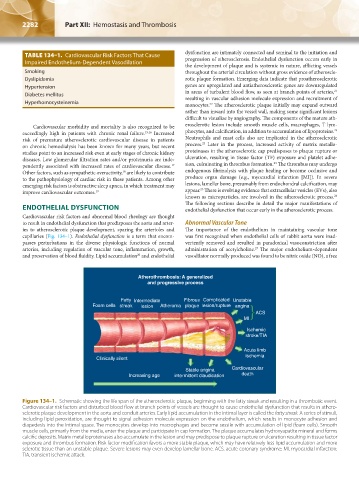
               Figure 134–1.  Schematic showing the life span of the atherosclerotic plaque, beginning with the fatty streak and resulting in a thrombotic event.
               Cardiovascular risk factors and disturbed blood flow at branch points of vessels are thought to cause endothelial dysfunction that results in athero-
               sclerotic plaque development in the aorta and conduit arteries. Early lipid accumulation in the intimal layer is called the fatty streak. A series of stimuli,
               including lipid peroxidation, are thought to signal adhesion molecule expression on the endothelium, which results in monocyte adhesion and
               diapedesis into the intimal space. The monocytes develop into macrophages and become sessile with accumulation of lipid (foam cells). Smooth
               muscle cells, primarily from the media, enter the plaque and participate in cap formation. The plaque accumulates hydroxyapatite mineral and forms
               calcific deposits. Matrix metalloproteinases also accumulate in the lesion and may predispose to plaque rupture or ulceration resulting in tissue factor
               exposure and thrombus formation. Risk factor modification favors a more stable plaque, which may have relatively less lipid accumulation and more
               sclerotic tissue than an unstable plaque. Severe lesions may even develop lamellar bone. ACS, acute coronary syndrome; MI, myocardial infarction;
               TIA, transient ischemic attack.


          Kaushansky_chapter 134_p2281-2302.indd   2282                                                                 17/09/15   3:49 pm

