


Page 2308 - Williams Hematology ( PDFDrive )
P. 2308
2282  Part XII:  Hemostasis and Thrombosis  Chapter 134:   Atherothrombosis: Disease Initiation, Progression, and Treatment  2283


                                                     28
                  radical gas with multiple physiologic properties,  including inhibition   NO availability.  The decreased vasodilatory capacity because of dyslip-
                                                                                   40
                  of platelet aggregation and inflammation and stimulation of angiogene-  idemia may facilitate the development of coronary ischemia.
                                                                                                                          41
                  sis. Numerous studies indicate that the endothelium does not vasodilate   Impaired endothelial vasodilation is noted with advanced aging,
                  appropriately in the setting of traditional and emerging cardiovascular   when the hands are exposed acutely to cold, and during mental stress.
                  risk factors. Cardiovascular risk factors are thought to reduce NO avail-  The impairment may be mediated by increased production of endothe-
                  ability through a variety of mechanisms, including increased oxidative   lin, a potent vasoconstrictor.  Sex differences are also seen in endothe-
                                                                                             42
                  stress, through generation of reactive oxygen species, and in so doing   lial function as women in middle age tend to have more endothelial
                                                                                                  43
                  create an environment conducive to development of atherosclerosis.    vasodilation than men at any age.  Proinflammatory cytokines may
                                                                    29
                  Major sources of reactive oxygen species are nicotinamide adenine   induce formation of endothelial-derived EVs making them a surrogate
                                                                                                  44
                  dinucleotide phosphate (NADPH) oxidases (NOXs). The catalytic sub-  marker for endothelial dysfunction  and a biomarker for cardiovascu-
                                                                                45
                  units of the NOXs are the NOX proteins and are found in atheroscle-  lar events.  Infection with concomitant inflammation is associated with
                           30
                  rotic lesions.  A reduction in NO synthesis is thought to occur because   impaired endothelial vasodilation. For example, repeated infection with
                  of decreased availability of tetrahydrobiopterin, an essential cofactor for   Chlamydia pneumoniae results in endothelial dysfunction via impaired
                  synthesis of NO.  Administration of sepiapterin, a substrate for tetrahy-  NO availability.  The combination of coronary artery disease and ele-
                                                                                    46
                             31
                  drobiopterin, improves endothelial dysfunction.  Also, recent evidence   vated serum levels of high-sensitivity C-reactive protein (hsCRP) is an
                                                    32
                  indicates that the transcription factor p53 and the adaptor protein Shc   independent predictor of abnormal endothelial vasoreactivity.  Exter-
                                                                                                                     47
                  both play essential roles in impairing endothelium-dependent vascu-  nal radiation therapy also results in endothelial dysfunction and may
                            33
                  lar relaxation.  High cholesterol levels are thought to produce oxygen   explain the increased risk of atherosclerosis in patients receiving mantle
                  free radicals that may inactivate NO. NO synthases are the enzymes   irradiation for Hodgkin lymphoma. 48
                  responsible for converting l-arginine to NO (Fig. 134–2) (Chap. 115).
                  The enzyme may be perturbed by modified low-density lipoprotein   Endothelial Inflammation
                  (LDL), resulting in decreased NO production. Supplementation of the   The endothelium does not routinely interact with inflammatory cells but
                  diet with  l-arginine leads to improvement in endothelial-dependent   is poised to express adhesion molecules after stimulation with inflam-
                  vasodilation.  Elevated levels of asymmetric dimethylarginine, an   matory mediators. An inflammatory response is thought to begin in the
                           34
                  endogenous competitive inhibitor of NO synthase, found in patients   vessel wall after “invasion” of pathogenic lipoproteins.  The presence of
                                                                                                               49
                  with hypercholesterolemia and diabetes, also may result in decreased   lipoproteins, especially oxidized LDL, results in expression of adhesion
                             35
                  NO availability.  Oxidized LDL is thought to increase the elaboration   molecules such as vascular cell adhesion molecule (VCAM)-1 on the
                  of asymmetric dimethylarginine by endothelial cells and decrease its   luminal surface of endothelial cells, leading to adherence of monocytes
                  degradation by the enzyme dimethylarginine dimethylaminohydro-  (Fig. 134–3).  Endothelial cell expression of adhesion molecules and
                                                                                  50
                     36
                  lase.  Administration of acetylcholine to patients with elevated serum   accumulation of monocytes can be regarded as endothelial dysfunction
                     37
                                                          38
                  LDL  and relatively low high-density lipoprotein (HDL)  may result in   because these events may occur in the absence of morphologic changes
                  abnormal vasoconstriction, which can be reversed with nitroglycerin   in the vessel wall. Inflammation may develop without the demonstrable
                                                  39
                  (an endothelium-independent vasodilator).  Intravenous infusion of   presence of an external microbial pathogen. It is now recognized that
                  HDL improves endothelial-mediated vasodilation through improved   diseases with inflammatory component such as psoriasis and systemic
                                                                        lupus erythematosus (SLE) confer an increased risk for atherosclerosis
                                                                              51
                                                                        and MI.  The complex interactions of inflammation and the endothe-
                                       sGC    ↑ cGMP      ↓ Platelet    lium on the initiation and progression of atherosclerosis are reviewed in
                                                             aggregation  more detail in “Inflammation and Atherosclerosis” below.
                                    Platelet
                                                                        Abnormal Control of Vascular Growth: Smooth Muscle Cells
                                      eNOS
                             L-Arginine      NO                         and Extracellular Matrix
                                                                        Normal  endothelium  inhibits  vascular  smooth muscle cell  prolifer-
                     Endothelium                                        ation.  The specific function of vascular smooth muscle cells in ath-
                                                                            52
                                                                        erosclerosis  is  unclear.  However,  evidence  indicates  that,  in  early
                                   Soluble guanylate cyclase (sGC)      atherosclerosis, vascular smooth muscle cells contribute to the develop-
                                                                        ment of atheroma through production of proinflammatory mediators
                          SMC              ↑ cGMP                       such as CC chemokine ligand (CCL)2 (previously termed monocyte che-
                                                                        moattractant protein, or MCP-1) and VCAMs. Although smooth mus-
                                                                        cle cells primarily play a role in modulating vascular tone, they also are
                                ↓ Tone    ↓ Growth  ↓ Migration
                                                                        involved in the control of extracellular matrix formation and degrada-
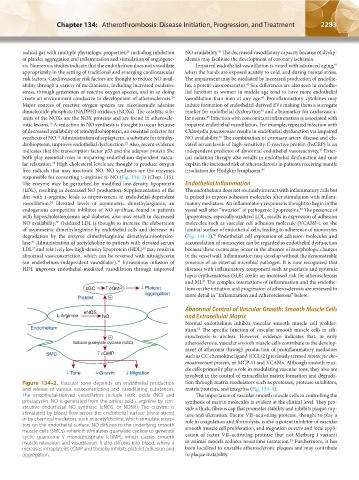
                  Figure 134–2.  Vascular tone depends on endothelial production   tion through matrix modulators such as proteases, protease inhibitors,
                  and release of various vasoconstricting and vasodilating substances.   matrix proteins, and integrins (Fig. 134–4).
                  The  endothelial-derived  vasodilators  include  nitric  oxide  (NO)  and   The importance of vascular smooth muscle cells in controlling the
                  prostacyclin. NO is generated from the amino acid  l-arginine by con-  synthesis of matrix molecules is evident at the clinical level. They pro-
                  stitutive endothelial NO synthase (eNOS, or NOSIII).  The enzyme is   vide a thick, fibrous cap that promotes stability and inhibits plaque rup-
                  stimulated by blood flow across the endothelial surface (shear stress)   ture and ulceration. Factor VII–activating protease, thought to play a
                  or by chemical mediators, such as acetylcholine, which stimulate recep-  role in coagulation and fibrinolysis, is also a potent inhibitor of vascular
                  tors on the endothelial surface. NO diffuses to the underlying smooth   smooth muscle cell proliferation, and migration in vitro and local appli-
                  muscle cells (SMCs), where it stimulates guanylate cyclase to generate
                  cyclic guanosine  V monophosphate (cGMP), which causes smooth   cation  of  factor  VII–activating protease  (but  not Marburg  I  variant)
                                                                                                            53
                  muscle relaxation and vasodilation. It also diffuses into blood, where it   in animal models reduces neointima formation.  Furthermore, it has
                  increases intraplatelet cGMP and thereby inhibits platelet adhesion and   been localized to unstable atherosclerotic plaques and may contribute
                  aggregation.                                          to plaque instability.


          Kaushansky_chapter 134_p2281-2302.indd   2283                                                                 17/09/15   3:49 pm

