


Page 2309 - Williams Hematology ( PDFDrive )
P. 2309
2284           Part XII:  Hemostasis and Thrombosis                                                                                      Chapter 134:   Atherothrombosis: Disease Initiation, Progression, and Treatment         2285


                                 L-Selectin,      Monocyte                Evidence indicates that vascular smooth muscle cells that undergo
                                  integrins                           apoptosis, especially at the shoulder region of the plaque, may cre-
                                      VCAM-1,                         ate a more unstable cap.  Both intact vascular smooth muscle cells
                                                                                        54
                     LDL E-Selectin,   ICAM-1
                         P-Selectin                                   and fibroblasts are thought to stabilize plaques through modulation of
                                                                      extracellular calcification and formation of a fibrocalcific plaque.
                                                 MCP-1       Intima       Vascular smooth muscle cells arise primarily from the medial layer
                                                                                                    55
                     OxLDL                                            and are considered monoclonal in origin.  Evidence also indicates that
                                                                                                                     56
                                                                      vascular smooth muscle cells may originate from the adventitia.  The
                                            M-CSF                     rate and timing of smooth muscle cell replication is unclear. It may
                                                                      occur at a constant low rate throughout the development of the ath-
                                                   Macrophage
                                                 activation & division  erosclerotic lesion or episodically at a higher rate. Animal studies indi-
                                                                      cate that new intimal cells may originate from outside the vessel wall
                                                                      from subpopulations of marrow- and non–marrow-derived circulating
                                                             Media    cells.  Smooth muscle progenitor cells circulating in blood may con-
                                                                          57
                                                  Smooth muscle cell  tribute to the arterial remodeling that occurs after angioplasty and after
                                                      migration       bypass graft surgery. 58
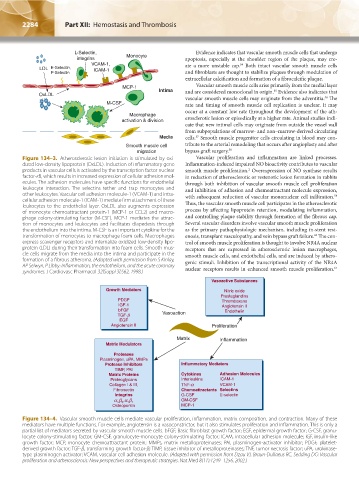
               Figure 134–3.  Atherosclerotic lesion initiation is stimulated by oxi-  Vascular proliferation and inflammation are linked processes.
               dized low-density lipoprotein (OxLDL). Induction of inflammatory gene   Inflammation-induced impaired NO bioactivity contributes to vascular
                                                                                           2
               products in vascular cells is activated by the transcription factor nuclear   smooth muscle proliferation.  Overexpression of NO synthase results
               factor-κB, which results in increased expression of cellular adhesion mol-  in reduction of atherosclerotic or restenotic lesion formation in rabbits
               ecules. The adhesion molecules have specific functions for endothelial   through both inhibition of vascular smooth muscle cell proliferation
               leukocyte interaction.  The selectins tether and  trap monocytes  and   and inhibition of adhesion and chemoattractant molecule expression,
               other leukocytes. Vascular cell adhesion molecule-1 (VCAM-1) and intra-  with subsequent reduction of vascular mononuclear cell infiltration.
                                                                                                                        59
               cellular adhesion molecule-1 (ICAM-1) mediate firm attachment of these   Thus, the vascular smooth muscle cell participates in the atherosclerotic
               leukocytes to the endothelial layer. OxLDL also augments expression
               of monocyte chemoattractant protein-1 (MCP-1 or CCL2) and macro-  process by affecting lipoprotein retention, modulating inflammation,
               phage colony-stimulating factor (M-CSF). MCP-1 mediates the attrac-  and controlling plaque stability through formation of the fibrous cap.
               tion of monocytes and leukocytes and facilitates diapedesis through   Several vascular disorders involve vascular smooth muscle proliferation
               the endothelium into the intima. M-CSF is an important cytokine for the   as the primary pathophysiologic mechanism, including in-stent rest-
               transformation of monocytes to macrophage foam cells. Macrophages   enosis, transplant vasculopathy, and vein bypass graft failure.  The con-
                                                                                                                 60
               express scavenger receptors and internalize oxidized low-density lipo-  trol of smooth muscle proliferation is thought to involve NR4A nuclear
               protein (LDL) during their transformation into foam cells. Smooth mus-  receptors that are expressed in atherosclerotic lesion macrophages,
               cle cells migrate from the media into the intima and participate in the   smooth muscle cells, and endothelial cells, and are induced by athero-
               formation of a fibrous atheroma. (Adapted with permission from S Kinlay,   genic stimuli. Inhibition of the transcriptional activity of the NR4A
               AP Selwyn, P Libby: Inflammation, the endothelium, and the acute coronary   nuclear receptors results in enhanced smooth muscle proliferation.
                                                                                                                        61
               syndromes. J Cardiovasc Pharmacol 32[Suppl 3]:S62, 1998.)


               Figure 134–4.  Vascular smooth muscle cells mediate vascular proliferation, inflammation, matrix composition, and contraction. Many of these
               mediators have multiple functions. For example, angiotensin is a vasoconstrictor, but it also stimulates proliferation and inflammation. This is only a
               partial list of mediators secreted by vascular smooth muscle cells. bFGF, Basic fibroblast growth factor; EGF, epidermal growth factor; G-CSF, granu-
               locyte colony-stimulating factor; GM-CSF, granulocyte-monocyte colony-stimulating factor; ICAM, intracellular adhesion molecule; IGF, insulin-like
               growth factor; MCP, monocyte chemoattractant protein; MMPs, matrix metalloproteinases; PAI, plasminogen-activator inhibitor; PDGF, platelet-
               derived growth factor; TGF-β, transforming growth factor-β; TIMP, tissue inhibitor of metalloproteinases; TNF, tumor necrosis factor; uPA, urokinase-
               type plasminogen activator; VCAM, vascular cell adhesion molecule. (Adapted with permission from Dzau VJ, Braun-Dullaeus RC, Sedding DG: Vascular
               proliferation and atherosclerosis: New perspectives and therapeutic strategies. Nat Med 8(11):1249–1256, 2002.)


          Kaushansky_chapter 134_p2281-2302.indd   2284                                                                 17/09/15   3:49 pm

