


Page 333 - Williams Hematology ( PDFDrive )
P. 333
308            Part IV:  Molecular and Cellular Hematology                                                                                                           Chapter 21:  Dendritic Cells and Adaptive Immunity            309


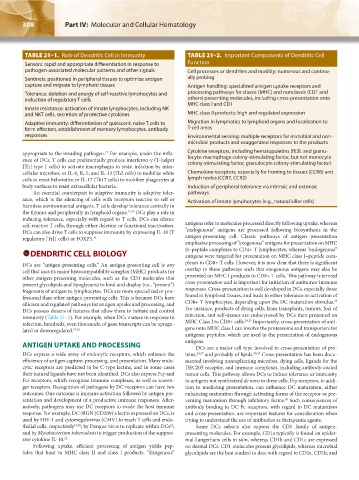
                TABLE 21–1.  Role of Dendritic Cell in Immunity        TABLE 21–2.  Important Components of Dendritic Cell
                Sensors: rapid and appropriate differentiation in response to   Function
                pathogen-associated molecular patterns and other signals  Cell processes or dendrites and motility: numerous and continu-
                Sentinels: positioned in peripheral tissues to optimize antigen   ally probing
                capture and migrate to lymphoid tissues                Antigen handling: specialized antigen uptake receptors and
                Tolerance: deletion and anergy of self-reactive lymphocytes and   processing pathways for classic (MHC) and nonclassic (CD1 and
                induction of regulatory T cells                        others) presenting molecules, including cross-presentation onto
                                                                       MHC class I and CD1
                Innate resistance: activation of innate lymphocytes, including NK
                and NKT cells, secretion of protective cytokines       MHC class II products: high and regulated expression
                Adaptive immunity: differentiation of quiescent, naïve T cells to   Migration in lymphatics to lymphoid organs and localization to
                form effectors, establishment of memory lymphocytes, antibody   T-cell areas
                responses                                              Environmental sensing: multiple receptors for microbial and non-
                                                                       microbial products and exaggerated responses to the products

               appropriate to the invading pathogen.  For example, under the influ-  Cytokine receptors, including hematopoietins (flt3L and granu-
                                           13
               ence of DCs, T cells can preferentially produce interferon-γ (T-helper   locyte-macrophage colony-stimulating factor, but not monocyte
                                                                       colony-stimulating factor, granulocyte colony-stimulating factor)
               [Th] type 1 cells) to activate macrophages to resist infection by intra-
               cellular microbes; or IL-4, IL-5, and IL-13 (Th2 cells) to mobilize white   Chemokine receptors, especially for homing to tissues (CCR6) and
               cells to resist helminths; or IL-17 (Th17 cells) to mobilize phagocytes at   lymph nodes (CCR7, CCR2)
               body surfaces to resist extracellular bacteria.         Induction of peripheral tolerance via intrinsic and extrinsic
                   An essential counterpart to adaptive immunity is adaptive toler-  pathways
               ance, which is the silencing of cells with receptors reactive to self or   Activation of innate lymphocytes (e.g., natural killer cells)
               harmless environmental antigens. T cells develop tolerance centrally in
               the thymus and peripherally in lymphoid organs. 14,15  DCs play a role in
               inducing tolerance, especially with regard to T cells. DCs can silence
               self-reactive T cells, through either deletion or functional inactivation.   antigens refer to molecules processed directly following uptake, whereas
               DCs can also drive T cells to suppress immunity by expressing IL-10 (T   “endogenous”  antigens  are  processed  following  biosynthesis  in  the
               regulatory [Tr]1 cells) or FOXP3. 16                   antigen-presenting cell. Classic pathways of antigen presentation
                                                                      emphasize processing of “exogenous” antigens for presentation on MHC
                  DENDRITIC CELL BIOLOGY                              II–peptide complexes to CD4+ T lymphocytes, whereas “endogenous”
                                                                      antigens were targeted for presentation on MHC class I–peptide com-
               DCs  are  “antigen-presenting  cells.”  An  antigen-presenting  cell  is  any   plexes to CD8+ T cells. However, it is now clear that there is significant
               cell that uses its major histocompatibility complex (MHC) products (or   overlap in these pathways such that exogenous antigens may also be
               other antigen-presenting molecules, such as the CD1 molecules that   presented on MHC I products to CD8+ T cells. This pathway is termed
               present glycolipids and lipoglycans) to bind and display (i.e., “present”)   cross-presentation and is important for initiation of antitumor immune
               fragments of antigen to lymphocytes. DCs are more specialized or pro-  responses. Cross-presentation is well developed in DCs, especially those
               fessional than other antigen-presenting cells. This is because DCs have   found in lymphoid tissues, and leads to either tolerance or activation of
                                                                                                                        23
               efficient and regulated pathways for antigen uptake and processing, and   CD8+ T lymphocytes, depending upon the DC maturation stimulus.
               DCs possess dozens of features that allow them to initiate and control   For instance, products of dying cells, from transplants, tumors, foci of
               immunity (Table 21–2). For example, when DCs mature in response to   infection, and self-tissues are endocytosed by DCs then presented on
               infection, hundreds, even thousands, of gene transcripts can be upregu-  MHC Class I to CD8+ cells. 24,25  Importantly, cross-presentation of anti-
               lated or downregulated. 17,18                          gens onto MHC class I can involve the proteasome and transporters for
                                                                      antigenic peptides, which are used in the presentation of endogenous
               ANTIGEN UPTAKE AND PROCESSING                          antigens.
                                                                          DCs are a major cell type involved in cross-presentation of pro-
               DCs express a wide array of endocytic receptors, which enhance the   teins, 26,27  and probably of lipids. 28,29  Cross-presentation has been docu-
               efficiency of antigen capture, processing, and presentation. Many endo-  mented involving nonreplicating microbes, dying cells, ligands for the
               cytic receptors are predicted to be C-type lectins, and in some cases   DEC205 receptor, and immune complexes, including antibody-coated
               their natural ligands have not been identified. DCs also express Fcγ and   tumor cells. This pathway allows DCs to induce tolerance or immunity
               Fcε receptors, which recognize immune complexes, as well as scaven-  to antigens not synthesized de novo in these cells. Fcγ receptors, in addi-
               ger receptors. Recognition of pathogens by DC receptors can have two   tion to mediating presentation, can influence DC maturation, either
               outcomes. One outcome is immune activation followed by antigen pre-  enhancing maturation through activating forms of the receptor or pre-
               sentation and development of a productive immune responses. Alter-  venting maturation through inhibitory forms.  Such consequences of
                                                                                                       30
               natively, pathogens may use DC receptors to evade the host immune   antibody binding to DC Fc receptors, with regard to DC maturation
               response. For example, DC-SIGN (CD209) a lectin expressed on DCs, is   and cross-presentation, are important features for consideration when
               used by HIV-1 and cytomegalovirus (CMV) to reach T cells and endo-  trying to understand the use of antibodies as therapeutic agents.
               thelial cells, respectively 19,20 ; by Dengue virus to replicate within DCs ;   Some DCs subsets also express the CD1 family of antigen-
                                                                 21
               and by Mycobacterium tuberculosis to trigger production of the suppres-  presenting molecules. For example, CD1a typically is found on epider-
               sive cytokine IL-10. 22                                mal Langerhans cells in skin, whereas CD1b and CD1c are expressed
                   Following uptake, efficient processing of antigen yields pep-  on dermal DCs. CD1 molecules present glycolipids, whereas microbial
               tides that bind to MHC class II and class I products. “Exogenous”   glycolipids are the best studied to date with regard to CD1a, CD1b, and


          Kaushansky_chapter 21_p0307-0312.indd   308                                                                   9/17/15   5:52 PM

