


Page 36 - Williams Hematology ( PDFDrive )
P. 36
12  Part I:  Clinical Evaluation of the Patient                       Chapter 2:  Examination of Blood Cells            13


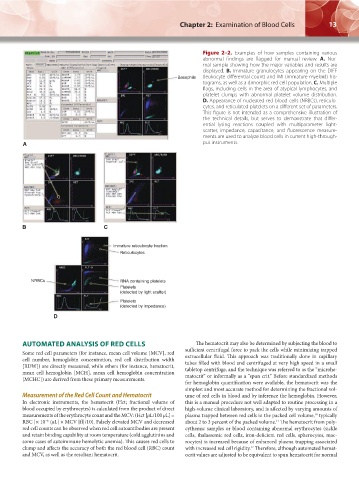
                                                                              Figure 2–2.  Examples of how samples containing various
                                                                              abnormal findings are flagged for manual review.  A. Nor-
                                                                              mal sample showing how the major variables and results are
                                                                              displayed.  B. Immature granulocytes appearing on the DIFF
                                                                      Basophils  (leukocyte differential count) and IMI (immature myeloid) his-
                                                                              tograms, as well as a dimorphic red cell population. C. Multiple
                                                                              flags, including cells in the area of atypical lymphocytes, and
                                                                              platelet clumps with abnormal platelet volume distribution.
                                                                              D. Appearance of nucleated red blood cells (NRBCs), reticulo-
                                                                              cytes, and reticulated platelets on a different set of parameters.
                                                                              This figure is not intended as a comprehensive illustration of
                                                                              the technical details, but serves to demonstrate that differ-
                                                                              ential  lysing  reactions  coupled  with  multiparameter  light-
                                                                              scatter, impedance, capacitance, and fluorescence measure-
                                                                              ments are used to analyze blood cells in current high-through-
                  A                                                           put instruments.


                  B                          C


                                                Immature reticulocyte fraction
                                                   Reticulocytes


                     NRBCs                         RNA containing platelets
                                                   Platelets
                                                   (detected by light scatter)
                                                   Platelets
                                                   (detected by impedance)
                            D


                  AUTOMATED ANALYSIS OF RED CELLS                           The hematocrit may also be determined by subjecting the blood to
                                                                        sufficient centrifugal force to pack the cells while minimizing trapped
                  Some red cell parameters (for instance, mean cell volume [MCV], red   extracellular fluid. This approach was traditionally done in capillary
                  cell number, hemoglobin concentration, red cell distribution width   tubes filled with blood and centrifuged at very high speed in a small
                  [RDW]) are directly measured, while others (for instance, hematocrit,   tabletop centrifuge, and the technique was referred to as the “microhe-
                  mean cell hemoglobin [MCH], mean cell hemoglobin concentration   matocrit” or informally as a “spun crit.” Before standardized methods
                  [MCHC]) are derived from these primary measurements.
                                                                        for hemoglobin quantification were available, the hematocrit was the
                                                                        simplest and most accurate method for determining the fractional vol-
                  Measurement of the Red Cell Count and Hematocrit      ume of red cells in blood and by inference the hemoglobin. However,
                  In electronic instruments, the hematocrit (Hct; fractional volume of   this is a manual procedure not well adapted to routine processing in a
                  blood occupied by erythrocytes) is calculated from the product of direct   high-volume clinical laboratory, and is affected by varying amounts of
                  measurements of the erythrocyte count and the MCV: (Hct [μL/100 μL] =   plasma trapped between red cells in the packed cell volume,  typically
                                                                                                                    16
                  RBC [× 10  /μL] × MCV [fl]/10). Falsely elevated MCV and decreased   about 2 to 3 percent of the packed volume.  The hematocrit from poly-
                         −6
                                                                                                       17
                  red cell counts can be observed when red cell autoantibodies are present   cythemic samples or blood containing abnormal erythrocytes (sickle
                  and retain binding capability at room temperature (cold agglutinins and   cells, thalassemic red cells, iron-deficient red cells, spherocytes, mac-
                  some cases of autoimmune hemolytic anemia). This causes red cells to   rocytes) is increased because of enhanced plasma trapping associated
                  clump and affects the accuracy of both the red blood cell (RBC) count   with increased red cell rigidity.  Therefore, although automated hemat-
                                                                                              17
                  and MCV, as well as the resultant hematocrit.         ocrit values are adjusted to be equivalent to spun hematocrit for normal


          Kaushansky_chapter 02_p0011-0026.indd   13                                                                    17/09/15   5:34 pm

