


Page 702 - Williams Hematology ( PDFDrive )
P. 702
676  Part VI:  The Erythrocyte                                Chapter 46:  Erythrocyte Membrane Disorders             677


                  HEREDITARY ELLIPTOCYTOSIS AND                         rearrangement of the skeleton is reduced. Disruption of the dynamic
                  PYROPOIKILOCYTOSIS                                    dissociation and reassociation of spectrin tetramers causes mechanical
                                                                        instability of the membrane, which precludes the recovery of the normal
                  Definition and History                                biconcave disk shape of the cell after prolonged and repeated unidirec-
                  HE is characterized by the presence of elliptical or oval erythrocytes on   tional axial distortion in the microcirculation.  HE reticulocytes have
                                                                                                          127
                  the blood films of affected individuals (Figs. 46–10D and 46–11F.). In   a normal shape when released into the circulation but the mature red
                  1904, Dresbach, a physiologist at Ohio State University in Columbus,   cells become progressively more elliptical as they age and ultimately the
                  Ohio, published the first description of elliptical red blood cells in one of   abnormal shape becomes permanent. 13,122  As the severity of the defect
                  his students, noticed during a laboratory exercise in which the students   increases, poikilocytes are formed and the cells become prone to frag-
                  were examining their own blood.  The report elicited controversy   mentation. HPP patients exhibit a combination of horizontal (impaired
                                           119
                  because the student died soon thereafter, leading to speculation that he   spectrin tetramer formation) and vertical (spectrin deficiency) defects,
                  had actually suffered from pernicious anemia. The demonstration of   with the latter causing microspherocytes and exacerbating the hemo-
                  elliptocytosis in three generations of one family established the hered-  lytic anemia. 128,129
                  itary nature of this disorder.  A related disorder, HPP is a rare disease
                                      120
                  first described in 1975 in children with severe neonatal anemia with   Red Cell Membrane Protein Defects
                  abnormal poikilocytic red cell morphology reminiscent of that seen in   Spectrin  Mutations that affect spectrin heterodimer self-association
                  patients suffering from severe burns (Fig. 46–13).  The erythrocytes   are found in the majority of HE patients and in all patients with HPP.
                                                      121
                  from these patients exhibited increased thermal sensitivity.  This functional defect results in an increased percentage of spectrin
                                                                        dimers relative to tetramers,  which is reflected on a structural level by
                                                                                            130
                  Epidemiology and Inheritance                          an abnormal tryptic digest pattern of the protein, whereby the normal
                  HE has a worldwide distribution but the true incidence is unknown   peptide is decreased with a concomitant increase in an abnormal pep-
                  because the disease is heterogeneous and many patients are asymptom-  tide of lower molecular weight. Most of the defects affect the 80-kDa
                  atic. In the United States, the incidence is estimated to be 1 in 2000 to   αI domain of α-spectrin and of the nine structural variants the most
                                                                                                       .
                                                                                          I/65
                  4000 individuals. 13,122  HE occurs in all racial groups but is more preva-  common are Spα , Spα , and Spα I/46 or 50a 128
                                                                                     I/74
                  lent in individuals of West African descent, possibly because elliptocytes   More than 50 mutations have been identified in either α- or β-spec-
                  may confer some resistance to malaria. 123,124  HPP is typically found in   trin genes. The majority of the mutations are missense mutations that
                  patients of African origin, but it has also been diagnosed in subjects of   substitute highly conserved amino acids or those in close proximity. The
                  European and Arabic descent. 122,125,126              abnormal amino acids typically have a different charge, or in the case of
                                                                        glycine or proline substitutions, they disrupt the helical structure of the
                  Etiology and Pathogenesis                             spectrin repeats, which alter the interactions between α and β subunits.
                  The primary abnormality in HE and HPP erythrocytes is defective   Interestingly, mutations in α-spectrin primarily occur in helix C of the
                  horizontal interactions between components of the membrane skele-  repeats, which highlights the importance of this helix in the triple heli-
                  ton, which weakens the skeleton and compromises its ability to main-  cal bundle (see Fig. 46–3). Several mechanisms have been identified by
                  tain the biconcave disk shape of the red cell during circulatory shear   which the mutations impair spectrin tetramer formation.
                  stress. Investigations of erythrocyte membrane proteins in these disor-  Spα  mutations are mostly missense mutations found at the
                                                                               I/74
                  ders have identified abnormalities in α- and β-spectrin, protein 4.1, and   self-association site, which consists of helix C of the α0 partial spectrin
                  GPC.  The most common defects occur in spectrin, the main struc-  repeat that interacts with helices B and C of β-spectrin partial repeat
                      122
                                                                                                         34
                  tural protein of the erythrocyte membrane skeleton, and they impair the   17 to form a complete triple helical bundle.  In vitro studies on mis-
                  ability of spectrin dimers to self-associate into tetramers and oligomers,   sense mutations in α0 revealed that the mutant peptides were stable
                  thereby disrupting the skeletal lattice.  Abnormalities in 4.1R diminish   folded structures, similar to wild type, but their binding affinities to β-
                                             55
                  the interaction between the tail ends of spectrin tetramers in the junc-  spectrin peptides were variable. This suggested that their effect on
                  tional complex and thus destabilize the skeleton. Deficiency of GPC/  tetramer formation was exerted through defective molecular recognition
                  GPD is associated with reduced levels of 4.1R, which presumably is   and disruption of protein-protein interactions at the contact site, rather
                                                                                           131
                  responsible for the elliptocytosis.                   than an altered structure.  These findings contrasted with mutations
                     When the integrity of the skeleton is compromised, the capac-  in the β17 repeat of β-spectrin, which perturbed the structural confor-
                                                                                                                  132
                  ity of the erythrocyte to undergo flow-induced deformation and   mation of this partial repeat and the adjacent β16 repeat.  Codon 28

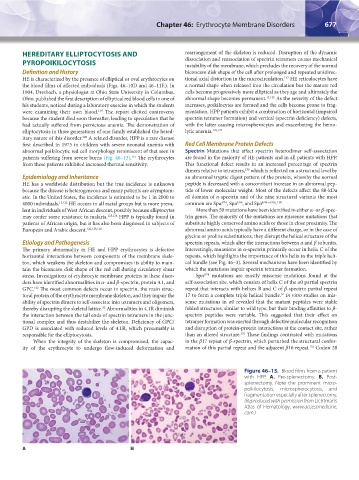
                                                                                            Figure 46–13.  Blood films from a patient
                                                                                            with  HPP.  A.  Pre-splenectomy.  B.  Post-
                                                                                            splenectomy. Note the prominent micro-
                                                                                            poikilocytosis, microspherocytosis, and
                                                                                            fragmentation especially after splenectomy.
                                                                                            (Reproduced with permission from Lichtman’s
                                                                                            Atlas of Hematology, www.accessmedicine.
                                                                                            com.)


                  A                                   B


          Kaushansky_chapter 46_p0661-0688.indd   677                                                                   9/17/15   6:42 PM

