


Page 732 - Williams Hematology ( PDFDrive )
P. 732
706  Part VI:  The Erythrocyte                                   Chapter 47:  Erythrocyte Enzyme Disorders            707


                                                 Sup Dismut             of the acid phosphatase gene have been attributed to a decrease in the
                                        –
                                       O 2                              f isoforms of this tyrosine phosphatase and, consequently, low GSH
                                                                        levels.  Immunologic factors do not seem to play a role in favism.
                                                                             455
                                                                                                                          456
                                                                        Increased levels of red cell calcium 457,458  and consequent “cross-
                           DRUG + HbO 2                 H O 2           bonding” of membranes may occur. Other membrane alterations that
                                                          2
                                                                        have been described are oxidation and clustering of membrane proteins,
                                                                        hemichrome binding to the internal face of the membrane, destabiliza-
                                                                        tion of the membrane, and the release of microvesicles. 459–462
                                          GSH-Px
                                                                        Icterus Neonatorum
                                                                        G6PD-deficient neonates are at increased risk of developing severe ict-
                             GSSG                        GSH
                                                                        erus neonatorum. The icterus is frequently unaccompanied by changes
                                                                        in hematologic indices reflective of a hemolytic process. 463–465  The rea-
                               +                          +
                                                                        son for this discrepancy is unclear. Icterus probably results principally
                             NADPH          GR          NADP            from inadequate processing of bilirubin by the immature liver of G6PD-
                                                                        deficient infants. The demonstrated increase in carboxyhemoglobin
                                          G-6-PD
                                                                        levels, indicative of increased heme catabolism, suggests, however, that
                                                                        shortening of red cell life span also plays a role.  A predisposing factor
                                                                                                          466
                                                                        for severe jaundice in G6PD deficiency is mutation of the uridine diphos-
                       6–Phosphogluconate             Glucose-6-P       phoglucuronate glucuronosyltransferase-1 gene (UGT1A1) promoter,
                                                                                                                          467
                                                                                                       468
                                                                        or, in Asia, the c.211G>A coding mutation.  In adults, these mutations
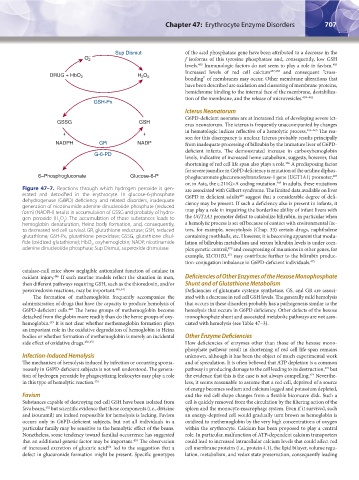
                  Figure 47–7.  Reactions through which hydrogen peroxide is gen-  are associated with Gilbert syndrome. The limited data available on liver
                  erated and detoxified in the erythrocyte. In glucose-6-phosphate   G6PD in deficient adults  suggest that a considerable degree of defi-
                                                                                           469
                  dehydrogenase  (G6PD)  deficiency  and  related  disorders,  inadequate   ciency may be present. If such a deficiency also is present in infants, it
                  generation of nicotinamide adenine dinucleotide phosphate (reduced
                  form) (NADPH) results in accumulation of GSSG and probably of hydro-  may play a role in impairing the borderline ability of infant livers with
                  gen peroxide (H O ). The accumulation of these substances leads to   the UGT1A1 promoter defect to catabolize bilirubin, in particular when
                                2
                              2
                  hemoglobin denaturation, Heinz body formation, and, consequently,   a hemolytic process is set off because of contact with environmental fac-
                  to decreased red cell survival. GR, glutathione reductase; GSH, reduced   tors, for example, neocytolysis (Chap. 33) certain drugs, naphthalene
                  glutathione; GSH-Px, glutathione peroxidase; GSSG, glutathione disul-  containing mothballs, etc. However, it is becoming apparent that modu-
                  fide (oxidized glutathione); HbO , oxyhemoglobin; NADP, nicotinamide   lation of bilirubin metabolism and serum bilirubin levels is under com-
                                         2
                  adenine dinucleotide phosphate; Sup Dismut, superoxide dismutase.  plex genetic control,  and coexpressing of mutations in other genes, for
                                                                                       470
                                                                                       471
                                                                        example, SLCO1B3,  may contribute further to the bilirubin produc-
                                                                        tion-conjugation imbalance in G6PD-deficient individuals. 472
                  catalase-null mice show negligible antioxidant function of catalase in
                  oxidant injury.  If such murine models reflect the situation in man,   Deficiencies of Other Enzymes of the Hexose Monophosphate
                             446
                  then different pathways requiring GSH, such as the thioredoxin, and/or   Shunt and of Glutathione Metabolism
                  peroxiredoxin reactions, may be important. 446,447    Deficiencies of glutamate cysteine synthetase, GS, and GR are associ-
                     The formation of methemoglobin frequently accompanies the   ated with a decrease in red cell GSH levels. The generally mild hemolysis
                  administration of drugs that have the capacity to produce hemolysis of   that occurs in these disorders probably has a pathogenesis similar to the
                  G6PD-deficient cells.  The heme groups of methemoglobin become   hemolysis that occurs in G6PD deficiency. Other defects of the hexose
                                 448
                  detached from the globin more readily than do the heme groups of oxy-  monophosphate shunt and associated metabolic pathways are not asso-
                  hemoglobin.  It is not clear whether methemoglobin formation plays   ciated with hemolysis (see Table  47–3).
                           449
                  an important role in the oxidative degradation of hemoglobin to Heinz
                  bodies or whether formation of methemoglobin is merely an incidental   Other Enzyme Deficiencies
                  side effect of oxidative drugs. 450,451               How deficiencies of enzymes other than those of the hexose mono-
                                                                        phosphate pathway result in shortening of red cell life-span remains
                  Infection-Induced Hemolysis                           unknown, although it has been the object of much experimental work
                  The mechanism of hemolysis induced by infection or occurring sponta-  and of speculation. It is often believed that ATP depletion is a common
                  neously in G6PD-deficient subjects is not well understood. The genera-  pathway in producing damage to the cell leading to its destruction,  but
                                                                                                                       473
                                                                                                                  474
                  tion of hydrogen peroxide by phagocytizing leukocytes may play a role   the evidence that this is the case is not always compelling.  Neverthe-
                  in this type of hemolytic reaction. 451               less, it seems reasonable to assume that a red cell, deprived of a source
                                                                        of energy becomes sodium and calcium logged and potassium depleted,
                  Favism                                                and the red cell shape changes from a flexible biconcave disk. Such a
                  Substances capable of destroying red cell GSH have been isolated from   cell is quickly removed from the circulation by the filtering action of the
                          452
                  fava beans,  but scientific evidence that these components (i.e., divicine   spleen and the monocyte-macrophage system. Even if it survived, such
                  and isouramil) are indeed responsible for hemolysis is lacking. Favism   an energy-deprived cell would gradually turn brown as hemoglobin is
                  occurs only in G6PD-deficient subjects, but not all individuals in a   oxidized to methemoglobin by the very high concentrations of oxygen
                  particular family may be sensitive to the hemolytic effect of the beans.   within the erythrocyte. Calcium has been proposed to play a central
                  Nonetheless, some tendency toward familial occurrence has suggested   role. In particular, malfunction of ATP-dependent calcium transporters
                                                       453
                  that an additional genetic factor may be important.  The observation   could lead to increased intracellular calcium levels that could affect red
                                              454
                  of increased excretion of glucaric acid  led to the suggestion that a   cell membrane proteins (i.e., protein 4.1), the lipid bilayer, volume regu-
                  defect in glucuronide formation might be present. Specific genotypes   lation, metabolism, and redox state preservation, consequently leading


          Kaushansky_chapter 47_p0689-0724.indd   707                                                                   9/17/15   6:44 PM

