


Page 733 - Williams Hematology ( PDFDrive )
P. 733
708            Part VI:  The Erythrocyte                                                                                                                                     Chapter 47:  Erythrocyte Enzyme Disorders             709


               to proteolysis, oxidation, irreversible cellular shrinkage, phosphatidyl   but may be hemolytic when given in excessive doses. A case in point is
               exposure and premature clearance.  In agreement with this, PFK defi-  ascorbic acid, which does not cause hemolytic anemia in normal doses
                                        475
               ciency has been shown to result in increased calcium levels, accompa-  but which can produce severe, even fatal, hemolysis at doses of 80 g
               nied by volume loss and metabolic dysregulation. 476,477  or more intravenously. 480–482  Some drugs, such as chloramphenicol, may
                   It is possible that, at least in some cases, alteration of the levels of   induce mild hemolysis in a person with severe, Mediterranean-type
                                                                                                                       485
                                                                                   484
               red cell intermediate metabolites interferes with synthesis of cell com-  G6PD deficiency,  but not in those with the milder A– or Canton
               ponents in early stages of development of the cell. In agreement with   types of deficiency. Furthermore, there appears, to be a difference in the
               this, the lack of pyruvate has been implicated in the ineffective matura-  severity of the reaction to the same drug of different individuals with
               tion of erythroid progenitors in PK-deficient mice. 478  the same G6PD variant. For example, red cells from a single G6PD-
                                                                      deficient individual were hemolyzed in the circulation of some recip-
               CLINICAL FEATURES                                      ients who were given thiazolsulfone, but their survival was normal in
                                                                                        438
                                                                      the circulation of others.  Sulfamethoxazole, which was clearly hemo-
               COMMON FORMS OF GLUCOSE-6-PHOSPHATE                    lytic in experimental studies, does not appear to be a common cause of
                                                                                            486
               DEHYDROGENASE DEFICIENCY                               hemolysis in a clinical setting.  Undoubtedly, individual differences in
               Individuals who inherit the common  (polymorphic)  forms of  G6PD   the metabolism and excretion of drugs influence the extent to which
                                                                                                  487,488
                                                                      G6PD-deficient red cells are destroyed.
               deficiency, such as G6PD A– or G6PD Mediterranean, usually have no   Several animal models have been developed to serve as a screening
               clinical manifestations. The major clinical consequence of G6PD defi-  platform for the determination of hemolytic toxicity of pharmacologic
               ciency is hemolytic anemia in adults and neonatal icterus in infants.   agents in G6PD deficiency. 489,490–492
               Usually the anemia is episodic, but some of the unusual variants of G6PD   Typically, an episode of drug-induced hemolysis in G6PD-deficient
               may cause nonspherocytic congenital hemolytic disease (see “Variants   individuals begins 1 to 3 days after drug administration is initiated.
                                                                                                                       493
               Producing Hereditary Nonspherocytic Hemolytic Anemia” above). In   Heinz bodies appear in the red cells, and the hemoglobin concentration
               general, hemolysis is associated with stress, most notably drug admin-  begins to decline rapidly.  As hemolysis progresses, Heinz bodies dis-
                                                                                        494
               istration, infection, and, in certain individuals, exposure to fava beans.  appear from the circulation, presumably as they or the erythrocytes that
                                                                      contain them are removed by the spleen. In severe cases, abdominal or
               Drug-Induced Hemolytic Anemia                          back pain may occur. The urine may turn dark or even black. Within 4
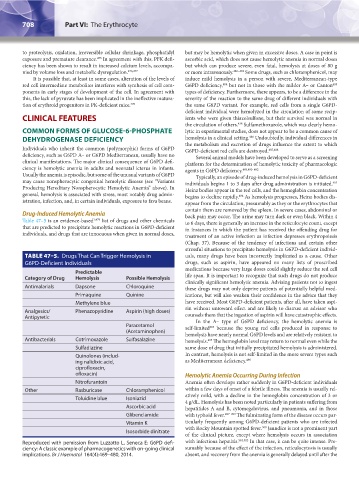
               Table 47–5 is an evidence-based 3,479  list of drugs and other chemicals   to 6 days, there is generally an increase in the reticulocyte count, except
               that are predicted to precipitate hemolytic reactions in G6PD-deficient   in instances in which the patient has received the offending drug for
               individuals, and drugs that are innocuous when given in normal doses,   treatment of an active infection as infection depresses erythropoiesis
                                                                      (Chap. 37). Because of the tendency of infections and certain other
                                                                      stressful situations to precipitate hemolysis in G6PD-deficient individ-
                TABLE 47–5.  Drugs That Can Trigger Hemolysis in      uals, many drugs have been incorrectly implicated as a cause. Other
                G6PD-Deficient Individuals                            drugs, such as aspirin, have appeared on many lists of proscribed
                                                                      medications because very large doses could slightly reduce the red cell
                                 Predictable
                Category of Drug  Hemolysis       Possible Hemolysis  life span. It is important to recognize that such drugs do not produce
                                                                      clinically significant hemolytic anemia. Advising patients not to ingest
                Antimalarials    Dapsone          Chloroquine         these drugs may not only deprive patients of potentially helpful med-
                                 Primaquine       Quinine             ications, but will also weaken their confidence in the advice that they
                                 Methylene blue                       have received. Most G6PD-deficient patients, after all, have taken aspi-
                Analgesics/      Phenazopyridine  Aspirin (high doses)  rin without untoward effect and are likely to distrust an advisor who
                Antipyretic                                           counsels them that the ingestion of aspirin will have catastrophic effects.
                                                                          In the A– type of G6PD deficiency, the hemolytic anemia is
                                                  Paracetamol         self-limited  because the young red cells produced in response to
                                                                              493
                                                  (Acetaminophen)     hemolysis have nearly normal G6PD levels and are relatively resistant to
                Antibacterials   Cotrimoxazole    Sulfasalazine       hemolysis.  The hemoglobin level may return to normal even while the
                                                                              495
                                 Sulfadiazine                         same dose of drug that initially precipitated hemolysis is administered.
                                 Quinolones (includ-                  In contrast, hemolysis is not self-limited in the more severe types such
                                 ing nalidixic acid,                  as Mediterranean deficiency. 496
                                 ciprofloxacin,
                                 ofloxacin)                           Hemolytic Anemia Occurring During Infection
                                 Nitrofurantoin                       Anemia often develops rather suddenly in G6PD-deficient individuals
                Other            Rasburicase      Chloramphenicol     within a few days of onset of a febrile illness. The anemia is usually rel-
                                 Toluidine blue   Isoniazid           atively mild, with a decline in the hemoglobin concentration of 3 or
                                                                      4 g/dL. Hemolysis has been noted particularly in patients suffering from
                                                  Ascorbic acid       hepatitides A and B, cytomegalovirus, and pneumonia, and in those
                                                  Glibenclamide       with typhoid fever. 497–499  The fulminating form of the disease occurs par-
                                                  Vitamin K           ticularly frequently among G6PD-deficient patients who are infected
                                                                      with Rocky Mountain spotted fever.  Jaundice is not a prominent part
                                                                                                500
                                                  Isosorbide dinitrate
                                                                      of the clinical picture, except where hemolysis occurs in association
               Reproduced with pemission from Luzzatto L, Seneca E: G6PD defi-  with infectious hepatitis. 501,502  In that case, it can be quite intense. Pre-
               ciency: A classic example of pharmacogenetics with on-going clinical   sumably because of the effect of the infection, reticulocytosis is usually
               implications. Br J Haematol  164(4):469–480, 2014.     absent, and recovery from the anemia is generally delayed until after the


          Kaushansky_chapter 47_p0689-0724.indd   708                                                                   9/17/15   6:44 PM

