


Page 973 - Williams Hematology ( PDFDrive )
P. 973
948            Part VII:  Neutrophils, Eosinophils, Basophils, and Mast Cells                                                                                            Chapter 62:  Eosinophils and Related Disorders            949


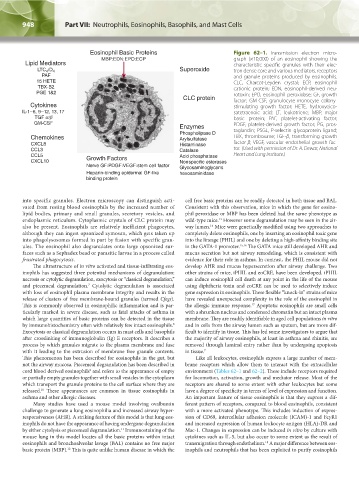
                                                                                      Figure 62–1.  Transmission electron micro-
                                                                                      graph (×10,000) of an eosinophil showing the
                                                                                      characteristic specific granules with their elec-
                                                                                      tron dense core and various mediators, receptors
                                                                                      and granule proteins produced by eosinophils.
                                                                                      CLC, Charcot-Leyden crystal;  ECP,  eosinophil
                                                                                      cationic protein; EDN, eosinophil-derived neu-
                                                                                      rotoxin; EPO, eosinophil peroxidase; GF, growth
                                                                                      factor; GM-CSF, granulocyte-monocyte colony-
                                                                                      stimulating growth factor; HETE, hydroxyeico-
                                                                                      satetraenoic acid; LT, leukotriene; MBP, major
                                                                                      basic protein; PAF, platelet-activating factor;
                                                                                      PDGF, platelet-derived growth factor; PG, pros-
                                                                                      taglandin; PSGL, P-selectin glycoprotein ligand;
                                                                                      TBX, thromboxane; TGF-β, transforming growth
                                                                                      factor-β; VEGF, vascular endothelial growth fac-
                                                                                      tor. (Used with permission of Dr. A. Dewar, National
                                                                                      Heart and Lung Institute.)


               into specific granules. Electron microscopy can distinguish acti-  cell free basic proteins can be readily detected in both tissue and BAL.
               vated from resting blood eosinophils by the increased number of   Consistent with this observation, mice in which the gene for eosino-
               lipid  bodies,  primary  and  small  granules,  secretory  vesicles,  and   phil peroxidase or MBP has been deleted had the same phenotype as
               endoplasmic reticulum. Cytoplasmic crystals of CLC protein may   wild-type mice.  However some degranulation may be seen in the air-
                                                                                 13
               also be present. Eosinophils are relatively inefficient phagocytes,   way lumen.  Mice were genetically modified using two approaches to
                                                                              14
               although they can ingest opsonized zymosan, which gets taken up   completely delete eosinophils, one by inserting an eosinophil toxic gene
               into phagolysosomes formed in part by fusion with specific gran-  into the lineage (PHIL) and one by deleting a high-affinity binding site
               ules. The eosinophil also degranulates onto large opsonized sur-  in the GATA-1 promoter. 15,16  The GATA mice still developed AHR and
               faces such as a Sephadex bead or parasitic larvae in a process called   mucus secretion but not airway remodeling, which is consistent with
               frustrated phagocytosis.                               evidence for their role in asthma. In contrast, the PHIL mouse did not
                   The ultrastructure of in vitro activated and tissue-infiltrating eos-  develop AHR and mucus hypersecretion after airway challenge. Two
               inophils has suggested three potential mechanisms of degranulation:   other strains of mice, iPHIL and eoCRE, have been developed. iPHIL
               necrosis or cytolytic degranulation, exocytosis or “classical degranulation,”   can induce eosinophil cell death at any point in the life of the mouse
               and piecemeal degranulation.  Cytolytic degranulation is associated   using diphtheria toxin and eoCRE can be used to selectively induce
                                     7
               with loss of eosinophil plasma membrane integrity and results in the   gene expression in eosinophils. These flexible “knock-in” strains of mice
               release of clusters of free membrane-bound granules (termed  Cfegs).   have revealed unexpected complexity in the role of the eosinophil in
               This is commonly observed in eosinophilic inflammation and is par-  the allergic immune response.  Apoptotic eosinophils are small cells
                                                                                            17
               ticularly marked in severe disease, such as fatal attacks of asthma in   with a shrunken nucleus and condensed chromatin but an intact plasma
               which large quantities of basic proteins can be detected in the tissue   membrane. They are readily identifiable in aged cell populations in vitro
               by immunohistochemistry often with relatively few intact eosinophils.    and in cells from the airway lumen such as sputum, but are more dif-
                                                                  8
               Exocytosis or classical degranulation occurs in mast cells and basophils   ficult to identify in tissue. This has led some investigators to argue that
               after crosslinking of immunoglobulin (Ig) E receptors. It describes a   the majority of airway eosinophils, at least in asthma and rhinitis, are
               process by which granules migrate to the plasma membrane and fuse   removed through luminal entry rather than by undergoing apoptosis
               with it leading to the extrusion of membrane free granule contents.   in tissue. 7
               This phenomenon has been described for eosinophils in the gut, but   Like all leukocytes, eosinophils express a large number of mem-
               not the airway mucosa. Piecemeal degranulation has been described in   brane receptors which allow them to interact with the extracellular
               cord blood derived eosinophils  and refers to the appearance of empty   environment (Tables 62–1 and 62–2). These include receptors required
                                      9
               or partially empty granules together with small vesicles in the cytoplasm   for locomotion, activation, growth and mediator release. Most of the
               which transport the granule proteins to the cell surface where they are   receptors are shared to some extent with other leukocytes but some
               released.  These appearances are common in tissue eosinophils in   have a degree of specificity in terms of level of expression and function.
                      10
               asthma and other allergic diseases.                    An important feature of tissue eosinophils is that they express a dif-
                   Many studies have used a mouse model involving ovalbumin   ferent pattern of receptors, compared to blood eosinophils, consistent
               challenge to generate a lung eosinophilia and increased airway hyper-  with a more activated phenotype. This includes induction of expres-
               responsiveness (AHR). A striking feature of this model is that lung eos-  sion of CD69,  intercellular adhesion molecule (ICAM)-1  and FcγR1
               inophils do not have the appearance of having undergone degranulation   and increased expression of human leukocyte antigen (HLA)-DR and
               by either cytolysis or piecemeal degranulation.  Immunostaining of the   Mac-1. Changes in expression can be induced in vitro by culture with
                                                11
               mouse lung in this model locates all the basic proteins within intact   cytokines such as IL-5, but also occur to some extent as the result of
               eosinophils and bronchoalveolar lavage (BAL) contains no free major   transmigration through endothelium.  A major difference between eos-
                                                                                                 18
               basic protein (MBP).  This is quite unlike human disease in which the   inophils and neutrophils that has been exploited to purify eosinophils
                              12


          Kaushansky_chapter 62_p0947-0964.indd   948                                                                   9/21/15   10:56 AM

