


Page 976 - Williams Hematology ( PDFDrive )
P. 976
950  Part VII:  Neutrophils, Eosinophils, Basophils, and Mast Cells  Chapter 62:  Eosinophils and Related Disorders   951


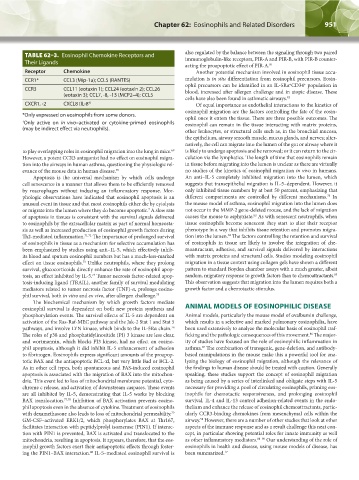
                   TABLE 62–3.  Eosinophil Chemokine Receptors and      also regulated by the balance between the signaling through two paired
                                                                        immunoglobulin-like receptors, PIR-A and PIR-B, with PIR-B counter-
                   Their Ligands
                                                                        acting the proapoptotic effect of PIR-A. 81
                   Receptor     Chemokine                                   Another potential mechanism involved in eosinophil tissue accu-
                   CCR1*        CCL3 (Mip-1a); CCL5 (RANTES)            mulation is in situ differentiation from eosinophil precursors. Eosin-
                                                                        ophil precursors can be identified in an IL-5Rα CD34  population in
                                                                                                                +
                                                                                                           +
                   CCR3         CCL11 (eotaxin 1); CCL24 (eotaxin 2); CCL26   blood, increased after allergen challenge and in atopic disease. These
                                (eotaxin 3); CCL7, -8, -13 (MCP2–4); CCL5
                                                                        cells have also been found in asthmatic airways. 82
                   CXCR1, -2    CXCL8 (IL-8 †)                              Of equal importance as endothelial interactions to the kinetics of
                                                                        eosinophil migration are the factors controlling the fate of the eosin-
                  *Only expressed on eosinophils from some donors.      ophil once it enters the tissue. There are three possible outcomes. The
                  † Only active on  in vivo–activated or cytokine-primed eosinophils   eosinophil can remain in the tissue interacting with matrix proteins,
                  (may be indirect effect via neutrophils).
                                                                        other leukocytes, or structural cells such as, in the bronchial mucosa,
                                                                        the epithelium, airway smooth muscle, mucus glands, and nerves; alter-
                                                                        natively, the cell can migrate into the lumen of the gut or airway where it
                  to play overlapping roles in eosinophil migration into the lung in mice.    is likely to undergo apoptosis and be removed; or it can return to the cir-
                                                                    69
                  However, a potent CCR3 antagonist had no effect on eosinophil migra-  culation via the lymphatics. The length of time that eosinophils remain
                  tion into the airways in human asthma, questioning the physiologic rel-  in tissue before migrating into the lumen is unclear as there are virtually
                  evance of the mouse data in human disease. 70         no studies of the kinetics of eosinophil migration in vivo in humans.
                     Apoptosis is the universal mechanism by which cells undergo   An  anti–IL-5  completely  inhibited  migration  into  the  lumen,  which
                  cell senescence in a manner that allows them to be efficiently removed   suggests that transepithelial migration is IL-5–dependent. However, it
                  by macrophages without inducing an inflammatory response. Mor-  only inhibited tissue numbers by at best 50 percent, emphasizing that
                  phologic observations have indicated that eosinophil apoptosis is an   different compartments are controlled by different mechanisms.  In
                                                                                                                        73
                  unusual event in tissue and that most eosinophils either die by cytolysis   the mouse model of asthma, eosinophil migration into the lumen does
                  or migrate into the lumen where they do become apoptotic.  A slow rate   not occur in the MMP-2 gene-deleted mouse, and the lack of migration
                                                            7
                  of apoptosis in tissues is consistent with the survival signals delivered   causes the mouse to asphyxiate.  As with senescent neutrophils, when
                                                                                               83
                  to eosinophils by the extracellular matrix as part of normal homeosta-  tissue eosinophils become senescent they start to alter their receptor
                  sis as well as increased production of eosinophil growth factors during   phenotype in a way that inhibits tissue retention and promotes migra-
                                                                                       84
                  Th2-mediated inflammation. 71,72  The importance of prolonged survival   tion into the lumen.  The factors controlling the retention and survival
                  of eosinophils in tissue as a mechanism for selective accumulation has   of eosinophils in tissue are likely to involve the integration of che-
                  been emphasized by studies using anti–IL-5, which effectively inhib-  moattractant, adhesive, and survival signals delivered by interactions
                  its blood and sputum eosinophil numbers but has a much-less-marked   with matrix proteins and structural cells. Studies modeling eosinophil
                  effect on tissue eosinophils.  Unlike neutrophils, where they prolong   migration in a tissue context using collagen gels have shown a different
                                      73
                  survival, glucocorticoids directly enhance the rate of eosinophil apop-  pattern to standard Boyden chamber assays with a much greater, albeit
                                                                                                                          85
                  tosis, an effect inhibited by IL-5.  Tumor necrosis factor-related apop-  random, migratory response to growth factors than to chemoattractants.
                                         74
                  tosis-inducing ligand (TRAIL), another family of survival modulating   This observation suggests that migration into the lumen requires both a
                  mediators related to tumor necrosis factor (TNF)-α, prolongs eosino-  growth factor and a chemotactic stimulus.
                  phil survival, both in vitro and ex vivo, after allergen challenge. 75
                     The biochemical mechanism by which growth factors mediate
                  eosinophil survival is dependent on both new protein synthesis and   ANIMAL MODELS OF EOSINOPHILIC DISEASE
                  phosphorylation events. The survival effects of IL-5 are dependent on   Animal models, particularly the mouse model of ovalbumin challenge,
                  activation of the Ras-Raf-MEC pathway and the Jak-2 Stat 1 and Stat 5   which results in a selective and marked pulmonary eosinophilia, have
                  pathways, and involve LYN kinase, which binds to the IL-5Rα chain.    been used extensively to analyze the molecular basis of eosinophil traf-
                                                                    76
                  The roles of p38 and phosphatidylinositide (PI) 3 kinase are less clear,   ficking and the pathologic consequences of this movement.  The major-
                                                                                                                  86
                  and wortmannin, which blocks PI3 kinase, had no effect on eosino-  ity of studies have focused on the role of eosinophilic inflammation in
                  phil apoptosis, although it did inhibit IL-5 enhancement of adhesion   asthma.  The combination of transgenic, gene-deletion, and antibody-
                                                                              87
                  to fibrinogen. Eosinophils express significant amounts of the proapop-  based manipulations in the mouse make this a powerful tool for ana-
                  totic BAX and the antiapoptotic BCL-xl, but very little Bad or BCL-2.   lyzing the biology of eosinophil migration, although the relevance of
                  As in other cell types, both spontaneous and FAS-induced eosinophil   the findings to human disease should be treated with caution. Generally
                  apoptosis is associated with the migration of BAX into the mitochon-  speaking, these studies support the concept of eosinophil migration
                  dria. This event led to loss of mitochondrial membrane potential, cyto-  as being caused by a series of interlinked and obligate steps with IL-5
                  chrome c release, and activation of downstream caspases. These events   necessary for providing a pool of circulating eosinophils, priming eos-
                  are all inhibited by IL-5, demonstrating that IL-5 works by blocking   inophils for chemotactic responsiveness, and prolonging eosinophil
                  BAX translocation. 77,78  Inhibition of BAX activation prevents eosino-  survival. IL-4 and IL-13 control adhesion-related events in the endo-
                  phil apoptosis even in the absence of cytokine. Treatment of eosinophils   thelium and enhance the release of eosinophil chemoattractants, partic-
                  with dexamethasone also leads to loss of mitochondrial permeability.    ularly CCR3-binding chemokines from mesenchymal cells within the
                                                                    79
                  GM-CSF–activated ERK1/2, which phosphorylates BAX at Thr167,   airway.  However, there are a number of other studies that look at other
                                                                             58
                  facilitates interaction with peptidylprolyl isomerase (PIN1). If interac-  aspects of the immune response and as a result challenge this neat con-
                  tion with PIN1 is prevented, BAX is activated and translocated to the   cept, in particular showing potential roles for innate immunity as well
                  mitochondria, resulting in apoptosis. It appears, therefore, that the eos-  as other inflammatory mediators. 88–90  Our understanding of the role of
                  inophil growth factors exert their antiapoptotic effects through foster-  eosinophils in health and disease, using mouse models of disease, has
                  ing the PIN1–BAX interaction.  IL-5–mediated eosinophil survival is   been summarized. 17
                                        80


          Kaushansky_chapter 62_p0947-0964.indd   951                                                                   9/21/15   10:56 AM

