


Page 1144 - Clinical Immunology_ Principles and Practice ( PDFDrive )
P. 1144
1110         Part NiNe  Transplantation


                 Tolerogenesis in the Liver                                               Clinical Observations
             The liver is an important site for primary T-cell                     •  Positive cross-match or blood type
             activation, but this takes place in an                                  incompatibility has little affect on graft survival
             environment biased toward tolerance:
           •  Liver endothelium expresses adhesion                                 •  HLA matching is not a prerequisite to liver
             molecules that facilitate the sequestration of                          transplantation
             circulating activated T cells, particularly CD8
             T cells. This gives the liver a role in systemic                      •  Reduced incidence of hyperacute rejection
             immunoregulation.                                                       ompared to other organs in SOT
           •  These activated T cells may undergo  Liver sinusoid
             apoptosis owing to FasL and TRAIL          TGF-β1  HCS                •  Frequent spontaneous recovery after severe
             expressed on Kupffer cells (KC)                                         rejection
             and may also be phagocytosed.              PD-L1
           •  Constitutive exposure of liver cells to traces of                    •  Acute rejection does not impact severely on
             endotoxin and other microbial products via        T cell                long-term graft and patient survival
             blood from the systemic circulation and  Trapping  T cell    IL-10
             intestine results in down-modulation of   Apoptosis                   •  Liver allograft protects other extra-hepatic
             costimulatory molecules and the synthesis of   Phagocytosis  KC  FasL    allograft from rejection if derived from
             IL-10 by Kupffer cells (KC) and liver sinusoidal  TRAIL  KC             the same donor
             endothelial cells (LSECS).                             LSEC
           •  Non haematopoietic liver cells, including                            •  Lower overall incidence of chronic rejection
             LSECs and hepatic stellate cells (HSC) act as                           that is reversible in up to 30% cases
             APCs, presenting antigen to T cells in the
             presence of immunosuppressive cytokines                               •  Clinical operational tolerance (COT) has been
             (IL-10 and TGF-β1) and inhibitory cell surface                           achieved most reliably and frequently in liver
             igands (PD-L1). Anergy, rather than activation                           transplantation than with any other solid organ
             is promoted. Thus immune responses to liver
             antigens can often result in tolerance.
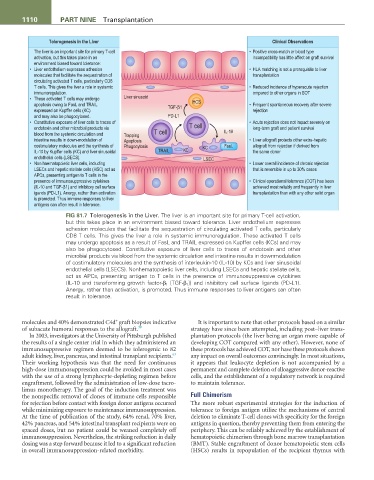
                       FiG 81.7  Tolerogenesis in the Liver. The liver is an important site for primary T-cell activation,
                       but this takes place in an environment biased toward tolerance. Liver endothelium expresses
                       adhesion molecules that facilitate the sequestration of circulating activated T cells, particularly
                       CD8 T cells. This gives the liver a role in systemic immunoregulation. These activated T cells
                       may undergo apoptosis as a result of FasL and TRAIL expressed on Kupffer cells (KCs) and may
                       also be phagocytosed. Constitutive exposure of liver cells to traces of endotoxin and other
                       microbial products via blood from the systemic circulation and intestine results in downmodulation
                       of costimulatory molecules and the synthesis of interleukin-10 (IL-10) by KCs and liver sinusoidal
                       endothelial cells (LSECS). Nonhematopoietic liver cells, including LSECs and hepatic stellate cells,
                       act as APCs, presenting antigen to T cells in the presence of immunosuppressive cytokines
                       (IL-10 and transforming growth factor-β 1  [TGF-β 1 ]) and inhibitory cell surface ligands (PD-L1).
                       Anergy, rather than activation, is promoted. Thus immune responses to liver antigens can often
                       result in tolerance.


                                       +
        molecules and 40% demonstrated C4d  graft biopsies indicative   It is important to note that other protocols based on a similar
        of subacute humoral responses to the allograft. 39     strategy have since been attempted, including post–liver trans-
           In 2003, investigators at the University of Pittsburgh published   plantation protocols (the liver being an organ more capable of
        the results of a single center trial in which they administered an   developing COT compared with any other). However, none of
        immunosuppressive regimen deemed to be tolerogenic to 82   these protocols has achieved COT, nor have these protocols shown
                                                         63
        adult kidney, liver, pancreas, and intestinal transplant recipients.    any impact on overall outcomes convincingly. In most situations,
        Their working hypothesis was that the need for continuous   it appears that leukocyte depletion is not accompanied by a
        high-dose immunosuppression could be avoided in most cases   permanent and complete deletion of alloaggressive donor-reactive
        with the use of a strong lymphocyte-depleting regimen before   cells, and the establishment of a regulatory network is required
        engraftment, followed by the administration of low-dose tacro-  to maintain tolerance.
        limus monotherapy. The goal of the induction treatment was
        the nonspecific removal of clones of immune cells responsible   Full Chimerism
        for rejection before contact with foreign donor antigens occurred   The more robust experimental strategies for the induction of
        while minimizing exposure to maintenance immunosuppression.   tolerance to foreign antigen utilize the mechanisms of central
        At the time of publication of the study, 64% renal, 70% liver,   deletion to eliminate T-cell clones with specificity for the foreign
        42% pancreas, and 54% intestinal transplant recipients were on   antigens in question, thereby preventing them from entering the
        spaced doses, but no patient could be weaned completely off   periphery. This can be reliably achieved by the establishment of
        immunosuppression. Nevertheless, the striking reduction in daily   hematopoietic chimerism through bone marrow transplantation
        dosing was a step forward because it led to a significant reduction   (BMT). Stable engraftment of donor hematopoietic stem cells
        in overall immunosuppression-related morbidity.        (HSCs) results in repopulation of the recipient thymus with

