


Page 1153 - Clinical Immunology_ Principles and Practice ( PDFDrive )
P. 1153
1118         Part NINE  Transplantation


              100                                                TABLE 82.2  Staging and Grading of acute
                                                NK-ve  87%
               80                                                Graft-Versus-Host Disease (aGvHD)
                                              NK+ve  62%         Stage Skin         Liver    Gastrointestinal system
                                                                                    (Bilirubin) (GI) (Stool output)
             % surviving                                         0     None         <2 mg/dL  Adult: <500 mL/day
               60
               40
                                                                 1     Rash <25% BSA  2–3 mg/dL  Child: <10 mL/kg/day
                                                                                             Adult: 500–999 mL/day
               20                                                                            Child: 10–19.9 mL/kg/day or
                                               P<0.01                                         persistent nausea,
                                                                                              vomiting, or anorexia, with
                0                                                                             a positive upper GI biopsy
                 0          2000       4000       6000           2     Rash 25–50%   3–6 mg/dL  Adult: 1000–1500 mL/day
                                 Days                                   BSA                  Child: 20–30 mL/kg/day
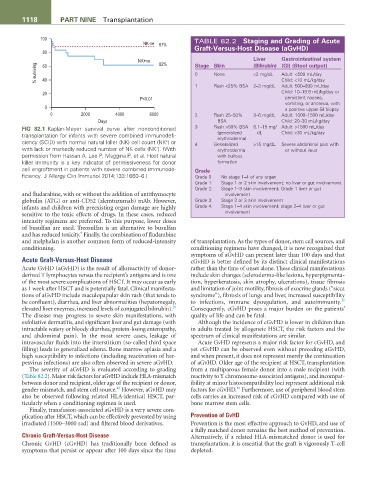
        FIG 82.1  Kaplan-Meyer survival curve after nonconditioned   3  Rash >50% BSA  6.1–15 mg/  Adult: >1500 mL/day
        transplantation for infants with severe combined immunodefi-    (generalized   dL    Child: >30 mL/kg/day
                                                                        erythroderma)
                                                       +
        ciency (SCID) with normal natural killer (NK) cell count (NK ) or   4  Generalized   >15 mg/dL  Severe abdominal pain with
                                                    −
        with lack or markedly reduced number of NK cells (NK ). (With   erythroderma          or without ileus
        permission from Hassan A, Lee P, Maggina P, et al. Host natural   with bullous
        killer immunity is a key indicator of permissiveness for donor   formation
        cell engraftment in patients with severe combined immunode-  Grade
        ficiency. J Allergy Clin Immunol 2014;133:1660–6.)       Grade 0  No stage 1–4 of any organ
                                                                 Grade 1:  Stage 1 or 2 skin involvement; no liver or gut involvement
                                                                 Grade 2:  Stage 1–3 skin involvement; Grade 1 liver or gut
        and fludarabine, with or without the addition of antithymocyte     involvement
        globulin (ATG) or anti-CD52 (alemtuzumab) mAb. However,   Grade 3:  Stage 2 or 3 skin involvement
        infants and children with preexisting organ damage are highly   Grade 4:  Stage 1–4 skin involvement; stage 2–4 liver or gut
        sensitive to the toxic effects of drugs. In these cases, reduced   involvement
        intensity regimens are preferred. To this purpose, lower doses
        of busulfan are used. Treosulfan is an alternative to busulfan
                           9
        and has reduced toxicity.  Finally, the combination of fludarabine
        and melphalan is another common form of reduced-intensity   of transplantation. As the types of donor, stem cell sources, and
        conditioning.                                          conditioning regimens have changed, it is now recognized that
                                                               symptoms of aGvHD can present later than 100 days and that
        Acute Graft-Versus-Host Disease                        cGvHD is better defined by its distinct clinical manifestations
        Acute GvHD (aGvHD) is the result of alloreactivity of donor-  rather than the time of onset alone. These clinical manifestations
        derived T lymphocytes versus the recipient’s antigens and is one   include skin changes (scleroderma-like lesions, hyperpigmenta-
        of the most severe complications of HSCT. It may occur as early   tion, hyperkeratosis, skin atrophy, ulcerations), tissue fibrosis
        as 1 week after HSCT and is potentially fatal. Clinical manifesta-  and limitation of joint motility, fibrosis of exocrine glands (“sicca
        tions of aGvHD include maculopapular skin rash (that tends to   syndrome”), fibrosis of lungs and liver, increased susceptibility
                                                                                                                 10
        be confluent), diarrhea, and liver abnormalities (hepatomegaly,   to infections, immune dysregulation, and autoimmunity.
                                                         10
        elevated liver enzymes, increased levels of conjugated bilirubin).    Consequently, cGvHD poses a major burden on the patients’
        The disease may progress to severe skin manifestations, with   quality of life and can be fatal.
        exfoliative dermatitis, and significant liver and gut damage (with   Although the incidence of cGvHD is lower in children than
        intractable watery or bloody diarrhea, protein-losing enteropathy,   in adults treated by allogeneic HSCT, the risk factors and the
        and abdominal pain). In the most severe cases, leakage of   spectrum of clinical manifestations are similar.
        intravascular fluids into the interstitium (so-called third space   Acute GvHD represents a major risk factor for cGvHD, and
        filling) leads to generalized edema. Bone marrow aplasia and a   yet cGvHD can be observed even without preceding aGvHD,
        high susceptibility to infections (including reactivation of her-  and when present, it does not represent merely the continuation
        pesvirus infections) are also often observed in severe aGvHD.  of aGvHD. Older age of the recipient at HSCT, transplantation
           The  severity of  aGvHD  is  evaluated  according  to  grading   from a multiparous female donor into a male recipient (with
        (Table 82.2). Major risk factors for aGvHD include HLA-mismatch   reactivity to Y chromosome-associated antigens), and incompat-
        between donor and recipient, older age of the recipient or donor,   ibility at minor histocompatibility loci represent additional risk
                                       10
                                                                              10
        gender mismatch, and stem cell source.  However, aGvHD may   factors for cGvHD.  Furthermore, use of peripheral blood stem
        also be observed following related HLA-identical HSCT, par-  cells carries an increased risk of cGvHD compared with use of
        ticularly when a conditioning regimen is used.         bone marrow stem cells.
           Finally, transfusion-associated aGvHD is a very severe com-
        plication after HSCT, which can be effectively prevented by using   Prevention of GvHD
        irradiated (1500–3000 rad) and filtered blood derivatives.  Prevention is the most effective approach to GvHD, and use of
                                                               a fully matched donor remains the best method of prevention.
        Chronic Graft-Versus-Host Disease                      Alternatively, if a related HLA-mismatched donor is used for
        Chronic GvHD (cGvHD) has traditionally been defined as   transplantation, it is essential that the graft is vigorously T-cell
        symptoms that persist or appear after 100 days since the time   depleted.

