


Page 1236 - Clinical Immunology_ Principles and Practice ( PDFDrive )
P. 1236
1198         ParT TEN  Prevention and Therapy of Immunological Diseases


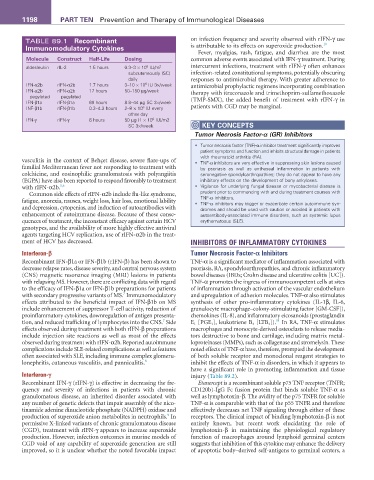
         TABLE 89.1 recombinant                                on infection frequency and severity observed with rIFN-γ use
                                                                                                           10
         Immunomodulatory Cytokines                            is attributable to its effects on superoxide production.
                                                                  Fever,  myalgias,  rash,  fatigue,  and  diarrhea  are  the most
          Molecule  Construct  Half-Life  Dosing               common adverse events associated with IFN-γ treatment. During
                                                 6
          aldesleukin  rIL-2  1.5 hours   0.3–3 × 10  IU/m     intercurrent infections, treatment with rIFN-γ often enhances
                                                     2
                                           subcutaneously (SC)   infection-related constitutional symptoms, potentially obscuring
                                           daily               responses to antimicrobial therapy. With greater adherence to
          IFN-α2b   rIFN-α2b  1.7 hours   3–10 × 10  IU 3×/week  antimicrobial prophylactic regimens incorporating combination
                                                 6
          IFN-α2b   rIFN-α2b   17 hours   50–150 µg/week       therapy with itraconazole and trimethoprim-sulfamethoxazole
           pegylated  pegylated
          IFN-β1a   rIFN-β1a  69 hours    8.8–44 µg SC 3×/week  (TMP-SMX), the  added  benefit  of treatment with  rIFN-γ  in
                                                6
          INF-β1b   rIFN-β1b  0.2–4.3 hours  2–8 × 10  IU every   patients with CGD may be marginal.
                                           other day
                                                   6
          IFN-γ     rIFN-γ    6 hours     50 µg (1 × 10  IU)/m2
                                           SC 3×/week              KEY CONCEPTS
                                                                 Tumor Necrosis Factor-α (GR) Inhibitors
                                                                 •  Tumor necrosis factor (TNF)-α inhibitor treatment significantly improves
                                                                   patient symptoms and function and inhibits structural damage in patients
                                                                   with rheumatoid arthritis (RA).
        vasculitis in the context of Behçet disease, severe flare-ups of   •  TNF-α inhibitors are very effective in suppressing skin lesions caused
        familial Mediterranean fever not responding to treatment with   by psoriasis as well as entheseal inflammation in patients with
        colchicine, and eosinophilic granulomatosis with polyangiitis   seronegative spondyloarthropathies; they do not appear to have any
        (EGPA) have also been reported to respond favorably to treatment   inhibitory effects on the development of bony ankyloses.
        with rIFN-α2b. 5,6                                       •  Vigilance for underlying fungal disease or mycobacterial disease is
           Common side effects of rIFN-α2b include flu-like syndrome,   prudent prior to commencing with and during treatment courses with
                                                                   TNF-α inhibitors.
        fatigue, anorexia, nausea, weight loss, hair loss, emotional lability   •  TNF-α inhibitors may trigger or exacerbate certain autoimmune syn-
        and depression, cytopenias, and induction of autoantibodies with   dromes and should be used with caution or avoided in patients with
        enhancement of autoimmune disease. Because of these conse-  autoantibody-associated immune disorders, such as systemic lupus
        quences of treatment, the inconstant efficacy against certain HCV   erythematosus (SLE).
        genotypes, and the availability of more highly effective antiviral
        agents targeting HCV replication, use of rIFN-α2b in the treat-
        ment of HCV has decreased.                             INHIBITORS OF INFLAMMATORY CYTOKINES
        Interferon-β                                           Tumor Necrosis Factor-α Inhibitors
        Recombinant IFN-β1a or IFN-β1b (rIFN-β) has been shown to   TNF-α is a significant mediator of inflammation associated with
        decrease relapse rates, disease severity, and central nervous system   psoriasis, RA, spondyloarthropathies, and chronic inflammatory
        (CNS) magnetic resonance imaging (MRI) lesions in patients   bowel diseases (IBDs; Crohn disease and ulcerative colitis [UC]).
        with relapsing MS. However, there are conflicting data with regard   TNF-α promotes the ingress of immunocompetent cells at sites
        to the efficacy of IFN-β1a or IFN-β1b preparations for patients   of inflammation through activation of the vascular endothelium
                                         7
        with secondary progressive variants of MS.  Immunomodulatory   and upregulation of adhesion molecules. TNF-α also stimulates
        effects attributed to the beneficial impact of IFN-β1b on MS   synthesis of other pro-inflammatory cytokines (IL-1β, IL-6,
        include enhancement of suppressor T-cell activity, reduction of   granulocyte macrophage–colony-stimulating factor [GM-CSF]),
        proinflammatory cytokines, downregulation of antigen presenta-  chemokines (IL-8), and inflammatory eicosanoids (prostaglandin
                                                      7
                                                                                           11
        tion, and reduced trafficking of lymphocytes into the CNS.  Side   E 1  [PGE 1], leukotriene B 4 [LTB 4 ]).  In RA, TNF-α stimulates
        effects observed during treatment with both rIFN-β preparations   macrophages and monocyte-derived osteoclasts to release media-
        include injection site reactions as well as most of the effects   tors destructive to bone and cartilage, including matrix metal-
        observed during treatment with rIFN-α2b. Reported autoimmune   loproteinases (MMPs), such as collagenase and stromelysin. These
        complications include SLE-related complications as well as features   noted effects of TNF-α have, therefore, prompted the development
        often associated with SLE, including immune complex glomeru-  of both soluble receptor and monoclonal reagent strategies to
        lonephritis, cutaneous vasculitis, and panniculitis. 8  inhibit the effects of TNF-α in disorders, in which it appears to
                                                               have a significant role in promoting inflammation and tissue
        Interferon-γ                                           injury (Table 89.2).
        Recombinant IFN-γ (rIFN-γ) is effective in decreasing the fre-  Etanercept is a recombinant soluble p75 TNF receptor (TNFR;
        quency and severity of infections in patients with chronic   CD120b)-IgG Fc fusion protein that binds soluble TNF-α as
        granulomatous disease, an inherited disorder associated with   well as lymphotoxin-β. The avidity of the p75 TNFR for soluble
        any number of genetic defects that impair assembly of the nico-  TNF-α is comparable with that of the p55 TNFR and therefore
        tinamide adenine dinucleotide phosphate (NADPH) oxidase and   effectively decreases net TNF signaling through either of these
                                                        9
        production of superoxide anion metabolites in neutrophils.  In   receptors. The clinical impact of binding lymphotoxin-β is not
        permissive X-linked variants of chronic granulomatous disease   entirely known, but recent work elucidating the role of
        (CGD), treatment with rIFN-γ appears to increase superoxide   lymphotoxin-β in maintaining the physiological regulatory
        production. However, infection outcomes in murine models of   function of macrophages around lymphoid germinal centers
        CGD void of any capability of superoxide generation are still   suggests that inhibition of this cytokine may enhance the delivery
        improved, so it is unclear whether the noted favorable impact   of apoptotic body–derived self-antigens to germinal centers, a

