


Page 460 - Clinical Immunology_ Principles and Practice ( PDFDrive )
P. 460
ChaPTEr 31  Immune Responses to Helminth Infection                 439


                                              Epithelial cells              Langerhans cells


                                                                           TSLP/other cytokines?
                                     TSLP       TSLP  IL-33/  IL-25
                                         Basophil     TSLP                Relmα/FIZZ1
                                                               Natural
                                                              helper cell
                               Dendritic    IL-4 IL-13
                                 cells                                   Alternatively activated  Eosinophil
                                                                YM-1       macrophages
                                              Th0      IL-4 IL-13  Arginase-1
                                                                       IL-5  Eosinophil differentiation
                                                                       IL-4  Promotes Th2 differentiation,
                                                                           IgE production
                                                         Th2           IL-10  Role in immunomodulation
                                              Treg                     IL-9  Role in mastocytosis

                                                   IL-10

                                        Bystander suppression  Tfh   B cell        IgG1
                                       (allergy, autoimmunity, etc.)
                                                               IL-4             IgE     Basophil
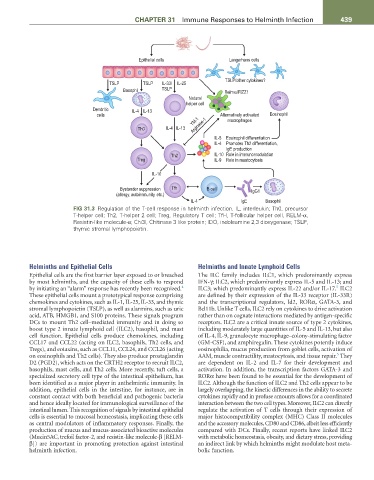
                         FIG 31.3  Regulation of the T-cell response in helminth infection. IL, interleukin; Th0, precursor
                         T-helper cell; Th2, T-helper 2 cell; Treg, Regulatory T cell; TfH, T-follicular helper cell, RELM-α,
                         Resistin-like molecule-α; Chi3l, Chitinase 3 like protein; IDO, indoleamine 2,3 dioxygenase; TSLP,
                         thymic stromal lymphopoietin.


           Helminths and Epithelial Cells                         Helminths and Innate Lymphoid Cells
           Epithelial cells are the first barrier layer exposed to or breached   The ILC family includes ILC1, which predominantly express
           by most helminths, and the capacity of these cells to respond   IFN-γ; ILC2, which predominantly express IL-5 and IL-13; and
                                                            4
                                                                                                               5
           by initiating an “alarm” response has recently been recognized.    ILC3; which predominantly express IL-22 and/or IL-17.  ILC2
           These epithelial cells mount a prototypical response comprising   are defined by their expression of the IL-33 receptor (IL-33R)
           chemokines and cytokines, such as IL-1, IL-25, IL-33, and thymic   and the transcriptional regulators, Id2, RORα, GATA-3, and
           stromal lymphopoietin (TSLP), as well as alarmins, such as uric   Bcl11b. Unlike T cells, ILC2 rely on cytokines to drive activation
           acid, ATB, HMGB1, and S100 proteins. These signals program   rather than on cognate interactions mediated by antigen-specific
           DCs to mount Th2 cell–mediated immunity and in doing so   receptors. ILC2 are a critical innate source of type 2 cytokines,
           boost type 2 innate lymphoid cell (ILC2), basophil, and mast   including moderately large quantities of IL-5 and IL-13, but also
           cell function. Epithelial cells produce chemokines, including   of IL-4, IL-9, granulocyte macrophage–colony-stimulating factor
           CCL17 and CCL22 (acting on ILC2, basophils, Th2 cells, and   (GM-CSF), and amphiregulin. These cytokines potently induce
           Tregs), and eotaxins, such as CCL11, CCL24, and CCL26 (acting   eosinophilia, mucus production from goblet cells, activation of
                                                                                                               5
           on eosinophils and Th2 cells). They also produce prostaglandin   AAM, muscle contractility, mastocytosis, and tissue repair.  They
           D2 (PGD2), which acts on the CRTH2 receptor to recruit ILC2,   are dependent on IL-2 and IL-7 for their development and
           basophils, mast cells, and Th2 cells. More recently, tuft cells, a   activation. In addition, the transcription factors GATA-3 and
           specialized secretory cell type of the intestinal epithelium, has   RORα have been found to be essential for the development of
           been identified as a major player in anthelmintic immunity. In   ILC2. Although the function of ILC2 and Th2 cells appear to be
           addition, epithelial cells in  the intestine, for instance,  are in   largely overlapping, the kinetic differences in the ability to secrete
           constant contact with both beneficial and pathogenic bacteria   cytokines rapidly and in profuse amounts allows for a coordinated
           and hence ideally located for immunological surveillance of the   interaction between the two cell types. Moreover, ILC2 can directly
           intestinal lumen. This recognition of signals by intestinal epithelial   regulate the activation of T cells through their expression of
           cells is essential to mucosal homeostasis, implicating these cells   major histocompatibility complex (MHC) Class II molecules
           as central modulators of inflammatory responses. Finally, the   and the accessory molecules, CD80 and CD86, albeit less efficiently
           production of mucus and mucus-associated bioactive molecules   compared with DCs. Finally, recent reports have linked ILC2
           (Mucin5AC, trefoil factor-2, and resistin-like molecule-β [RELM-  with metabolic homeostasis, obesity, and dietary stress, providing
           β]) are important in promoting protection against intestinal   an indirect link by which helminths might modulate host meta-
           helminth infection.                                    bolic function.

