


Page 728 - Clinical Immunology_ Principles and Practice ( PDFDrive )
P. 728
CHaPtEr 51  Systemic Lupus Erythematosus                 701


           “Treat-to-target” recommendations in SLE from an international   indications, whereas others are still in the developmental stages.
           SLE task force include the following more specific guidelines:   These therapies, in general, have more specific immunological
           the treatment target should be remission of organ manifestations;   targets than standard treatments. Although multiple agents have
           factors such as pain that  negatively influences health-related   been tested in animal models of disease, we will focus only on
           quality of life should be addressed; maintenance treatment should   therapies that have been given to humans. Several of these agents
           aim for the lowest glucocorticoid dose needed to control disease;   have been recently evaluated in phase III clinical trials and have
           and relevant therapies adjuvant to any immunomodulation should   been unable to demonstrate superiority over treatment with
           be considered to control comorbidity in SLE. 75        placebo or standard of care. Although imperfect trial design may
             Some genetic factors predicting risk of toxicity or therapeutic   account for some of these failures, the possibility remains that
           benefit for individual agents have been identified. Polymorphisms   these agents are not effective treatments for SLE and do not confer
           of a key enzyme in the metabolism of azathioprine, thiopurine   a substantial improvement over current standard-of-care therapies.
           methyltransferase (TPMT), are common; 0.3% and 11% of   Rituximab (anti-CD20 antibody), a B-cell–directed therapy
           Caucasians are homozygous and heterozygous, respectively, for   approved for use in rheumatoid arthritis, targeting all B cells
                                                      76
           mutations associated with altered expression of TPMT.  TPMT-  except plasma cells, failed to demonstrate improved performance
           deficient patients are especially susceptible to leukopenia and   over standard of care in trials of patients with active SLE, or in
           pancytopenia associated with azathioprine. Cyclophosphamide   patients with active lupus nephritis added to a background therapy
           is metabolized to its active form by cytochrome P450. Individuals   of MMF and corticosteroids. Elevated BAFF levels are present
           heterozygous or homozygous for a specific cytochrome P450   after B-cell depletion. These can exacerbate the impaired tolerance
           polymorphism (CYP2C19*2) have a lower probability of develop-  of SLE. Thus studies are ongoing to evaluate the efficacy of
           ing premature ovarian failure, but they also show a poorer   rituximab followed by belimumab. Abatacept (CTLA4-Ig), which
           response to therapy. 77                                is also approved for rheumatoid arthritis and blocks T-cell activa-
             Although  corticosteroids  are  the  foundation  of treatment,   tion, was no better than placebo in trials of active lupus and of
           exposure must be minimized to the greatest extent given their   lupus nephritis, again added to background therapy of
           multiple and frequent side effects, including hypertension, diabetes   corticosteroids and MMF. A redesigned trial of abatacept for SLE
           mellitus, increased susceptibility to infection, bone loss, and   is now being conducted. Epratuzumab (anti-CD22 antibody)
           weight gain (Chapter 86). Additional disease-modifying agents   targeting all B cells failed a phase III clinical trial. TACI-Ig, which
           that are also steroid-sparing include antimalarials (hydroxychlo-  blocks both BAFF and APRIL, is undergoing clinical study, although
           roquine), antimetabolites such as azathioprine (1–2.5 mg/kg per   previous clinical trials were terminated prematurely because of
           day), methotrexate (7.5–25 mg/week), leflunomide (10–20 mg/  infectious complications. Tocilizumab, an antibody to the IL-6
           day), and mycophenolate mofetil ([MMF], 2–3 g/day), and   receptor, a cytokine involved in B-cell survival and activation as
           alkylating agents such as cyclophosphamide (monthly pulse   well as in differentiation of Th17 and Tfh cells, which is approved
                    2
           0.5–1.0 g/m ) (Chapter 87). When more conventional therapies   for RA, demonstrated unacceptable toxicity in SLE. Other agents
           have failed, anecdotal reports, case series, and open-label studies   in earlier clinical development are inhibitors of intracellular B-cell
           suggest the use of intravenous immunoglobulin (2 g/kg over   signaling molecules designed to block B-cell activation; R406, a
           2–5 days), thalidomide (50–100 mg/day), or cyclosporine (3–5 mg/  SYK inhibitor; and Janus tyrosine kinase (JAK) inhibitors. The
           kg/day). Medications such as dapsone, danazol, and chlorambucil   Jak inhibitors are being studied using topical administration for
           may be efficacious in cutaneous disease, hematological disease,   discoid lupus and oral administration for systemic disease.
           and in severe refractory disease, respectively, but in general these   Potential therapies aimed at DCs include vitamin D, which
           medications are not commonly used due to their toxicity and   blocks DC maturation and T-cell activation, and inhibitory
           the introduction and availability of better-tolerated, efficacious   oligodeoxynucleotides, which  block  TLR9  signaling  and  DC
           agents. Belimumab, a monoclonal antibody directed against BAFF   maturation. However, a study of vitamin D supplementation
           (Chapter 89), was approved by the FDA for treatment of SLE   designed to assess vitamin D inhibition of DC activation failed
           in 2011 and represents a therapeutic option for patients with   to demonstrate efficacy. Hydroxychloroquine, a standard agent
           nonrenal, non-CNS active disease.                      for lupus, interferes with TLR7 and TLR9 signaling by preventing
             A number of newer agents are on the horizon for treatment   acidification of the endosomal compartment. A study of a novel
           of SLE. Some are  currently  available but  approved for other   RNase is under way.


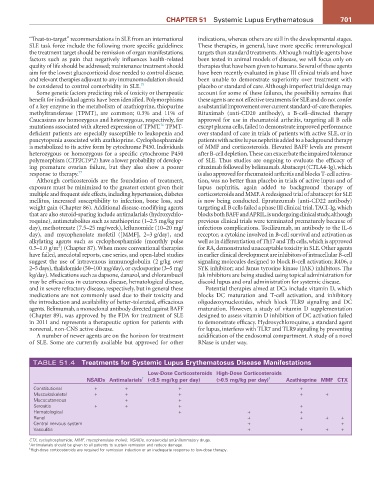
            TABLE 51.4  treatments for Systemic Lupus Erythematosus Disease Manifestations
                                                 Low-Dose Corticosteroids  High-Dose Corticosteroids
                             NSaIDs antimalarials †  (<0.5 mg/kg per day)  (>0.5 mg/kg per day) ‡  azathioprine MMF CtX
            Constitutional      +         +                +                                       +
            Musculoskeletal     +         +                +                                       +        +
            Mucocutaneous                 +                +
            Serositis           +         +                +                                       +
            Hematological                                  +                      +                +
            Renal                                                                 +                +        +    +
            Central nervous system                                                +                              +
            Vasculitis                                                            +                +        +    +
           CTX, cyclophosphamide; MMF, mycophenolate mofetil; NSAIDs, nonsteroidal antiinflammatory drugs.
           † Antimalarials should be given to all patients to sustain remission and reduce damage.
           ‡ High-dose corticosteroids are required for remission induction or an inadequate response to low-dose therapy.

