


Page 896 - Clinical Immunology_ Principles and Practice ( PDFDrive )
P. 896
CHaPtEr 63  Bullous Diseases of the Skin and Mucous Membranes                   867


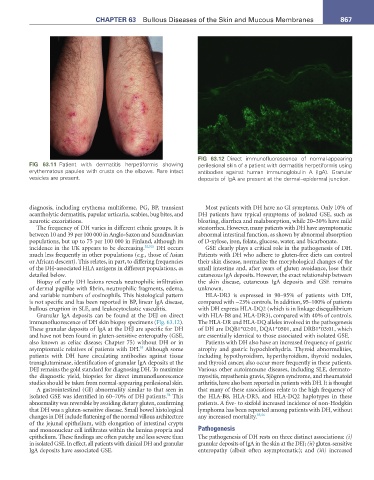
                                                                  FIG 63.12  Direct immunofluorescence of normal-appearing
           FIG 63.11  Patient with dermatitis herpetiformis showing   perilesional skin of a patient with dermatitis herpetiformis using
           erythematous papules with crusts on the elbows. Rare intact   antibodies  against  human  immunoglobulin  A  (IgA). Granular
           vesicles are present.                                  deposits of IgA are present at the dermal–epidermal junction.


           diagnosis, including erythema multiforme, PG, BP, transient   Most patients with DH have no GI symptoms. Only 10% of
           acantholytic dermatitis, papular urticaria, scabies, bug bites, and   DH patients have typical symptoms of isolated GSE, such as
           neurotic excoriations.                                 bloating, diarrhea and malabsorption, while 20–30% have mild
             The frequency of DH varies in different ethnic groups. It is   steatorrhea. However, many patients with DH have asymptomatic
           between 10 and 39 per 100 000 in Anglo-Saxon and Scandinavian   abnormal intestinal function, as shown by abnormal absorption
           populations, but up to 75 per 100 000 in Finland, although its   of D-xylose, iron, folate, glucose, water, and bicarbonate.
           incidence in the UK appears to be decreasing. 52,52a  DH occurs   GSE clearly plays a critical role in the pathogenesis of DH.
           much less frequently in other populations (e.g., those of Asian   Patients with DH who adhere to gluten-free diets can control
           or African descent). This relates, in part, to differing frequencies   their skin disease, normalize the morphological changes of the
           of the DH-associated HLA antigens in different populations, as   small intestine and, after years of gluten avoidance, lose their
           detailed below.                                        cutaneous IgA deposits. However, the exact relationship between
             Biopsy of early DH lesions reveals neutrophilic infiltration   the skin disease, cutaneous IgA deposits and GSE remains
           of dermal papillae with fibrin, neutrophilic fragments, edema,   unknown.
           and variable numbers of eosinophils. This histological pattern   HLA-DR3 is expressed in 90–95% of patients with DH,
           is not specific and has been reported in BP, linear IgA disease,   compared with ~23% controls. In addition, 95–100% of patients
           bullous eruption in SLE, and leukocytoclastic vasculitis.  with DH express HLA-DQ2 (which is in linkage disequilibrium
             Granular  IgA  deposits  can  be  found  at  the  DEJ  on  direct   with HLA-B8 and HLA-DR3), compared with 40% of controls.
           immunofluorescence of DH skin biopsy specimens (Fig. 63.12).   The HLA-DR and HLA-DQ alleles involved in the pathogenesis
           These granular deposits of IgA at the DEJ are specific for DH   of DH are DQB1*02:01, DQA1*0501, and DRB1*03:01, which
           and have not been found in gluten-sensitive enteropathy (GSE,   are essentially identical to those associated with isolated GSE.
           also known as celiac disease; Chapter 75) without DH or in   Patients with DH also have an increased frequency of gastric
                                               53
           asymptomatic relatives of patients with DH.  Although some   atrophy and gastric hypochlorhydria. Thyroid abnormalities,
           patients with DH have circulating antibodies against tissue   including hypothyroidism, hyperthyroidism, thyroid nodules,
           transglutaminase, identification of granular IgA deposits at the   and thyroid cancer, also occur more frequently in these patients.
           DEJ remains the gold standard for diagnosing DH. To maximize   Various other autoimmune diseases, including SLE, dermato-
           the diagnostic yield, biopsies for direct immunofluorescence   myositis, myasthenia gravis, Sjögren syndrome, and rheumatoid
           studies should be taken from normal-appearing perilesional skin.  arthritis, have also been reported in patients with DH. It is thought
             A gastrointestinal (GI) abnormality similar to that seen in   that many of these associations relate to the high frequency of
                                                        54
           isolated GSE was identified in 60–70% of DH patients.  This   the HLA-B8, HLA-DR3, and HLA-DQ2 haplotypes in these
           abnormality was reversible by avoiding dietary gluten, confirming   patients. A five- to sixfold increased incidence of non-Hodgkin
           that DH was a gluten-sensitive disease. Small bowel histological   lymphoma has been reported among patients with DH, without
           changes in DH include flattening of the normal villous architecture   any increased mortality. 55,56
           of the jejunal epithelium, with elongation of intestinal crypts
           and mononuclear cell infiltrates within the lamina propria and   Pathogenesis
           epithelium. These findings are often patchy and less severe than   The pathogenesis of DH rests on three distinct associations: (i)
           in isolated GSE. In effect, all patients with clinical DH and granular   granular deposits of IgA in the skin at the DEJ; (ii) gluten-sensitive
           IgA deposits have associated GSE.                      enteropathy (albeit often asymptomatic); and  (iii) increased

