


Page 1144 - Hall et al (2015) Principles of Critical Care-McGraw-Hill
P. 1144
CHAPTER 85: Seizures in the Intensive Care Unit  783


                    Prospective  data  indicate  that  EEG  patterns  may  also  be  helpful  in   efficacy of phenytoin in the control of seizures is well established, several
                    determining prognosis. One study found that the presence of burst sup-  inherent properties of the drug limit its tolerability. In order to improve
                    pression, post-SE ictal discharges, and periodic lateralized epileptiform   aqueous solubility, phenytoin is suspended in a highly alkaline solution
                    discharges during the initial 24 hours after control of SE were statisti-  that is comprised of 40% propylene glycol.  The propylene glycol vehicle
                                                                                                        68
                    cally significantly correlated with mortality and poor outcome.  Burst   has been linked to hypotension and cardiac arrhythmias during phe-
                                                                  63
                    suppression secondary to pharmacologic coma for treatment of SE must   nytoin infusion; however, phenytoin itself may be partly responsible for
                    be differentiated from burst suppression due to widespread cortical   hemodynamic instability. The caustic pH of the parenteral formulation
                    injury, or that seen as the last stage of the EEG evolution of SE. The   can cause injection site reactions that can range from burning at the IV
                    availability of continuous paperless electroencephalographic monitoring   site to necrosis in the event of extravasation.
                    allows for detection of seizure activity over a long period. In critically   The phenytoin prodrug fosphenytoin is water soluble; therefore the
                    ill  patients with  an otherwise unexplained decrease in  mental  status,   parenteral formulation is more neutral than that of phenytoin and
                    electrographic seizures were captured on continuous EEG monitoring   contains no organic solvents. Cardiovascular side effects were initially
                    in 93% by 48 hours, and only 7% after 48 hours ; therefore, continuous   thought to be less common with fosphenytoin, but subsequent experi-
                                                      11
                    EEG monitoring should at least be continued for 48 hours in comatose   ence suggests that hypotension and arrhythmias may follow its infusion.
                    patients. 6                                           Pain at the infusion site is significantly less common with fosphenytoin
                     The EEG can also provide information that is very useful in the   than with phenytoin.  In patients without IV access, fosphenytoin
                                                                                          69
                      diagnosis and management of other neurologic conditions. 64,65  can be safely administered intramuscularly. IM doses of fosphenytoin
                                                                          are well tolerated, require no cardiac monitoring, and are completely
                                                                          absorbed. Fosphenytoin is rapidly converted to phenytoin in vivo and
                    MANAGEMENT APPROACH                                   free phenytoin levels after fosphenytoin administration are not markedly
                        ■  ISOLATED SEIZURES                              different compared to phenytoin, although the time to reach the peak
                                                                          level after IM administration is several hours.
                    Not all patients who have seizures require anticonvulsant therapy.   A 20-mg/kg loading dose of phenytoin brings most patients to the
                    Making the decision to administer anticonvulsants to a hospitalized   desired concentration of 20 µg/mL (corresponding to an unbound or
                    patient who experiences one or a few seizures mandates consideration of   free concentration of 2 µg/mL). Fosphenytoin is dosed by phenytoin-
                    a provisional cause, estimation of the likelihood of recurrence, and rec-  equivalent units (PE); therefore no dosage adjustments are needed when
                    ognition of the utility and limitations of anticonvulsants. For example,   converting patients from phenytoin to fosphenytoin. Fosphenytoin can
                    seizures due to ethanol or other hypnosedative withdrawal do not need   be administered via intravenous infusion at rates of up to 150 mg PE/min,
                    chronic  treatment,  but  short-term  therapy  with  benzodiazepines  for   compared with a maximum rate of 50 mg/min for phenytoin. Both of
                    repeated or prolonged seizures may be warranted (Table 85-2). Seizures   these drug infusions should be started at a lower rate and increased
                    caused  by  metabolic  disturbances  such  as  hyponatremia  are  often   as tolerated. When loading doses of fosphenytoin are given IM, two
                    refractory to conventional anticonvulsant medications such as phe-  divided doses of 10 mg/kg each are recommended. After fosphenytoin
                    nytoin, and are best treated with correction of the underlying disorder   administration, phenytoin concentrations should not be measured
                    ( benzodiazepines may be useful for seizure suppression if needed while   until the biologic conversion to phenytoin is complete and the drug has
                    the metabolic problem is being corrected). Seizures related to nonketotic   equilibrated throughout the body, about 2 hours after an intravenous
                    hyperglycemia respond best to correction of hyperglycemia with insulin   infusion or 4 hours after an intramuscular injection of fosphenytoin.
                    and rehydration. 57                                   Phenytoin is approximately 90% protein bound in normal hosts, but the
                     A patient with CNS disease who has even one seizure should receive   unbound fraction is the active component. Patients with renal or hepatic
                    anticonvulsant  therapy  because  the  risk  of  seizure  recurrence  is  very   dysfunction or those taking drugs that compete for protein binding may
                    high. However, this treatment should be reviewed before discharge.   benefit from measuring the free (unbound) serum phenytoin concentra-
                    Initiating this treatment after the first unprovoked seizure may help delay   tion before increasing phenytoin doses due to apparently subtherapeutic
                    the appearance of subsequent seizures,  but probably does not influ-  total phenytoin concentrations.
                                                66
                    ence whether epilepsy subsequently develops.  Prophylactic therapy   The maintenance dose for phenytoin is typically in the range of 5
                                                      67
                    in patients at high risk for seizure, especially if the condition was seri-  to 7 mg/kg per day, but is highly variable because of individual differ-
                    ously complicated by a convulsion, is not unreasonable. Patients with   ences in metabolism and interactions with other drugs metabolized via
                    traumatic brain injury, intracerebral hemorrhages, and subarachnoid   the cytochrome P450 system. Maintenance doses can be given either
                    hemorrhages are frequently placed on anticonvulsants immediately     enterally or parenterally. Maintenance doses of IV or enteral liquid
                    upon admission, although no prospective randomized trials have proven   suspension phenytoin must be given in twice-daily divided doses since
                    a positive effect on outcome.                         their half-life is less than 24 hours. Extended-release capsules can be
                     In the ICU setting, phenytoin is often the first drug selected due to   given once a day. However, patients often do not tolerate more than 300
                    ease of administration and rapid assessment of blood levels. While the   or 400 mg of phenytoin enterally in any one dose secondary to nausea.


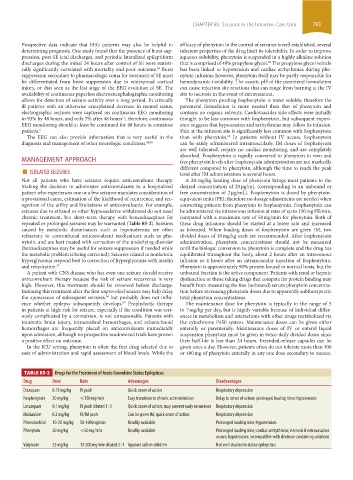
                      TABLE 85-2    Drugs for the Treatment of Acute Convulsive Status Epilepticus
                    Drug      Dose      Rate            Advantages                    Disadvantages
                    Diazepam  0.15 mg/kg  IV push       Quick onset of action         Respiratory depression
                    Fosphenytoin  20 mg/kg  <150 mg/min  Easy transition to chronic administration  Delay to onset of action; prolonged loading time; hypotension
                    Lorazepam  0.1 mg/kg  IV push diluted 1 : 1  Quick onset of action; may prevent early recurrence Respiratory depression
                    Midazolam  0.2 mg/kg  IV/IM push    Can be given IM; quick onset of action  Respiratory depression
                    Phenobarbital  10-20 mg/kg  50-100 mg/min  Readily available      Prolonged loading time; hypotension
                    Phenytoin  20 mg/kg  <50 mg/min     Readily available             Prolonged loading time; cardiac arrhythmias; necrosis if extravasation
                                                                                      occurs;  hypotension; incompatible with dextrose-containing solutions
                    Valproate  25 mg/kg  12-200 mg/min diluted 2 : 1 Appears safe in children  Not well studied in status epilepticus


            section06.indd   783                                                                                       1/23/2015   12:55:36 PM

