


Page 1146 - Hall et al (2015) Principles of Critical Care-McGraw-Hill
P. 1146
CHAPTER 85: Seizures in the Intensive Care Unit  785


                    more definitive treatment strategy for patients who have entered refrac-  leukocytes. The intensivist must be vigilant in monitoring for infection
                    tory SE (RSE).                                        since barbiturate-induced poikilothermia may mask fever. Despite these
                        ■  REFRACTORY STATUS EPILEPTICUS                  side effects, barbiturate anesthesia should not be rapidly discontinued
                                                                          if it is successful in terminating refractory SE. Continuing therapy for
                    Refractory status epilepticus evolves in 31% to 44% of patients in   at least 48 hours, gradual tapering of the infusion dose, and the admin-
                                                                                                                            93
                    SE.  Failure of a first-line anticonvulsant drug to terminate SE usually   istration of phenobarbital during the drug taper are recommended.
                      86
                    requires the use of a definitive therapy in anesthetic doses that are highly   Pentobarbital is loaded at 5 to 12 mg/kg followed by an infusion of 1 to
                    likely to cause significant respiratory suppression and hypotension.   10 mg/kg per hour. As an alternative, thiopental sodium may be given in
                    Therefore, mechanical ventilation is necessary, and invasive hemody-  75- to 125-mg IV boluses followed by infusion rates of 1 to 5 mg/kg per
                    namic monitoring is frequently required. Concomitant continuous EEG   hour. Both medications rapidly redistribute into adipose tissue; recovery
                    monitoring is also mandatory to confirm treatment success and monitor   of consciousness usually takes much longer after thiopental infusions
                    depth of sedation. The traditional goal of therapy is burst-suppression   than after pentobarbital. Elimination times can be greatly increased in
                    pattern on EEG for 12 to 24 hours prior to any attempts to wean medi-  obese patients after prolonged infusions. 90-100
                    cation.  Since  the  available  data  suggest  that  successful  treatment  and   The efficacy of alternative regimens needs further evaluation to define
                    improved outcome probably required seizure suppression regardless of   their role in the treatment of seizure emergencies. While there are many
                    background EEG activity,  we recommend cessation of electrographic   case reports, no convincing evidence or randomized trials are available
                                      87
                    seizures as the goal instead.                         to support early initiation of these interventions. 6
                     The agents used most frequently include propofol, midazolam, and   In brain tumor patients with RSE, the use of phenytoin, levetiracetam,
                    barbiturates.  Propofol is an intravenous anesthetic agent that acts   and pregabalin to abort RSE has been found safe and highly effective. 102
                             88
                                                                                                                         103
                    primarily on the GABA  receptor. Smaller series and case reports   Lacosamide, a modulator of voltage-gated sodium channels,  has
                                      A
                    documenting its efficacy in RSE are abundant,  but studies examining   also gained attention for the use in refractory SE. It has been reported
                                                      89
                                                                                                                       104
                    direct comparisons with other agents have had mixed results. 90-92  An   effective as an adjunct in refractory NCSE, especially focal SE ; how-
                                                                                                                            105
                    initial bolus of 1 to 2 mg/kg should be followed with a maintenance   ever, other series have not been able to confirm its efficacy in RSE.
                                                                                                                    103
                    infusion at 1 to 15 mg/kg per hour. Propofol is fast acting, highly lipid   It is available intravenously, and is easy to administer.  Common
                    soluble, and has little propensity to accumulate even with prolonged     dosing is a loading dose of 200 to 300 mg IV, followed by 100 to 200 mg
                    infusions.  Because of its rapid clearance, propofol should not be   maintenance every 12 hours. Success in the termination of RSE has
                           93
                    abruptly discontinued, but instead tapered gradually. Respiratory   also been reported for isoflurane, intravenous valproate, ketamine, and
                    depression and hypotension are extremely common, especially after   topiramate. Ketamine in particular is often described, probably at least
                    the initial bolus. Nutritional support must be adjusted in the setting of   partly due to its lack of cardiosuppressive side effects, and its potential
                    propofol infusion due to the high lipid and calorie content of the solu-  neuroprotective capacity given its structure as NMDA antagonist. 106
                    tion. Acidosis and rhabdomyolysis have been reported in both adults    Emerging insight into antibody-induced seizures and SE, mainly
                                                                      94
                    and children.  Careful monitoring of creatine kinase and blood pH   NMDA-receptor antibodies, has also triggered exploration of emergency
                              95
                    are prudent.                                          treatment of SE with immunosuppressants in selected cases, with high
                     Midazolam is a water-soluble benzodiazepine that has demonstrated   dose methylprednisolone and/or intravenous immunoglobulin. 106
                    high efficacy in refractory SE in adults and children. 96-98  Midazolam is   The application of therapeutic hypothermia, the use of which in RSE
                                                                                                       107
                    loaded at 0.2 mg/kg followed by continuous infusion of 0.05 to 2.0 mg/kg     has anecdotally been reported successful,  lacks data on a larger scale.
                    per hour. Respiratory depression may be encountered less frequently   Once SE is addressed, one must manage the major systemic complica-
                    than with other hypnosedatives, but should be anticipated. Since most   tions of SE. Patients with GCSE should be screened for rhabdomyolysis
                    patients with RSE are already intubated, concern for respiratory effects   with urine myoglobin and serum creatin kinase (CK) determination.
                    should not limit use. Clinically significant hypotension is rare even at   If  myoglobinuria  is  present  or  if  the  CK  concentration  is  more  than
                    the very high doses that are often required to address tachyphylaxis.    10 times the upper limit of normal, rehydration and urinary alkaliniza-
                                                                      99
                                                                                            81
                    Sedation is quickly reversed after short-term infusions are  discontinued.   tion should be instituted.  Prolonged or severe hyperthermia should be
                    However, terminal  half-lives  of three to  eight times  normal  have   aggressively treated with cooling blankets, ice packs, or other cooling
                    been reported with extended administration.  In addition, prolonged   modalities.
                                                     100
                    elimination times have been associated with critical illness and hepa-    ■
                    torenal dysfunction. High-dose barbiturates, most commonly pentobar-  SPECIAL CONSIDERATIONS FOR CHILDREN
                    bital, are extremely useful in RSE when used as third-line therapeutic   Treatment of seizures or SE in critically ill children generally parallels
                    choice,  but side effects can be severe and may limit use (Table 85-3).   that for adults. Intravenous access is often more difficult to achieve in
                         101
                    Hypotension can be refractory to initial resuscitative efforts, and the   children. Lorazepam and diazepam can both be administered by the rec-
                    patient may benefit from pulmonary artery catheterization to plan fluid   tal route (usually 0.5 mg/kg per rectum for both agents) and midazolam
                    and vasopressor management. Pulmonary infection is common due to   (0.2 mg/kg) via the IM, nasal, or buccal routes. Lorazepam is probably
                    prolonged intubation and impaired function of both respiratory cilia and   the first-line drug of choice for terminating SE in children as for adults.
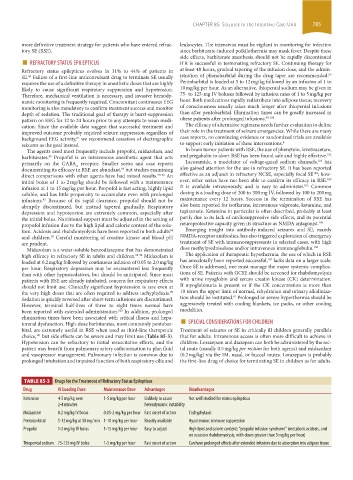
                      TABLE 85-3    Drugs for the Treatment of Refractory Status Epilepticus
                    Drug        IV loading Dose  Maintenance Dose  Advantages  Disadvantages
                    Ketamine    4-5 mg/kg over    1-5 mg/kg per hour  Unlikely to cause    Not well studied for status epilepticus
                                2-4 minutes                  hemodynamic instability
                    Midazolam   0.2 mg/kg IV bolus  0.05-2 mg/kg per hour Fast onset of action  Tachyphylaxis
                    Pentobarbital  5-12 mg/kg at 50 mg/min 1-10 mg/kg per hour  Readily available  Hypotension; immune suppression
                    Propofol    1-2 mg/kg IV bolus  1-15 mg/kg per hour  Easy to adjust  High lipid and calorie content; “propofol infusion syndrome” (metabolic acidosis, and
                                                                             on occasion rhabdomyolysis, with doses greater than 5 mg/kg per hour)
                    Thiopental sodium 75-125 mg IV bolus  1-5 mg/kg per hour  Fast onset of action  Can have prolonged effects after extended infusions due to absorption into adipose tissue


            section06.indd   785                                                                                       1/23/2015   12:55:37 PM

