


Page 464 - Review of Medical Microbiology and Immunology ( PDFDrive )
P. 464
mebooksfree.com
mebooksfree.com
mebooksfree.com
mebooksfree.com
mebooksfree.com mebooksfree.com mebooksfree.com mebooksfree.com C H mebooksfree.com mebooksfree.com
mebooksfree.com
mebooksfree.com
54
T
P
A
R
E
Cestodes
mebooksfree.com mebooksfree.com mebooksfree.com Cestodes of Minor Importance mebooksfree.com mebooksfree.com
mebooksfree.com
CHAPTER C ONTENT S
Introduction
Taenia
Self-assessment Questions
Summaries of Organisms
Diphyllobothrium
Practice Questions: USMLE & Course Examinations
Echinococcus
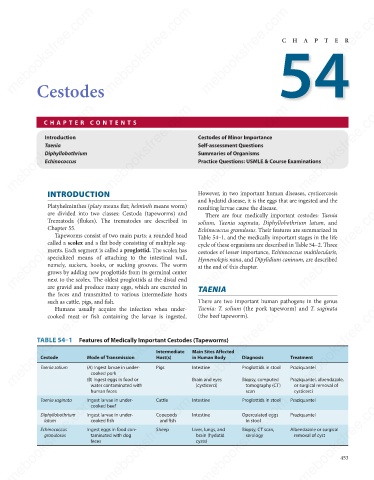
INTRODUCTION However, in two important human diseases, cysticercosis
and hydatid disease, it is the eggs that are ingested and the
mebooksfree.com
mebooksfree.com
mebooksfree.com mebooksfree.com mebooksfree.com solium, Taenia saginata, Diphyllobothrium latum, and mebooksfree.com
Platyhelminthes (platy means flat; helminth means worm)
resulting larvae cause the disease.
are divided into two classes: Cestoda (tapeworms) and
There are four medically important cestodes: Taenia
Trematoda (flukes). The trematodes are described in
Chapter 55.
Echinococcus granulosus. Their features are summarized in
Tapeworms consist of two main parts: a rounded head
Table 54–1, and the medically important stages in the life
called a scolex and a flat body consisting of multiple seg-
cycle of these organisms are described in Table 54–2. Three
ments. Each segment is called a proglottid. The scolex has
cestodes of lesser importance, Echinococcus multilocularis,
specialized means of attaching to the intestinal wall,
Hymenolepis nana, and Dipylidium caninum, are described
namely, suckers, hooks, or sucking grooves. The worm
at the end of this chapter.
grows by adding new proglottids from its germinal center
next to the scolex. The oldest proglottids at the distal end
are gravid and produce many eggs, which are excreted in
the feces and transmitted to various intermediate hosts TAENIA
mebooksfree.com mebooksfree.com Mode of Transmission Intermediate Main Sites Affected Diagnosis Treatment mebooksfree.com
There are two important human pathogens in the genus
mebooksfree.com
such as cattle, pigs, and fish.
mebooksfree.com
(cysticerci) mebooksfree.com
Humans usually acquire the infection when under-
Taenia: T. solium (the pork tapeworm) and T. saginata
(the beef tapeworm).
cooked meat or fish containing the larvae is ingested.
TABLE 54–1 Features of Medically Important Cestodes (Tapeworms)
Host(s)
in Human Body
Cestode
Pigs
Proglottids in stool
Taenia solium
Praziquantel
(A) Ingest larvae in under-
Intestine
cooked pork
(B) Ingest eggs in food or
water contaminated with
or surgical removal of
tomography (CT)
cysticerci
scan
human feces Cattle Brain and eyes Biopsy, computed Praziquantel, albendazole,
mebooksfree.com
mebooksfree.com
mebooksfree.com mebooksfree.com Ingest eggs in food con- Sheep Liver, lungs, and Biopsy, CT scan, Albendazole or surgical 453 mebooksfree.com
mebooksfree.com
Taenia saginata
Praziquantel
Intestine
Proglottids in stool
Ingest larvae in under-
cooked beef
Intestine
Copepods
Praziquantel
Ingest larvae in under-
Operculated eggs
Diphyllobothrium
latum
cooked fish
in stool
and fish
Echinococcus
taminated with dog
brain (hydatid
removal of cyst
granulosus
serology
feces
cysts)
mebooksfree.com mebooksfree.com mebooksfree.com mebooksfree.com mebooksfree.com mebooksfree.com

