


Page 474 - Review of Medical Microbiology and Immunology ( PDFDrive )
P. 474
mebooksfree.com
mebooksfree.com
mebooksfree.com
mebooksfree.com
mebooksfree.com
mebooksfree.com
mebooksfree.com mebooksfree.com Mode of Main Sites Intermediate Diagnostic CHAPTER 55 Trematodes 463 mebooksfree.com
mebooksfree.com
mebooksfree.com
mebooksfree.com
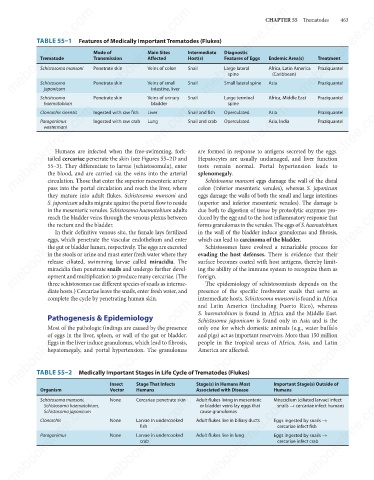
TABLE 55–1 Features of Medically Important Trematodes (Flukes)
Host(s)
Endemic Area(s)
Affected
Features of Eggs
Treatment
Transmission
Trematode
Penetrate skin
Veins of colon
Africa, Latin America
Large lateral
Schistosoma mansoni
Snail
Praziquantel
spine
(Caribbean)
Schistosoma
japonicum
intestine, liver
Penetrate skin
Schistosoma Penetrate skin Veins of small Snail Small lateral spine Asia Praziquantel
Snail
Praziquantel
Africa, Middle East
Large terminal
Veins of urinary
bladder
spine
haematobium
mebooksfree.com
mebooksfree.com mebooksfree.com mebooksfree.com are formed in response to antigens secreted by the eggs. mebooksfree.com
mebooksfree.com
Ingested with raw fish
Praziquantel
Clonorchis sinensis
Asia
Operculated
Liver
Snail and fish
Praziquantel
Snail and crab
Asia, India
Lung
Operculated
Ingested with raw crab
Paragonimus
westermani
Humans are infected when the free-swimming, fork-
tailed cercariae penetrate the skin (see Figures 55–2D and
Hepatocytes are usually undamaged, and liver function
tests remain normal. Portal hypertension leads to
55–3). They differentiate to larvae (schistosomula), enter
the blood, and are carried via the veins into the arterial
circulation. Those that enter the superior mesenteric artery
Schistosoma mansoni eggs damage the wall of the distal
pass into the portal circulation and reach the liver, where
colon (inferior mesenteric venules), whereas S. japonicum
eggs damage the walls of both the small and large intestines
they mature into adult flukes. Schistosoma mansoni and splenomegaly.
(superior and inferior mesenteric venules). The damage is
S. japonicum adults migrate against the portal flow to reside
mebooksfree.com
mebooksfree.com
mebooksfree.com mebooksfree.com mebooksfree.com forms granulomas in the venules. The eggs of S. haematobium mebooksfree.com
due both to digestion of tissue by proteolytic enzymes pro-
in the mesenteric venules. Schistosoma haematobium adults
reach the bladder veins through the venous plexus between
duced by the egg and to the host inflammatory response that
the rectum and the bladder.
in the wall of the bladder induce granulomas and fibrosis,
In their definitive venous site, the female lays fertilized
which can lead to carcinoma of the bladder.
eggs, which penetrate the vascular endothelium and enter
the gut or bladder lumen, respectively. The eggs are excreted
Schistosomes have evolved a remarkable process for
evading the host defenses. There is evidence that their
in the stools or urine and must enter fresh water where they
surface becomes coated with host antigens, thereby limit-
release ciliated, swimming larvae called miracidia. The
ing the ability of the immune system to recognize them as
miracidia then penetrate snails and undergo further devel-
foreign.
opment and multiplication to produce many cercariae. (The
The epidemiology of schistosomiasis depends on the
three schistosomes use different species of snails as interme-
presence of the specific freshwater snails that serve as
diate hosts.) Cercariae leave the snails, enter fresh water, and
complete the cycle by penetrating human skin.
mebooksfree.com
mebooksfree.com mebooksfree.com mebooksfree.com intermediate hosts. Schistosoma mansoni is found in Africa mebooksfree.com
mebooksfree.com
and Latin America (including Puerto Rico), whereas
S. haematobium is found in Africa and the Middle East.
Pathogenesis & Epidemiology
Schistosoma japonicum is found only in Asia and is the
only one for which domestic animals (e.g., water buffalo
Most of the pathologic findings are caused by the presence
and pigs) act as important reservoirs. More than 150 million
of eggs in the liver, spleen, or wall of the gut or bladder.
Eggs in the liver induce granulomas, which lead to fibrosis,
people in the tropical areas of Africa, Asia, and Latin
hepatomegaly, and portal hypertension. The granulomas
America are affected.
TABLE 55–2 Medically Important Stages in Life Cycle of Trematodes (Flukes)
Organism Insect Stage That Infects Stage(s) in Humans Most Important Stage(s) Outside of
Humans
Vector
Associated with Disease
Humans
mebooksfree.com
mebooksfree.com mebooksfree.com mebooksfree.com Adult flukes live in biliary ducts Eggs ingested by snails → mebooksfree.com
mebooksfree.com
Cercariae penetrate skin
Miracidium (ciliated larvae) infect
None
Adult flukes living in mesenteric
Schistosoma mansoni,
snails → cercariae infect humans
Schistosoma haematobium,
or bladder veins lay eggs that
Schistosoma japonicum
cause granulomas
Clonorchis
None
Larvae in undercooked
cercariae infect fish
fish
Adult flukes live in lung
Eggs ingested by snails →
Paragonimus
None
Larvae in undercooked
crab
cercariae infect crab
mebooksfree.com mebooksfree.com mebooksfree.com mebooksfree.com mebooksfree.com mebooksfree.com

