Page 652 - 9780077418427.pdf
P. 652

Volume/207/MHDQ243/tiL12214_disk1of1/0073512214/tiL12214_pagefile
          tiL12214_appa_623-630.indd Page 629  09/10/10  8:36 AM user-f463
          tiL12214_appa_623-630.indd Page 629  09/10/10  8:36 AM user-f463              Volume/207/MHDQ243/tiL12214_disk1of1/0073512214/tiL12214_pagefiles


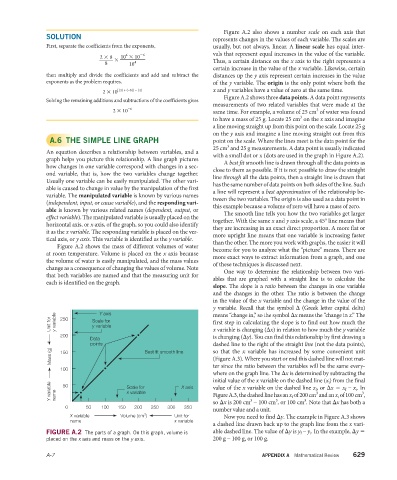
                                                                                  Figure A.2 also shows a number  scale on each axis that
                       SOLUTION
                                                                               represents changes in the values of each variable. The scales are
                       First, separate the coefficients from the exponents,    usually, but not always, linear. A linear scale has equal inter-
                                                  4
                                                       −6
                                                10  × 10
                                         _      _                              vals that represent equal increases in the value of the variable.
                                         2 × 8


                                              ×

                                           8       10 4                        Thus, a certain distance on the x axis to the right represents a
                                                                               certain increase in the value of the x variable. Likewise, certain
                       then multiply and divide the coefficients and add and subtract the   distances up the y axis represent certain increases in the value
                         exponents as the problem requires.                    of the y variable. The origin is the only point where both the
                                           2 × 10 [(4) + (−6)] − [4]           x and y variables have a value of zero at the same time.
                                                                                  Figure A.2 shows three data points. A data point represents
                       Solving the remaining additions and subtractions of the coefficients gives
                                                                               measurements of two related variables that were made at the
                                              2 × 10 −6                        same time. For example, a volume of 25 cm  of water was found
                                                                                                                 3
                                                                                                            3
                                                                               to have a mass of 25 g. Locate 25 cm  on the x axis and imagine
                                                                               a line moving straight up from this point on the scale. Locate 25 g
                                                                               on the y axis and imagine a line moving straight out from this
                         A.6  THE SIMPLE LINE GRAPH                            point on the scale. Where the lines meet is the data point for the
                                                                                   3
                                                                               25 cm  and 25 g measurements. A data point is usually indicated
                       An equation describes a relationship between variables, and a
                                                                               with a small dot or x (dots are used in the graph in Figure A.2).
                       graph helps you picture this relationship. A line graph pictures
                                                                                  A best fit smooth line is drawn through all the data points as
                       how changes in one variable correspond with changes in a sec-
                                                                               close to them as possible. If it is not possible to draw the straight
                       ond variable, that is, how the two variables change together.
                                                                               line through all the data points, then a straight line is drawn that
                       Usually one variable can be easily manipulated. The other vari-
                                                                               has the same number of data points on both sides of the line. Such
                       able is caused to change in value by the manipulation of the first
                                                                               a line will represent a best approximation of the relationship be-
                       variable. The manipulated variable is known by various names
                                                                               tween the two variables. The origin is also used as a data point in
                       (independent, input, or cause variable), and the responding vari-
                                                                               this example because a volume of zero will have a mass of zero.
                       able is known by various related names (dependent, output, or
                                                                                  The smooth line tells you how the two variables get larger
                       eff ect variable). The manipulated variable is usually placed on the
                                                                               together. With the same x and y axis scale, a 45° line means that
                       horizontal axis, or x axis, of the graph, so you could also identify
                                                                               they are increasing in an exact direct proportion. A more flat or
                       it as the x variable. The responding variable is placed on the ver-
                                                                               more upright line means that one variable is increasing faster
                       tical axis, or y axis. This variable is identified as the y variable.
                                                                               than the other. The more you work with graphs, the easier it will
                           Figure A.2 shows the mass of different volumes of water
                                                                               become for you to analyze what the “picture” means. There are
                       at room temperature. Volume is placed on the x axis because
                                                                               more exact ways to extract information from a graph, and one
                       the volume of water is easily manipulated, and the mass values
                                                                               of these techniques is discussed next.
                       change as a consequence of changing the values of volume. Note
                                                                                  One way to determine the relationship between two vari-
                       that both variables are named and that the measuring unit for
                                                                               ables that are graphed with a straight line is to calculate the
                       each is identified on the graph.
                                                                               slope. The slope is a ratio between the changes in one variable
                                                                               and the changes in the other. The ratio is between the change
                                                                               in the value of the x variable and the change in the value of the
                                                                               y variable. Recall that the symbol  Δ (Greek letter capital delta)
                                         Y axis
                                                                               means “change in,” so the symbol Δx means the “change in x.” The
                         Unit for  y variable  250  Scale for                  first step in calculating the slope is to find out how much the
                                       y variable
                                                                                 x variable is changing (Δx) in relation to how much the y variable
                            200
                                      Data                                     is changing (Δy). You can find this relationship by first drawing a
                                      points                                   dashed line to the right of the straight line (not the data points),
                         Mass (g)  150                  Best fit smooth line   so that the  x variable has increased by some convenient unit
                                                                               ( Figure A.3). Where you start or end this dashed line will not mat-
                            100                                                ter since the ratio between the variables will be the same every-
                                                                               where on the graph line. The Δx is determined by subtracting the
                                                                               initial value of the x variable on the dashed line (x i ) from the final
                         Y variable  name         Scale for         X axis     value of the x variable on the dashed line x f , or Δx = x f  – x i . In
                             50
                                                  x variable
                                                                                                                 3
                                                                                                                                3
                                                                                 Figure A.3, the dashed line has an x f  of 200 cm  and an x i  of 100 cm ,
                                                                                                             3
                                                                                           3
                                                                                                   3
                                                                               so Δx is 200 cm  – 100 cm , or 100 cm . Note that Δx has both a
                              0      50   100  150   200  250   300  350
                                                                               number value and a unit.
                               X variable       Volume (cm ) 3    Unit for        Now you need to find Δy. The example in Figure A.3 shows
                               name                               x variable
                                                                               a dashed line drawn back up to the graph line from the x vari-
                                                                               able dashed line. The value of Δy is y f  – y i . In the example, Δy =
                          FIGURE A.2  The parts of a graph. On this graph, volume is
                       placed on the x axis and mass on the y axis.            200 g – 100 g, or 100 g.
                        A-7                                                                    APPENDIX A  Mathematical Review   629
   647   648   649   650   651   652   653   654   655   656   657