


Page 653 - 9780077418427.pdf
P. 653
Volume/207/MHDQ243/tiL12214_disk1of1/0073512214/tiL12214_pagefiles
          tiL12214_appa_623-630.indd Page 630  09/10/10  8:36 AM user-f463
          tiL12214_appa_623-630.indd Page 630  09/10/10  8:36 AM user-f463              Volume/207/MHDQ243/tiL12214_disk1of1/0073512214/tiL12214_pagefile


                                                                                                  3
                                                                             Thus, the slope is 1 g/cm , and this tells you how the vari-
                     250                                                                            3
                                                                          ables change together. Since g/cm  is also the unit of density, you
                                                                          know that you have just calculated the density of water from a
                     200   y f                                            graph.
                                                                            that are increasing together, that is, for variables that are in
                                                                             Note that the slope can be calculated only for two variables
                    Mass (g)  150                   Δ y  = 100 g            direct proportion and have a line that moves upward and to the


                     100   y i                                            right. If variables change in any other way, mathematical opera-
                                                                          tions must be performed to change the variables into this rela-
                                                                          tionship. Examples of such necessary changes include taking the
                                      Δ x = 100 cm 3       Δ y  y f –  y i
                      50                             slope =  =           inverse of one variable, squaring one variable, taking the inverse
                                                           Δ x  x f –  x i
                                                                          square, and so forth.
                                    x i        x f
                      0       50   100   150   200  250   300  350
                                                  3
                                          Volume (cm )
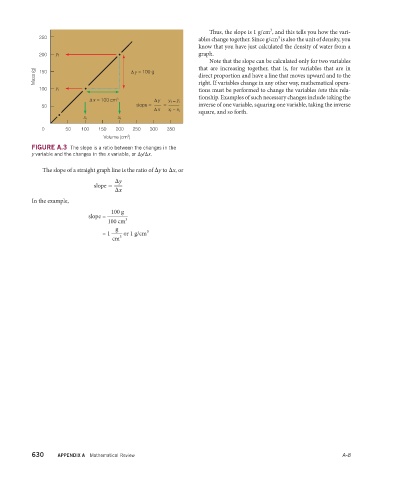
                   FIGURE A.3  The slope is a ratio between the changes in the
                   y variable and the changes in the x variable, or Δy/Δx.

                      The slope of a straight graph line is the ratio of Δy to Δx, or

                                              Δy
                                              _
                                       slope =

                                              Δx
                   In the example,
                                             100 g
                                            _

                                     slope =
                                            100 cm 3
                                              g
                                             _           3
                                          = 1       or 1 g/cm


                                                3
                                             cm


                   630     APPENDIX A Mathematical Review                                                                 A-8

