


Page 56 - Learn to Program - Basic-256
P. 56
Chapter 3 – Variables                                                             Page 40


               into the location named "numerator". Line four stores the value 4 in the
               variable "denominator". Line five takes the value from "numerator" divides it
               by the value in the "denominator" variable and stores the value in the
               variable named "result". Another thing to watch is on line nine, you can see
               the statement let result = result * 2 takes the value in result multiplies it
               by two and then save the value back into the variable result.


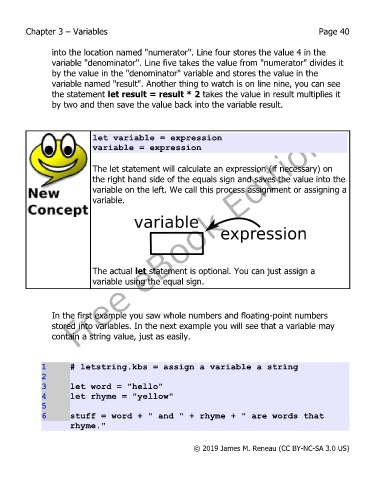
                           let variable = expression
                           variable = expression

                           The let statement will calculate an expression (if necessary) on
                           the right hand side of the equals sign and saves the value into the
                           variable on the left. We call this process assignment or assigning a
                           variable.


                           The actual let statement is optional. You can just assign a
                           variable using the equal sign.


               In the first example you saw whole numbers and floating-point numbers
               stored into variables. In the next example you will see that a variable may
               contain a string value, just as easily.


             1      # letstring.kbs = assign a variable a string
             2
             3      let word = "hello"
             4      let rhyme = "yellow"
             5
             6      stuff = word + " and " + rhyme + " are words that
                    rhyme."


                                                       © 2019 James M. Reneau (CC BY-NC-SA 3.0 US)

