


Page 152 - T-I JOURNAL19 4
P. 152
800                             HALL, DYER & MACUARE


      innovation know other people in the invention arena,  look at the most important innovations coming out
      in their departments and possibly their schools, but  of the university, so many of them have not resulted
      this was a way to bring together people across the  in patents. For example, we were the creators of the
      entire university and honor that whole group at once.  domain name system that’s used to record every
      Last spring, we honored people for their work and  internet address in the world, and, at one time, we
      then inducted them into the chapter. When we held  managed the domain name system for the entire
      the event, we offered two kinds of honors: one for  world. That is something that wasn’t patented, but
      those inducted into the chapter and the other for  it’s nevertheless very impactful. So, we want to be
      those whose patents or software had been successfully  able to recognize that community as well.
      licensed within the last year.
                                                  Could you describe for us what USC’s invention
      Given that you do have people who are working  and innovation landscape looks like?
      across a broad spectrum at different campuses     It’s very broad and has many facets to it, so I’ll
      and at very different levels, what are the requi-  start by speaking from an organizational standpoint
      sites for membership in your chapter, and how   about how we work.
      does that selection process work?             The Stevens Center for Innovation is our technol-
        We have a set of criteria. For instance, to be an  ogy transfer and commercialization office. Its job is
      NAI fellow, you need to have an issued U.S. patent,  to protect USC-owned IP and to find the industry
      and we used that same criterion, which led to more  partners to commercialize that IP. That can come
      than 300 people being inducted. We do have many  through corporate-sponsored research agreements,
      people in the university, faculty predominantly, who  or it can come through a licensed technology. They
      have issued U.S. patents. That’s the reason why our  also organize innovation activities. For instance, they
      chapter is so large.                        host a student innovation showcase every year where
        We will broaden our criteria in the future, partly to  students compete for prizes with their inventions and
      recognize our very large program in computer science  start-up concepts.
      research. We’re typically in the top three nationally    There are also many school-based programs, and
      in federally funded computer science research, but  there are a few other university-wide programs with
      much of what people do in the computer science field  more focused purposes. For example, the Marshall
      does not involve patents. Our initial criteria may have  School of Business, with undergraduate and graduate
      left out much of that group, but we can see that they  programs, has the Greif Center for Entrepreneurial
      do things that are very impactful. In fact, when we  Studies. They educate students through a wide vari-
                                                  ety of courses and through incubation activity for
                                                  student entrepreneurs. They also put on a showcase
                                                  of technologies for students and mentor students.
                                                  Marshall received recognition this year for launching
                                                  a course on IP where students learn the principles of
                                                  IP protection, how it builds industries, and how to
                                                  use it strategically. The course is a great example of
                                                  the Marshall School’s success.
                                                    Within our Viterbi School of Engineering, we also
                                                  have a set of entrepreneurship and innovation pro-
                                                  grams, such as the I-Corps node, which is part of the
                                                  national I-Corps program that provides training for
                                                  innovators from both inside and outside the univer-
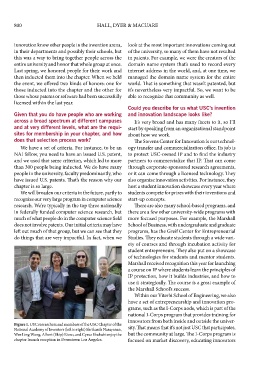
      Figure 1. USC researchers and members of the USC Chapter of the
      National Academy of Inventors (left to right) Shrikanth Narayanan,   sity. That means that it’s not just USC that participates,
      Wee Ling Wong, Albert (Skip) Rizzo, and Cyrus Shahabi enjoy the   but the community at large. The I-Corps program is
      chapter launch reception in Downtown Los Angeles.  focused on market discovery, educating innovators

