


Page 59 - T-I JOURNAL19-3
P. 59
IONO-ELASTOMERS FOR WEARABLE ELECTRONICS                     619


             The Smart Outlet is a lightweight Bluetooth energy  along the joint (see the right photo of Figure 7 (b)).
             system embed with a Bluetooth wireless system and  The lifetime of our device is approximately 13 hours.
             coin battery, which transmits data from the patch to  Work is progressing to dramatically reduce the foot-
             a desktop, tablet, or phone. Figure 7 (a) illustrates  print of the electronics to a postage-stamp size, such
             the working procedures of our MSP. End users, such  that it can be directly integrated with the polymeric
             as athletes, rehabilitation patients, or anyone who  component without wires.
             would like to track their motion, attach the MSP
             onto the targeted body parts, and the strain sensor  Analysis of Market and Industry Need
             will measure the strain motion and send the strain    A global market size report (Figure 8 (a)) pre-
             signal in real-time to a computer, tablet, or phone.  dicts that stretchable conductive material will rapidly
             The computer app provides real-time, quantitative  become a billion-dollar market. The global market
             performance measures to the end users, allowing  size is predicted to reach $1.7 billion for flexible con-
             them to monitor, track, and potentially improve their  ductive materials by 2026 (39), $2 billion for flexible
             motion performance. It is envisioned that the app can  electronics by 2018 (40), $34 billion for wearable
             be integrated with a myriad of existing data analysis  technology by 2020 (41), and $87 billion for smart
             software incorporating data analytics.     textiles and/or fabrics by 2024 (42). In addition, the
               We designed and fabricated our first-generation  wearable technology market is expected to grow from
             MSP minimal viable product prototype, and its  $15.74 billion in 2015 to reach $51.6 billion by 2022 at
             photo is in Figure 7 (b). As shown in the figure, one  a compound annual growth rate (CAGR) of 15.51%
             piece of our iono-elastomer is taped to a laboratory  between 2016 and 2022 (43).
             glove at the finger joint position, and the change in    Our motion strain sensor addresses customer
             finger strain is measured via a Bluetooth system.  needs for wearable electronics in sports, which has
             Finally, the result could be directly read out from the  an even bigger market potential, as shown in Figure 8
             pre-calibrated and custom programmed phone app,  (b). Predictions for a global market size of $8.2 billion
             where 0% elongation strain is read out when finger  for sport devices is anticipated by 2019 (44), $184.5
             is not bent (see left photo of Figure 7 (b)), and 38%  billion for the sports apparel industry by 2020 (45),
             elongation strain is read out when finger is rotated  and $1.5 trillion for the global sports industry (46).


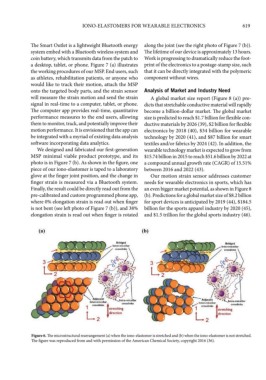
             Figure 6. The microstructural rearrangement (a) when the iono-elastomer is stretched and (b) when the iono-elastomer is not stretched.
             The figure was reproduced from and with permission of the American Chemical Society, copyright 2016 (36).

