


Page 38 - Technology and Innovation Journal - 19-1
P. 38
376                              DOMSCHKE & BLAHO


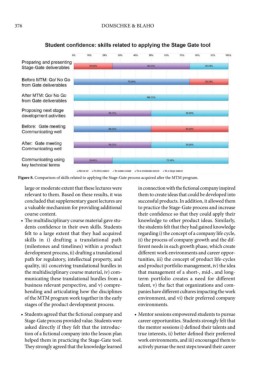
        Figure 8. Comparison of skills related to applying the Stage-Gate process acquired after the MTM program.

           large or moderate extent that these lectures were      in connection with the fictional company inspired
           relevant to them. Based on these results, it was      them to create ideas that could be developed into
           concluded that supplementary guest lectures are      successful products. In addition, it allowed them
           a valuable mechanism for providing additional      to practice the Stage-Gate process and increase
           course content.                            their confidence so that they could apply their
         • The multidisciplinary course material gave stu-     knowledge to other product ideas. Similarly,
           dents confidence in their own skills. Students      the students felt that they had gained knowledge
           felt to a large extent that they had acquired      regarding i) the concept of a company life cycle,
           skills in i) drafting a translational path      ii) the process of company growth and the dif-
           (milestones and timelines) within a product      ferent needs in each growth phase, which create
           development process, ii) drafting a translational      different work environments and career oppor-
           path for regulatory, intellectual property, and      tunities, iii) the concept of product life-cycles
           quality, iii) conceiving translational hurdles in      and product portfolio management, iv) the idea
           the multidisciplinary course material, iv) com-     that management of a short-, mid-, and long-
           municating these translational hurdles from a      term portfolio creates a need for different
           business relevant perspective, and v) compre-     talent, v) the fact that organizations and com-
           hending and articulating how the disciplines      panies have different cultures impacting the work
           of the MTM program work together in the early      environment, and vi) their preferred company
           stages of the product development process.    environments.

         • Students agreed that the fictional company and    • Mentor sessions empowered students to pursue
           Stage-Gate process provided value. Students were      career opportunities. Students strongly felt that
           asked directly if they felt that the introduc-     the mentor sessions i) defined their talents and
           tion of a fictional company into the lesson plan      true interests, ii) better defined their preferred
           helped them in practicing the Stage-Gate tool.      work environments, and iii) encouraged them to
           They strongly agreed that the knowledge learned      actively pursue the next steps toward their career

