


Page 179 - Health, Population and Environment Education 10
P. 179
Syphilis  is  generally  transmitted  through  unsafe  sexual  intercourse.  This  commonly
            occurs in young people as they have a high frequency of sexual activities. This disease
            can be cured if treated in its early stage. But, most people hide this disease and do not go
            for treatment. If not treated on time, this disease may damage various vital organs of the
            body such as brain, liver, heart, etc. which may cause the death of the patient.


            Modes of Transmission
            i.   Syphilis  is  transmitted  through  the  unsafe  sexual  intercourse  with  the  infected
                partner.

            ii.  It is transmitted from pregnant mother to her unborn baby.
            iii.  It is also transmitted through contaminated blood transfusion.

            Major Symptoms
            Syphilis infection occurs in three distinct stages. They are as follows:


            Early or Primary Symptoms
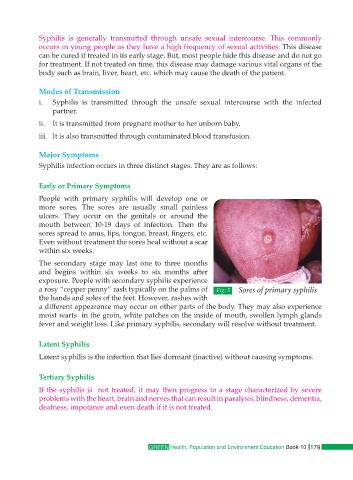
            People with primary syphilis will develop one or
            more sores.  The sores  are usually small  painless
            ulcers. They occur on the genitals  or around the
            mouth between 10-19 days of infection. Then the
            sores spread to anus, lips, tongue, breast, fingers, etc.
            Even without treatment the sores heal without a scar
            within six weeks.

            The  secondary stage may last one to three months
            and  begins  within  six  weeks  to  six  months  after
            exposure. People with secondary syphilis experience
            a rosy “copper penny” rash typically on the palms of   Fig: 5  Sores of primary syphilis
            the hands and soles of the feet. However, rashes with
            a different appearance may occur on other parts of the body. They may also experience
            moist warts  in the groin, white patches on the inside of mouth, swollen lymph glands
            fever and weight loss. Like primary syphilis, secondary will resolve without treatment.


            Latent Syphilis
            Latent syphilis is the infection that lies dormant (inactive) without causing symptoms.


            Tertiary Syphilis
            If the syphilis is  not treated, it may then progress to a stage characterized by severe
            problems with the heart, brain and nerves that can result in paralysis, blindness, dementia,
            deafness, impotance and even death if it is not treated.


                                            GREEN  Health, Population and Environment Education Book-10 179

