


Page 132 - leadership-experience-2008
P. 132
CikguOnline
         CikguOnline
               CHAPTER 4: THE LEADER AS AN INDIVIDUAL                                                    113

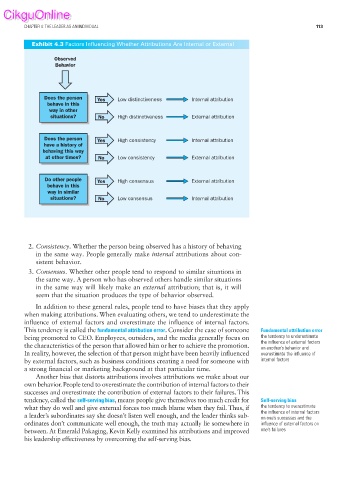
                  Exhibit 4.3 Factors Influencing Whether Attributions Are Internal or External

                         Observed
                         Behavior


                      Does the person
                                      Yes   Low distinctiveness    Internal attribution
                      behave in this
                       way in other
                       situations?    No    High distinctiveness   External attribution


                      Does the person
                                      Yes   High consistency       Internal attribution
                     have a history of
                     behaving this way
                      at other times?  No   Low consistency        External attribution


                      Do other people
                                      Yes   High consensus         External attribution
                      behave in this
                      way in similar
                       situations?    No    Low consensus          Internal attribution


                2. Consistency. Whether the person being observed has a history of behaving
                   in the same way. People generally make internal attributions about con-
                   sistent behavior.
                3. Consensus. Whether other people tend to respond to similar situations in
                   the same way. A person who has observed others handle similar situations
                   in the same way will likely make an external attribution; that is, it will
                   seem that the situation produces the type of behavior observed.
                   In addition to these general rules, people tend to have biases that they apply
               when making attributions. When evaluating others, we tend to underestimate the

               influence of external factors and overestimate the influence of internal factors.

               This tendency is called the fundamental attribution error. Consider the case of someone   Fundamental attribution error
                                                                                        Fundamental attribution error
                                                                                        the tendency to underestimate
               being promoted to CEO. Employees, outsiders, and the media generally focus on   the tendency to underestimate
                                                                                        the infl uence of external factors
               the characteristics of the person that allowed him or her to achieve the promotion.   the infl uence of external factors
                                                                                        on another’s behavior and
                                                                                        on another’s behavior and
               In reality, however, the selection of that person might have been heavily infl uenced   overestimate the infl uence of
                                                                                        overestimate the infl uence of
                                                                                        internal factors
               by external factors, such as business conditions creating a need for someone with   internal factors
               a strong fi nancial or marketing background at that particular time.
                   Another bias that distorts attributions involves attributions we make about our
               own behavior. People tend to overestimate the contribution of internal factors to their
               successes and overestimate the contribution of external factors to their failures. This
               tendency, called the self-serving bias, means people give themselves too much credit for   Self-serving bias
                                                                                        Self-serving bias
                                                                                        the tendency to overestimate
               what they do well and give external forces too much blame when they fail. Thus, if   the tendency to overestimate
                                                                                        the infl uence of internal factors
               a leader’s subordinates say she doesn’t listen well enough, and the leader thinks sub-  the infl uence of internal factors
                                                                                        on one’s successes and the
                                                                                        on one’s successes and the
               ordinates don’t communicate well enough, the truth may actually lie somewhere in   infl uence of external factors on
                                                                                        infl uence of external factors on
                                                                                        one’s failures
               between. At Emerald Pakaging, Kevin Kelly examined his attributions and improved   one’s failures
               his leadership effectiveness by overcoming the self-serving bias.

