


Page 298 - leadership-experience-2008
P. 298
CikguOnline
         CikguOnline
               CHAPTER 9: LEADERSHIP COMMUNICATION                                                       279

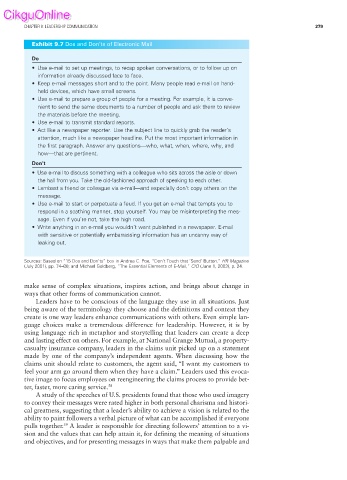
                  Exhibit 9.7 Dos and Don’ts of Electronic Mail

                  Do
                  •  Use e-mail to set up meetings, to recap spoken conversations, or to follow up on
                   information already discussed face to face.
                  •  Keep e-mail messages short and to the point. Many people read e-mail on hand-
                   held devices, which have small screens.
                  •  Use e-mail to prepare a group of people for a meeting. For example, it is conve-
                   nient to send the same documents to a number of people and ask them to review
                   the materials before the meeting.
                  •  Use e-mail to transmit standard reports.
                  •  Act like a newspaper reporter. Use the subject line to quickly grab the reader’s
                   attention, much like a newspaper headline. Put the most important information in
                   the first paragraph. Answer any questions—who, what, when, where, why, and
                   how—that are pertinent.
                  Don’t
                  •  Use e-mail to discuss something with a colleague who sits across the aisle or down
                   the hall from you. Take the old-fashioned approach of speaking to each other.
                  •  Lambast a friend or colleague via e-mail—and especially don’t copy others on the
                   message.
                  •  Use e-mail to start or perpetuate a feud. If you get an e-mail that tempts you to
                   respond in a scathing manner, stop yourself. You may be misinterpreting the mes-
                   sage. Even if you’re not, take the high road.
                  •  Write anything in an e-mail you wouldn’t want published in a newspaper. E-mail
                   with sensitive or potentially embarrassing information has an uncanny way of
                     leaking out.


               Sources: Based on “15 Dos and Don’ts” box in Andrea C. Poe, “Don’t Touch that ‘Send’ Button,” HR Magazine
               (July 2001), pp. 74–80; and Michael Goldberg, “The Essential Elements of E-Mail,” CIO (June 1, 2003), p. 24.

               make sense of complex situations, inspires action, and brings about change in
               ways that other forms of communication cannot.
                   Leaders have to be conscious of the language they use in all situations. Just
               being aware of the terminology they choose and the definitions and context they

               create is one way leaders enhance communications with others. Even simple lan-
               guage choices make a tremendous difference for leadership. However, it is by
               using language rich in metaphor and storytelling that leaders can create a deep
               and lasting effect on others. For example, at National Grange Mutual, a property-
               casualty insurance company, leaders in the claims unit picked up on a statement
               made by one of the company’s independent agents. When discussing how the
               claims unit should relate to customers, the agent said, “I want my customers to
               feel your arm go around them when they have a claim.” Leaders used this evoca-
               tive image to focus employees on reengineering the claims process to provide bet-
               ter, faster, more caring service. 58
                   A study of the speeches of U.S. presidents found that those who used imagery
               to convey their messages were rated higher in both personal charisma and histori-
               cal greatness, suggesting that a leader’s ability to achieve a vision is related to the
               ability to paint followers a verbal picture of what can be accomplished if everyone
                           59
               pulls together.  A leader is responsible for directing followers’ attention to a vi-

               sion and the values that can help attain it, for defining the meaning of situations
               and objectives, and for presenting messages in ways that make them palpable and

