


Page 81 - GARIS PANDUAN KAWALAN INFEKSI 2013
P. 81
01.LayOut  11/7/13  7:02 AM  Page 74


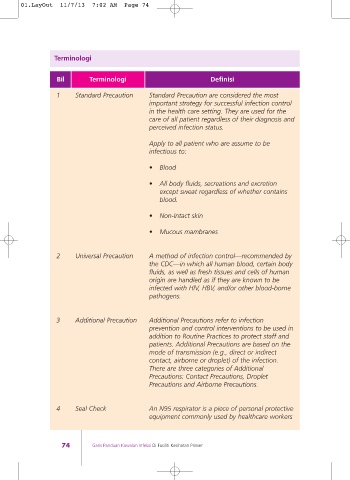
                Terminologi


                Bil      Terminologi                      Definisi

                1    Standard Precaution   Standard Precaution are considered the most
                                         important strategy for successful infection control
                                         in the health care setting. They are used for the
                                         care of all patient regardless of their diagnosis and
                                         perceived infection status.

                                         Apply to all patient who are assume to be
                                         infectious to:

                                         •  Blood
                                         •  All body fluids, secreations and excretion
                                            except sweat regardless of whether contains
                                            blood.

                                         •  Non-Intact skin
                                         •  Mucous mambranes


                2    Universal Precaution  A method of infection control—recommended by
                                         the CDC—in which all human blood, certain body
                                         fluids, as well as fresh tissues and cells of human
                                         origin are handled as if they are known to be
                                         infected with HIV, HBV, and/or other blood-borne
                                         pathogens.


                3    Additional Precaution  Additional Precautions refer to infection
                                         prevention and control interventions to be used in
                                         addition to Routine Practices to protect staff and
                                         patients. Additional Precautions are based on the
                                         mode of transmission (e.g., direct or indirect
                                         contact, airborne or droplet) of the infection.
                                         There are three categories of Additional
                                         Precautions: Contact Precautions, Droplet
                                         Precautions and Airborne Precautions.


                4    Seal Check          An N95 respirator is a piece of personal protective
                                         equipment commonly used by healthcare workers


                  74      Garis Panduan Kawalan Infeksi Di Fasiliti Kesihatan Primer

