


Page 77 - Essentials of Nursing Leadership and Management, 5th Edition
P. 77
CikguOnline
         2208_Ch05_057-070.qxd  11/6/09  5:56 PM  Page 64
               64   unit 1 | Professional Considerations                                                                   CikguOnline
                                                            Sometimes, people are unwilling to discuss the
                                                            informal processes. However, careful observation
                                            Aromatherapy
                    Nutrition                               of the most experienced “system-wise” individuals
                     Group                   and Imagery
                                               Group        in  an organization will eventually reveal these
                                                            processes. This will help you do things as efficient-
                                                            ly as they do.
                                Health and
                                 Wellness                   Power
                                   Care
                                                            There are times when one’s attempts to influence
                                                            others are overwhelmed by other forces or individ-
                   Relaxation                               uals. Where does this power come from? Who has
                                            Exercise and
                      and                                   it? Who does not?
                                              Massage
                   Meditation
                     Group                     Group          In the earlier section on hierarchy, it was noted
                                                            that, although people at the top of the hierarchy
                                                            have most of the authority in the organization, they
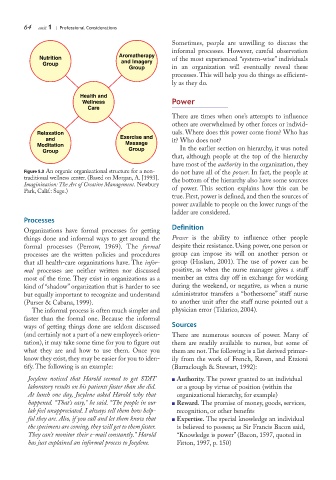
               Figure 5.3 An organic organizational structure for a non-  do not have all of the power. In fact, the people at
               traditional wellness center. (Based on Morgan, A. [1993].  the bottom of the hierarchy also have some sources
               Imaginization: The Art of Creative Management. Newbury
               Park, Calif.: Sage.)                         of power. This section explains how this can be
                                                            true. First, power is defined, and then the sources of
                                                            power available to people on the lower rungs of the
                                                            ladder are considered.
               Processes
                                                            Definition
               Organizations have formal processes for getting
               things done and informal ways to get around the  Power is the ability to influence other people
               formal processes (Perrow, 1969). The  formal  despite their resistance. Using power, one person or
               processes are the written policies and procedures  group can impose its will on another person or
               that all health-care organizations have. The infor-  group (Haslam, 2001). The use of power can be
               mal processes are neither written nor discussed  positive, as when the nurse manager gives a staff
               most of the time. They exist in organizations as a  member an extra day off in exchange for working
               kind of “shadow” organization that is harder to see  during the weekend, or negative, as when a nurse
               but equally important to recognize and understand  administrator transfers a “bothersome” staff nurse
               (Purser & Cabana, 1999).                     to another unit after the staff nurse pointed out a
                  The informal process is often much simpler and  physician error (Talarico, 2004).
               faster than the formal one. Because the informal
               ways of getting things done are seldom discussed  Sources
               (and certainly not a part of a new employee’s orien-  There are numerous sources of power. Many of
               tation), it may take some time for you to figure out  them are readily available to nurses, but some of
               what they are and how to use them. Once you  them are not.The following is a list derived primar-
               know they exist, they may be easier for you to iden-  ily from the work of French, Raven, and Etzioni
               tify. The following is an example:           (Barraclough & Stewart, 1992):
                 Jocylene noticed that Harold seemed to get STAT  ■ Authority. The power granted to an individual
                 laboratory results on his patients faster than she did.  or a group by virtue of position (within the
                 At lunch one day, Jocylene asked Harold why that  organizational hierarchy, for example)
                 happened. “That’s easy,” he said. “The people in our  ■ Reward. The promise of money, goods, services,
                 lab feel unappreciated. I always tell them how help-  recognition, or other benefits
                 ful they are. Also, if you call and let them know that  ■ Expertise. The special knowledge an individual
                 the specimens are coming, they will get to them faster.  is believed to possess; as Sir Francis Bacon said,
                 They can’t monitor their e-mail constantly.” Harold  “Knowledge is power” (Bacon, 1597, quoted in
                 has just explained an informal process to Jocylene.  Fitton, 1997, p. 150)

