


Page 664 - alligood 8th edition_Neat
P. 664
CHAPTER 32  Phil Barker  645


                                                                   Enters service


                                               Re-enters service


                                        Developmental   Orientation to Immediate Care
                                          Care Plan
                                  Exit
                                         Transitional   Holistic    Security
                                         Care  Plan   Assessment   Assessment


                                          Group work   One-One      Personal
                                            1/2/3      Sessions     Security
                                                                    Planning

                                                    Immediate Care Plan


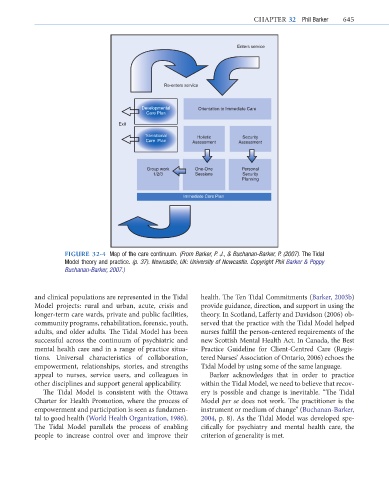
                   FIGURE 32-4   Map of the care continuum. (From Barker, P. J., & Buchanan-Barker, P. (2007). The Tidal
                   Model theory and practice. (p. 37). Newcastle, UK: University of Newcastle. Copyright Phil Barker & Poppy
                   Buchanan-Barker, 2007.)


           and clinical populations are represented in the Tidal   health. The Ten Tidal Commitments (Barker, 2003b)
           Model  projects:  rural  and  urban,  acute,  crisis  and   provide guidance, direction, and support in using the
           longer-term care wards, private and public facilities,   theory. In Scotland, Lafferty and Davidson (2006) ob-
           community programs, rehabilitation, forensic, youth,   served that the practice with the Tidal Model helped
           adults, and older adults. The Tidal Model has been   nurses fulfill the person-centered requirements of the
           successful  across  the  continuum  of  psychiatric  and   new Scottish Mental Health Act. In Canada, the Best
           mental health care and in a range of practice situa-  Practice  Guideline  for  Client-Centred  Care  (Regis-
           tions.  Universal  characteristics  of  collaboration,    tered Nurses’ Association of Ontario, 2006) echoes the
           empowerment,  relationships,  stories,  and  strengths   Tidal Model by using some of the same language.
           appeal  to  nurses,  service  users,  and  colleagues  in   Barker  acknowledges  that  in  order  to  practice
           other disciplines and support general applicability.  within the Tidal Model, we need to believe that recov-
             The  Tidal  Model  is  consistent  with  the  Ottawa   ery  is  possible  and  change  is  inevitable.  “The  Tidal
           Charter for Health Promotion, where the process of   Model per se does not work. The practitioner is the
           empowerment and participation is seen as fundamen-  instrument or medium of change” (Buchanan-Barker,
           tal to good health (World Health Organization, 1986).   2004, p. 8). As the Tidal Model was developed spe-
           The  Tidal  Model  parallels  the  process  of  enabling   cifically  for  psychiatry  and  mental  health  care,  the
           people  to  increase  control  over  and  improve  their   criterion of generality is met.

