


Page 11 - Year 1 SOW 2020
P. 11
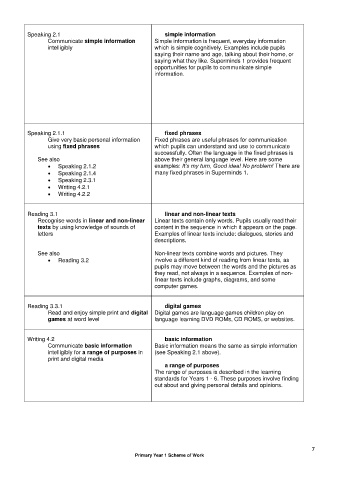
Speaking 2.1 simple information
Communicate simple information Simple information is frequent, everyday information
intelligibly which is simple cognitively. Examples include pupils
saying their name and age, talking about their home, or
saying what they like. Superminds 1 provides frequent
opportunities for pupils to communicate simple
information.
Speaking 2.1.1 fixed phrases
Give very basic personal information Fixed phrases are useful phrases for communication
using fixed phrases which pupils can understand and use to communicate
successfully. Often the language in the fixed phrases is
See also above their general language level. Here are some
Speaking 2.1.2 examples: It’s my turn, Good idea! No problem! There are
Speaking 2.1.4 many fixed phrases in Superminds 1.
Speaking 2.3.1
Writing 4.2.1
Writing 4.2.2
Reading 3.1 linear and non-linear texts
Recognise words in linear and non-linear Linear texts contain only words. Pupils usually read their
texts by using knowledge of sounds of content in the sequence in which it appears on the page.
letters Examples of linear texts include: dialogues, stories and
descriptions.
See also Non-linear texts combine words and pictures. They
Reading 3.2 involve a different kind of reading from linear texts, as
pupils may move between the words and the pictures as
they read, not always in a sequence. Examples of non-
linear texts include graphs, diagrams, and some
computer games.
Reading 3.3.1 digital games
Read and enjoy simple print and digital Digital games are language games children play on
games at word level language learning DVD ROMs, CD ROMS, or websites.
Writing 4.2 basic information
Communicate basic information Basic information means the same as simple information
intelligibly for a range of purposes in (see Speaking 2.1 above).
print and digital media
a range of purposes
The range of purposes is described in the learning
standards for Years 1 - 6. These purposes involve finding
out about and giving personal details and opinions.
7
Primary Year 1 Scheme of Work

