


Page 217 - Advanced Course
P. 217
KNX ADVANCED COURSE


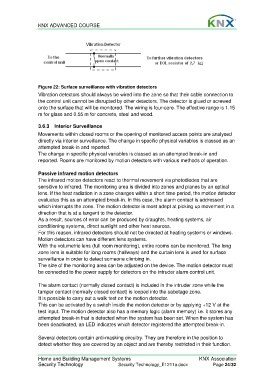
                  Figure 22: Surface surveillance with vibration detectors
                  Vibration detectors should always be wired into the zone so that their cable connection to
                  the control unit cannot be disrupted by other detectors. The detector is glued or screwed
                  onto the surface that will be monitored. The wiring is four-core. The effective range is 1.15
                  m for glass and 0.55 m for concrete, steel and wood.

                  3.6.3  Interior Surveillance
                  Movements within closed rooms or the opening of monitored access points are analysed
                  directly via interior surveillance. The change in specific physical variables is classed as an
                  attempted break-in and reported.
                  The change in specific physical variables is classed as an attempted break-in and
                  reported. Rooms are monitored by motion detectors with various methods of operation.

                  Passive infrared motion detectors
                  The infrared motion detectors react to thermal movement via photodiodes that are
                  sensitive to infrared. The monitoring area is divided into zones and planes by an optical
                  lens. If the heat radiation in a zone changes within a short time period, the motion detector
                  evaluates this as an attempted break-in. In this case, the alarm contact is addressed
                  which interrupts the zone. The motion detector is most adept at picking up movement in a
                  direction that is at a tangent to the detector.
                  As a result, sources of error can be produced by draughts, heating systems, air
                  conditioning systems, direct sunlight and other heat sources.
                  For this reason, infrared detectors should not be directed at heating systems or windows.
                  Motion detectors can have different lens systems.
                  With the volumetric lens (full room monitoring), entire rooms can be monitored. The long
                  zone lens is suitable for long rooms (hallways) and the curtain lens is used for surface
                  surveillance in order to detect someone climbing in.
                  The size of the monitoring area can be adjusted on the device. The motion detector must
                  be connected to the power supply for detectors on the intruder alarm control unit.

                  The alarm contact (normally closed contact) is included in the intruder zone while the
                  tamper contact (normally closed contact) is looped into the sabotage zone.
                  It is possible to carry out a walk test on the motion detector.
                  This can be activated by a switch inside the motion detector or by applying +12 V at the
                  test input. The motion detector also has a memory logic (alarm memory) i.e. it stores any
                  attempted break-in that is detected when the system has been set. When the system has
                  been deactivated, an LED indicates which detector registered the attempted break-in.

                  Several detectors contain anti-masking circuitry. They are therefore in the position to
                  detect whether they are covered by an object and are thereby restricted in their function.


                  Home and Building Management Systems                                    KNX Association
                  Security Technology                 Security Technology_E1211a.docx           Page 24/32

