


Page 37 - Tafsir of surat at tawba repentance
P. 37
© Islamic Online University Usool at-Tafseer
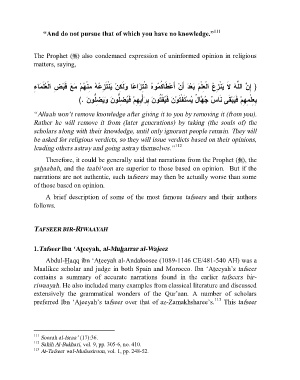
“And do not pursue that of which you have no knowledge.” 111
The Prophet (r) also condemned expression of uninformed opinion in religious
matters, saying,
ِﺀﺎﻤﹶﻠﻌﹾﻟﺍ ِﺽﺒﹶﻗ ﻊﻤ ﻡﻬﹾﻨِﻤ ﻪﻋِﺯﹶﺘﹾﻨﻴ ﻥِﻜﹶﻟﻭ ﺎﻋﺍﺯِﺘﹾﻨﺍ ﻩﻭﻤﹸﻜﺎﹶﻁﻋَﺃ ﻥَﺃ ﺩﻌﺒ ﻡﹾﻠِﻌﹾﻟﺍ ﻉِﺯﹾﻨﻴ ﹶﻻ ﻪﱠﻠﻟﺍ ﻥِﺇ )
(. ﻥﻭﱡﻠِﻀﻴﻭ ﻥﻭﱡﻠِﻀﻴﹶﻓ ﻡِﻬِﻴْﺃﺭِﺒ ﻥﻭﹸﺘﹾﻔﻴﹶﻓ ﻥﻭﹶﺘﹾﻔﹶﺘﺴﻴ ٌلﺎﻬﺠ ﺱﺎﹶﻨ ﻰﹶﻘﺒﻴﹶﻓ ﻡِﻬِﻤﹾﻠِﻌِﺒ
“Allaah won’t remove knowledge after giving it to you by removing it (from you).
Rather he will remove it from (later generations) by taking (the souls of) the
scholars along with their knowledge, until only ignorant people remain. They will
be asked for religious verdicts, so they will issue verdicts based on their opinions,
leading others astray and going astray themselves.” 112
Therefore, it could be generally said that narrations from the Prophet (r), the
sahaabah, and the taabi‘oon are superior to those based on opinion. But if the
narrations are not authentic, such tafseers may then be actually worse than some
of those based on opinion.
A brief description of some of the most famous tafseers and their authors
follows.
TAFSEER BIR-RIWAAYAH
1.Tafseer Ibn ‘Ateeyah, al-Muharrar al-Wajeez
Abdul-Haqq ibn ‘Ateeyah al-Andaloosee (1089-1146 CE/481-540 AH) was a
Maalikee scholar and judge in both Spain and Morocco. Ibn ‘Ateeyah’s tafseer
contains a summary of accurate narrations found in the earlier tafseers bir-
riwaayah. He also included many examples from classical literature and discussed
extensively the grammatical wonders of the Qur’aan. A number of scholars
preferred Ibn ‘Ateeyah’s tafseer over that of az-Zamakhsharee’s. 113 This tafseer
111
Soorah al-Israa’ (17):36.
112
Sahih Al-Bukhari, vol. 9, pp. 305-6, no. 410.
113
At-Tafseer wal-Mufassiroon, vol. 1, pp. 248-52.
http://www.islamiconlineuniversity.com 37

