


Page 83 - spectroscopic-atlas-5_0-english_Neat
P. 83
Spectroscopic Atlas for Amateur Astronomers 83
On a glance, the two profiles look indeed very similar, although Pollux (K0 Illb) is a Giant
and the Sun (G2V) is still a Main Sequence Star. Apparently the trend continues that the
luminosity-related differences in the profiles become increasingly smaller towards later
spectral classes.
Within the G- and early K-subclasses apparently no spectacular changes of spectral charac-
teristics take place. Considered more in detail, several differences in the line intensity and
in the shape of the continuum become visible. Now the spectral lines are mainly caused
due to neutral atoms or by simple diatomic molecules. The intensity of the neutral metals
continues to increase. The neutral calcium Ca l at λ 4227 has excelled the G-Band in the
class K5 (detail in Table 50 marked in red). The G-Band becomes now very faint and about
at K5 it’s even split into several discrete lines. The H-Balmer series is now very weak and
difficult to identify, except of the Hα- and the considerably shrunken Hβ line. The Magne-
sium Triplet still appears quite prominently.
In the spectra of the later K-subclasses a remarkable break occurs and the similarity to the
solar spectrum gets increasingly lost. Since the class K5 and later, particularly in the long
wave-(red) part of the spectrum, titanium oxide (TiO) bands appear and start to overprint
the telluric H2O and O2 absorptions. Therefore already Father Angelo Secchi noticed Alde-
baran (K5lll) as a transition star for the appearance of the impressive TiO band spectra.
In use are only the classes K1 - K5 and K7. K6, K8 and K9 have not yet been allocated. The
intensity maximum of the real continuum is shifted here into the red region of the visible
spectral range. The graph shows the theoretical continuum for a synthetic K4 III standard
star (Vspec/Tools/Library).
18.4 Commented Spectra
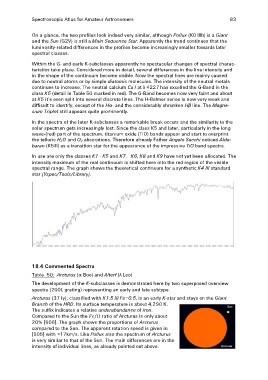
Table 50: Arcturus (α Boo) and Alterf (λ Leo)
The development of the K-subclasses is demonstrated here by two superposed overview
spectra (200L grating) representing an early and late subtype.
Arcturus (37 ly), classified with K1.5 Ill Fe–0.5, is an early K-star and stays on the Giant
Branch of the HRD. Its surface temperature is about 4,290 K.
The suffix indicates a relative underabundance of iron.
Compared to the Sun the ݁ܨ/ ܪratio of Arcturus is only about
20% [506]. The graph shows the proportions of Arcturus
compared to the Sun. The apparent rotation speed is given in
[505] with <17km/s. Like Pollux also the spectrum of Arcturus
is very similar to that of the Sun. The main differences are in the
intensity of individual lines, as already pointed out above.

